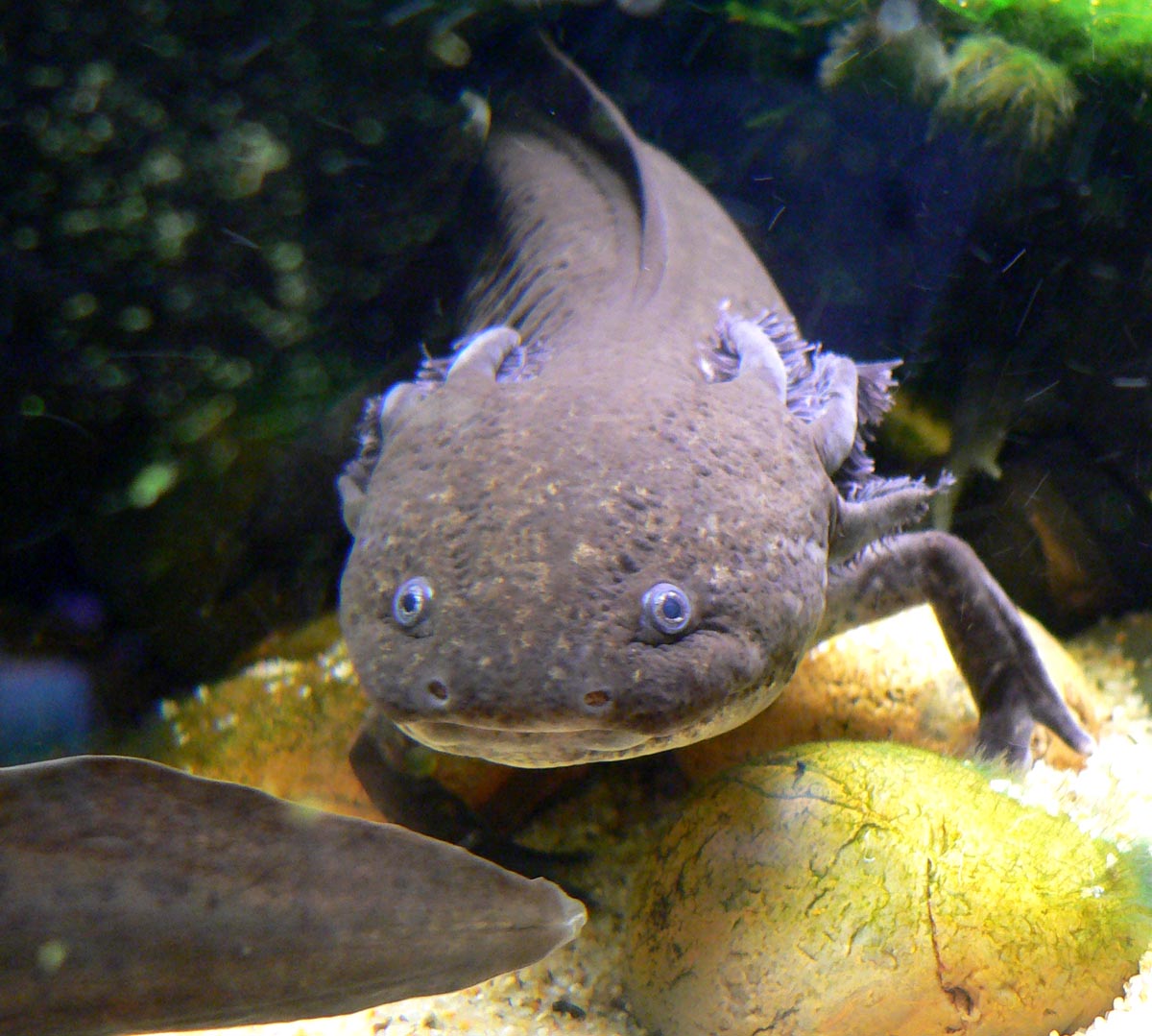
- Meet the Axolotl: The Salamander That Never Grows Up
- The Axolotl Regeneration Process: How a Lost Limb Comes Back
- Step 1: The Wound Epidermis and the Nerve Signal
- Step 2: Building the Blastema
- Step 3: Redifferentiation and Full Recovery
- What Else Can Axolotls Regrow? More Than Just Limbs
- Why Can Axolotls Regenerate but Humans Cannot?
- What Axolotl Regeneration Means for Human Medicine
- Threats to the Axolotl and Why Conservation Matters
- The Regeneration Truth: Marvel, Not Magic
- ❓ Frequently Asked Questions
Few animals on Earth capture the imagination quite like the axolotl, and few biological abilities are as astonishing as axolotl regeneration — the creature's near-magical talent for rebuilding lost body parts, from legs and gills to parts of its own heart and brain. This small, permanently smiling salamander has become a scientific superstar, studied in laboratories around the world for clues that might one day help humans heal spinal cord injuries, regrow damaged tissue, and even combat scarring. But how does it actually work, and why can an axolotl do something no mammal can? The answers are stranger and more fascinating than most people expect.
Meet the Axolotl: The Salamander That Never Grows Up
The axolotl (Ambystoma mexicanum) is a species of mole salamander native to the ancient lake system of Xochimilco, on the southern edge of Mexico City. It is a modest-looking animal: adults typically measure 15 to 30 centimeters (6 to 12 inches) from snout to tail tip, with a broad, flat head, feathery external gills sprouting from both sides of the neck, and a color palette ranging from dark gray-brown in wild types to the familiar pinkish-white and golden morphs bred in captivity. Wild axolotls are mottled olive and brown, which helps them blend into muddy lake bottoms.
What makes the axolotl truly unusual is that it never undergoes metamorphosis. Most amphibians — frogs, toads, and many salamanders — transform from aquatic larvae into terrestrial adults. The axolotl simply doesn't. It keeps its larval features, including those gills, for its entire life, a condition called neoteny. It reaches sexual maturity while still looking like an overgrown tadpole with legs. In the wild, axolotls are carnivorous, feeding on worms, insects, small fish, and crustaceans, which they suction into their mouths with a rapid vacuum-like motion. In captivity they are typically fed earthworms, bloodworms, and specially formulated pellets.
Axolotls are solitary, nocturnal, and surprisingly long-lived for a small amphibian. With good care, a captive axolotl can live 10 to 15 years, and some individuals have reached 20. They prefer cool water — ideally between 15 and 20 degrees Celsius (59 to 68 degrees Fahrenheit) — because warm water stresses them and encourages fungal and bacterial infections. Sadly, wild axolotls are critically endangered. Habitat loss, polluted water, and invasive fish like carp and tilapia have pushed the population to a tiny fraction of its historic size. Some surveys estimate fewer than 1,000 wild individuals remain, making the species far more common in laboratories and aquariums than in its native canals.
The Axolotl Regeneration Process: How a Lost Limb Comes Back
When an axolotl loses a leg — whether to a predator, an aggressive tankmate, or a scientist's scalpel — the response is immediate and remarkably organized. Within hours, cells around the wound migrate to cover the exposed tissue, forming a thin layer of skin called the wound epidermis. This isn't a scab. It's a living, signaling tissue that prevents infection and, crucially, tells the underlying cells what to do next.
Step 1: The Wound Epidermis and the Nerve Signal
The wound epidermis is only the opening act. For regeneration to proceed, the injury site needs nerves. Nerves release signaling molecules that prompt the underlying connective tissue cells to dedifferentiate — that is, to revert from specialized cell types back into a more primitive, flexible state. Without a nerve supply, an axolotl's limb stump will simply scar over instead of regenerating. This reliance on nerve signals is one reason regeneration is so hard to replicate in mammals: our wounds heal by forming scar tissue, which blocks the cellular communication that regeneration requires.
Step 2: Building the Blastema
The dedifferentiated cells pile up into a mound called the blastema, a structure unique to regenerating animals. The blastema is not just a random clump of cells. It is a highly organized, self-patterning mass that "remembers" what the missing limb should look like. Cells in the blastema proliferate rapidly, and as they multiply they arrange themselves along positional axes — shoulder to wrist, thumb to pinky. This positional memory is one of the great mysteries of axolotl biology. Somehow, the cells know exactly how much limb is missing and stop growing when the job is done, avoiding the uncontrolled growth that would otherwise resemble cancer.
Step 3: Redifferentiation and Full Recovery
Over the following weeks, the blastema cells redifferentiate into bone, muscle, cartilage, skin, blood vessels, and nerves. The limb elongates, joints form, toes appear, and eventually the new leg is indistinguishable from the original — complete with correct bone structure, muscle attachment points, and even restored nerve connections. A full axolotl limb can regenerate in roughly 30 to 60 days depending on the animal's age and temperature. Juveniles regenerate faster than adults, and warmer water (within safe limits) speeds the process, though it also raises the risk of infection.
What Else Can Axolotls Regrow? More Than Just Limbs
Limb regeneration tends to get the headlines, but the axolotl's regenerative toolkit is far broader. The animal can regrow:
- Tail and tail fin, including the spinal cord inside it — a feat that has enormous implications for spinal injury research.
- External gills, which are delicate, highly vascularized structures that can be lost to injury or nibbling tankmates and rebuilt within weeks.
- Jaw and parts of the face, including bone and cartilage.
- Skin, with no scar tissue left behind.
- Parts of the heart, including damaged muscle tissue, after injury.
- Retina and lens tissue in the eye, and portions of the brain, including some forebrain structures.
- Spinal cord segments, which reconnect and restore function in ways that mammalian spinal cords cannot.
This breadth is what makes the axolotl such a valuable model organism. A single animal can provide researchers with insights into muscle, bone, nerve, and organ repair all at once. It is also why the axolotl genome — roughly 32 billion base pairs, about ten times the size of the human genome — was sequenced in 2018, revealing a huge number of duplicated genes, many of which appear linked to regeneration.
Why Can Axolotls Regenerate but Humans Cannot?
Humans are not completely incapable of regeneration. We regrow skin, hair, fingernails, and parts of the liver. But we cannot regrow a limb, and the reason comes down to a few key differences.
First, our immune system responds to injury by rushing in inflammatory cells that promote rapid wound closure. Fast closure is good for survival — it stops bleeding and infection — but it produces scar tissue, a collagen-rich patch that seals the wound without rebuilding the original structure. The axolotl's immune response is different: it is more tolerant, less inflammatory, and does not default to scarring. When researchers suppress scarring in mammals, they sometimes see hints of regenerative behavior, but never a full limb.
Second, mammals lose the ability to dedifferentiate cells efficiently. Our specialized cells tend to stay specialized. Axolotl cells can rewind their identity, at least locally, and re-enter the cell cycle. Third, the axolotl's blastema relies on a network of signaling pathways — including FGF, BMP, Wnt, and retinoic acid — that are conserved across animals but deployed differently. Humans have the same basic genetic machinery; we simply don't switch it on in the same way.
There is also an evolutionary angle. Regeneration is metabolically expensive. It takes weeks of energy, requires abundant food, and leaves the animal vulnerable in the meantime. For a small, slow-moving salamander that is preyed upon regularly, the ability to regrow a bitten-off leg is worth the cost. For a large, warm-blooded mammal that can often survive with a scar, fast healing is the better trade-off. Evolution optimized each species for its own circumstances.
What Axolotl Regeneration Means for Human Medicine
The axolotl is not just a biological curiosity — it is a research tool with real medical potential. Scientists study axolotl regeneration to understand the molecular switches that allow complex tissue to rebuild itself, with the long-term goal of applying those lessons to human patients.
Areas of active research include:
- Spinal cord injury. Axolotls regrow spinal cord tissue in their tails and restore function. Understanding how could inform therapies for paralysis.
- Heart repair. After injury, axolotl heart muscle regenerates without scarring. Human heart attacks leave permanent scar tissue, which weakens the heart. Learning to prevent that scarring could transform cardiac care.
- Joint and bone disease. The blastema builds perfect cartilage and bone. Researchers hope to replicate that precision for arthritis and bone loss.
- Scar-free wound healing. If human wounds could heal without fibrosis, burn victims and surgical patients would recover with far less long-term damage.
- Cancer suppression. Regeneration involves rapid, controlled cell division. Understanding why axolotls don't develop tumors during this process could shed light on cancer biology.
Progress is steady but cautious. No one expects humans to regrow limbs in the near future. The more realistic goal is to nudge human tissue toward partial regeneration — healing a spinal cord, repairing a heart, or closing a wound without a scar. Each of those would be a medical revolution in its own right.
Threats to the Axolotl and Why Conservation Matters
There is a bitter irony in the axolotl's story: the animal that could teach us to heal is itself disappearing. In the wild, axolotls are found only in the canals and wetlands of Xochimilco. Mexico City's expansion, water pollution, introduced predators, and the draining of waterways have devastated the population. A 2020 survey found only a handful of individuals in a small area of the remaining habitat.
Captive axolotls are thriving, however. They breed readily in laboratories and aquariums, and the global pet trade has made them a popular exotic pet. This creates a strange situation: the species is functionally secure in captivity but critically endangered in nature. Conservationists are working on habitat restoration, water quality improvement, and reintroduction programs, but the challenges are enormous. Protecting the axolotl means protecting one of the most unusual freshwater ecosystems in the world.
For pet owners, responsible care matters too. Axolotls need cool, clean, well-filtered water, a varied diet, and tankmates chosen carefully — because a stressed or nipped axolotl will regenerate, but repeated injury is still harmful. They are not low-maintenance animals, and they should never be released into the wild, where they could introduce disease or disrupt local ecosystems.
The Regeneration Truth: Marvel, Not Magic
Axolotl regeneration is not magic, and it is not infinite. It is a finely tuned biological process built on nerve signals, dedifferentiated cells, a self-patterning blastema, and a permissive immune system. It works brilliantly for the axolotl because millions of years of evolution shaped it for a life in which losing a limb is a routine risk. It does not work in humans because our biology prioritizes fast, safe healing over slow, perfect rebuilding.
That is the real truth about axolotl regeneration: it is a reminder that the rules of healing are not fixed. They are written in genes and signaling pathways that we share, in modified form, with a smiling salamander from a Mexican lake. Every limb an axolotl regrows is a clue — and every clue brings medicine a little closer to repairing what we once thought could never be repaired. The axolotl may be small, but it is teaching us something enormous about what bodies can do.
❓ Frequently Asked Questions
💬 Can axolotls regrow their whole head or brain?
Axolotls can regenerate complex structures including parts of the brain and spinal cord, but they cannot regrow an entirely new head from a severed one. They can replace damaged brain tissue and even portions of the spinal cord, which is remarkable among vertebrates.
💬 Do axolotls regrow limbs perfectly every time?
Usually yes, but not always perfectly. Regenerated limbs are typically fully functional with correct bones, muscles, nerves, and skin, though repeated injuries or poor water conditions can lead to slightly smaller or malformed limbs.
💬 How long does it take an axolotl to regrow a lost limb?
A full limb typically regrows in about one to three months, depending on the axolotl's age, size, and water temperature. Younger axolotls regenerate faster, and you'll first see a small bud that gradually develops into a complete limb.
💬 Why can axolotls regenerate limbs but humans can't?
Axolotls keep specialized cells called blastema cells that can dedifferentiate and rebuild complex body parts, while adult humans mostly form scar tissue instead. Their genome also contains unique regeneration-related genes that mammals have largely lost or silenced.