- The Chilling Truth: Why Capybaras Love Water Is a Matter of Life and Death
- The Anatomy of an Amphibious Rodent
- How Capybaras Love Water Shapes Their Social Structure
- Mating and Birth: An Aquatic Affair
- The Dietary Reason Behind the Capybaras Love Water
- Habitat: The Flooded Savannas as a Lifeline
- The Ultimate Defense: Water as an Escape Route
- Symbiotic Relationships in the Water
- The Psychological Chill: Do They Actually Enjoy It?
- The Impact of Climate Change on Their Aquatic Lives
- Conclusion: A Lifelong Bond Forged in Evolution
When you picture a capybara, the image is almost always the same: a giant, barrel-shaped rodent lounging in a steamy hot spring, submerged up to its nostrils, with a family of monkeys or a flock of birds perched on its back. The capybaras love water is not just a quirky internet meme; it is the single most important biological and behavioral fact about this species. But the chilling truth behind this affection is far more complex than a simple preference for a nice bath. It is a matter of survival, a defense mechanism, and a physiological necessity that dictates every waking moment of their lives. To understand why a capybara is practically amphibious, we have to look at their anatomy, their predators, their diet, and the unforgiving climate of the South American wetlands they call home.
The Chilling Truth: Why Capybaras Love Water Is a Matter of Life and Death
The primary reason capybaras love water is not because they find it relaxing; it is because they are completely and utterly dependent on it for thermoregulation. As the world’s largest rodent, a fully grown capybara can weigh between 77 and 146 pounds (35 to 66 kilograms) and measure up to 4.5 feet (1.4 meters) in length. This massive body mass generates a significant amount of internal heat, but their fur is coarse, sparse, and offers almost no insulation. Unlike a dog that pants or a human that sweats, capybaras have very few sweat glands.
This leaves them with a severe problem in the sweltering heat of their native habitats, where temperatures can easily exceed 95°F (35°C). If a capybara were to remain on dry land for extended periods, it would suffer from hyperthermia, leading to heat stroke, organ failure, and death. The chilling truth is that their love of water is a compulsory act of survival. The water acts as a massive heat sink, drawing excess body heat away from their dense bodies and allowing them to maintain a safe internal temperature. They do not just "like" the water; they physically cannot survive without it.
The Anatomy of an Amphibious Rodent
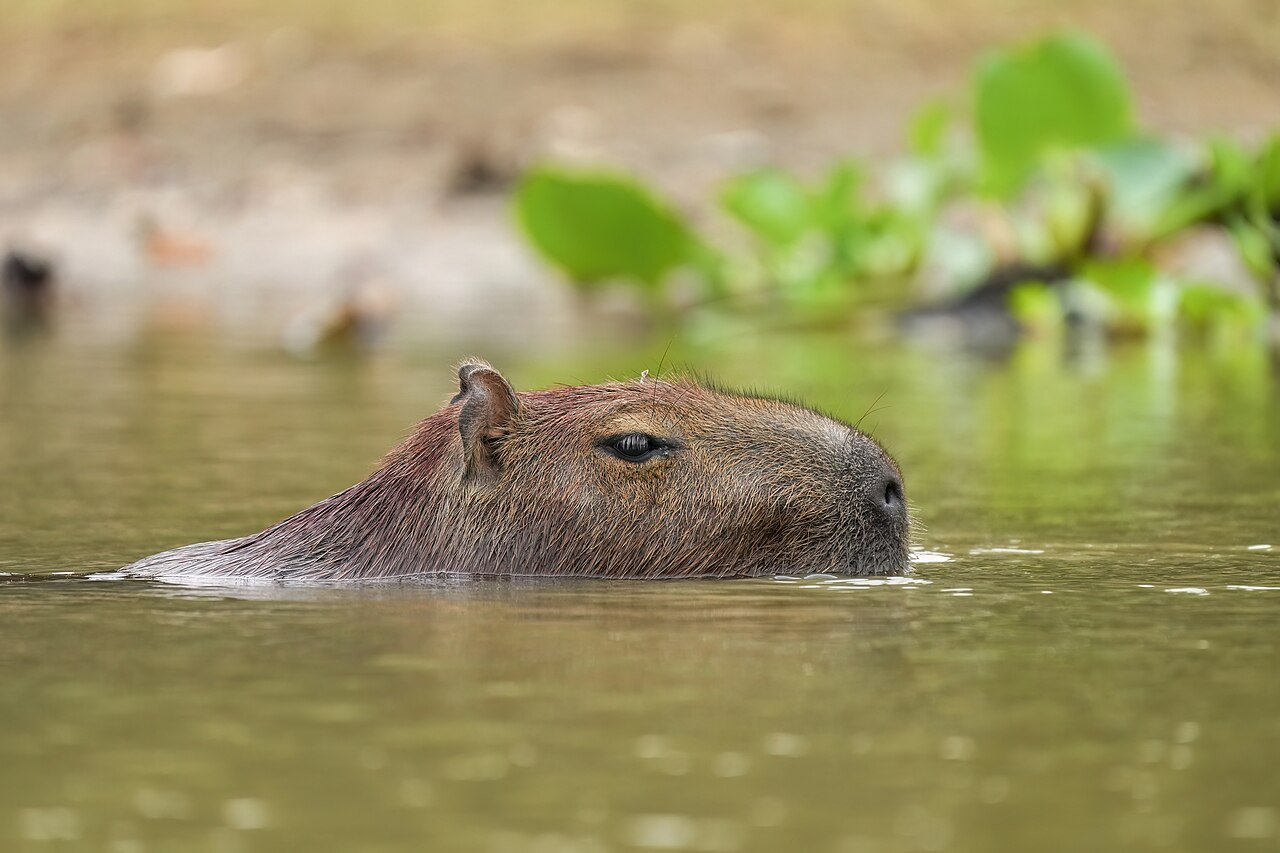
Evolution has sculpted the capybara into a perfect aquatic machine. Their eyes, ears, and nostrils are all positioned high on the top of their heads, a classic adaptation of semi-aquatic mammals. This allows them to remain almost completely submerged, with only these sensory organs breaking the surface. They can sleep in the water, fully concealed from land-based threats, while their senses remain on alert.
Furthermore, their bodies are built for buoyancy and propulsion. Their hind legs are slightly longer than their front legs, giving them a powerful kick for swimming. They possess slightly webbed feet, which act like paddles, allowing them to navigate rivers and flooded grasslands with surprising speed and agility. They can even swim underwater for up to five minutes to escape a predator, and they are known to use aquatic plants as a disguise, hiding beneath floating vegetation to break their silhouette from above.
How Capybaras Love Water Shapes Their Social Structure
The dependence on water does not just influence their individual biology; it dictates the very fabric of their society. Capybaras live in highly structured social groups, typically ranging from 10 to 20 individuals, though groups of up to 100 have been recorded in the dry season. These groups are dominated by a single alpha male, a few subordinate males, several females, and their young. The group's territory is almost always defined by a body of water—a riverbank, a pond, or a flooded savanna.
Water is the social glue that holds these groups together. During the hottest parts of the day, the entire group will wallow in the mud and water, engaging in grooming and social bonding. This communal bathing is not just for cooling off; it is a critical social activity that reinforces hierarchy and reduces aggression within the group. The water serves as a neutral ground where disputes are settled without the risk of overheating.
Interestingly, the alpha male's primary job is to patrol the water's edge, ensuring that no rival males encroach on the group's aquatic territory. The highest-ranking males secure the best, deepest, and safest spots in the water, while lower-ranking individuals are relegated to the shallower, more exposed edges. This creates a strict social pecking order that is visually reinforced every single day through their shared time in the water.
Mating and Birth: An Aquatic Affair
Even the reproductive cycle of the capybara is intrinsically linked to water. Mating almost always occurs in the water. The female will signal her receptivity to the dominant male by whistling and standing in a specific posture at the water's edge. He then mounts her in the shallows, a behavior that offers them both a degree of safety from terrestrial predators during a highly vulnerable act.
The gestation period is about 150 days, and when the time comes to give birth, the female will isolate herself temporarily but will typically give birth on land near the water's edge. The newborns are astonishingly precocial—they are born fully furred, with their eyes open, and are able to walk and swim within just a few hours of birth. This rapid development is crucial, as the mother will lead the pups into the water almost immediately to protect them from predators like jaguars and ocelots that patrol the land. The water is their nursery, their safe haven, and the first environment a young capybara learns to navigate.
The Dietary Reason Behind the Capybaras Love Water
Another chilling truth about the capybara's aquatic obsession is tied directly to its diet. Capybaras are strict herbivores, and their diet consists almost entirely of grasses and aquatic plants. A single adult capybara can consume up to 8 pounds (3.6 kilograms) of vegetation per day. However, the grasses of the South American savannas, known as the Llanos, are incredibly tough, fibrous, and low in nutritional value.
To extract enough nutrients from this poor-quality forage, capybaras have evolved a complex digestive system that relies on fermentation. They are "hindgut fermenters," meaning they use a large cecum to break down cellulose with the help of symbiotic bacteria. However, this process is inefficient compared to ruminants like cows. To compensate, they must eat vast quantities of food, and they often seek out the most tender, nutrient-rich aquatic plants to supplement their diet.
Water is also essential for their digestion. The fermentation process requires a significant amount of water to function correctly. By staying hydrated and consuming water-rich vegetation, they ensure their digestive system operates at peak efficiency. Furthermore, they practice coprophagy—eating their own feces—to extract additional protein and B vitamins that were not absorbed the first time through the digestive tract. This process also requires substantial water intake to keep the system moving. The water is not just a swimming pool; it is their pantry and their digestive aid.
Habitat: The Flooded Savannas as a Lifeline
Capybaras are native to South America, with a range that includes Brazil, Venezuela, Colombia, Argentina, and Uruguay. Their preferred habitat is not just any body of water; they thrive in densely vegetated, marshy areas and along the banks of rivers, lakes, and streams. They are particularly abundant in the Pantanal, the world’s largest tropical wetland, and the Llanos, a vast tropical grassland plain that floods seasonally.
These seasonal floods are a double-edged sword. During the wet season, the flooding creates an expansive aquatic paradise, allowing capybaras to disperse across huge areas and find abundant food. They can graze on fresh, tender shoots that sprout up after the floodwaters recede. However, during the dry season, the water becomes scarce. The rivers shrink, and the ponds dry up. This is when the capybara's dependence on water becomes a matter of intense competition. They will migrate in large herds, sometimes travelling several miles, to find the last remaining deep pools of water. These remaining water sources become crowded, and predation risk skyrockets as jaguars and caimans converge on the same shrinking oasis.
The Ultimate Defense: Water as an Escape Route
In the animal kingdom, the safest place is often the one your predators cannot easily reach. For the capybara, that place is underwater. Their primary terrestrial predators are jaguars, pumas, and ocelots. While these big cats are powerful and fast, they are not particularly adept at swimming. When a capybara senses danger on land, its immediate reaction is to dive into the nearest body of water.
This is not a panicked splash; it is a calculated escape. Capybaras can hold their breath for up to five minutes, allowing them to swim long distances underwater and surface far away from the point of attack. They will often head for the deepest part of the water, where the big cats cannot follow. Even in the water, they face threats from anacondas and caimans, but they are surprisingly agile swimmers and can often outmaneuver these aquatic predators. The water offers a better chance of survival than the open land, where they are slow and cumbersome on their relatively short legs.
Symbiotic Relationships in the Water
The capybara's time in the water has also fostered famous symbiotic relationships. The most iconic is with the yellow-headed caracara and various species of birds, like the wattled jacana. These birds will ride on the capybara's back while it is in the water, picking off ticks, flies, and other parasites. This is a win-win situation: the birds get a free meal, and the capybara gets a cleaning service.
Even more remarkable is the relationship capybaras have with fish, particularly the pacu and the yacare caiman. In some cases, capybaras will stand still in the water while fish nibble at their skin, cleaning away dead tissue and parasites. This behavior, known as "cleaning symbiosis," is rarely seen in mammals but is common in the aquatic world. The capybara's willingness to sit still in the water for long periods makes them a perfect station for these aquatic cleaners, further reinforcing how integral the aquatic environment is to their overall health and well-being.
The Psychological Chill: Do They Actually Enjoy It?
While the biological and survival reasons are clear, the question remains: do capybaras experience joy in the water? While we cannot ask them, observational behavior strongly suggests a positive emotional association. Capybaras are famously docile and relaxed animals. When they are in the water, they display behaviors that indicate low stress and contentment. They will often close their eyes, rest their heads on the bank, and remain completely still for hours. This is not the behavior of an animal in a state of high alert; it is the behavior of an animal that feels safe and comfortable.
In captivity, zookeepers report that capybaras will actively seek out their pools even when the temperature is moderate. They will voluntarily choose to spend the majority of their day in the water, even when alternative shaded areas are available. This suggests that the water provides not just physical relief but also a sense of psychological security. The deep, calm water is their "home base," a place where they feel insulated from the chaos of the terrestrial world. The "chilling truth" is that their love for water is so deeply ingrained that it is not just an instinct; it is likely a core component of their emotional state.
The Impact of Climate Change on Their Aquatic Lives
The future of the capybara's love affair with water is under threat. Climate change is causing more extreme weather patterns in South America, leading to more severe and prolonged droughts. The Pantanal has experienced catastrophic wildfires in recent years, fueled by the drying out of the wetlands. When the water disappears, the capybara's lifeline disappears with it.
During severe droughts, capybaras face a grim choice: stay near the shrinking water source and starve due to a lack of food, or venture into drier areas and risk predation and overheating. This leads to increased mortality, especially among the young and the old. The chilling truth is that their entire survival strategy is predicated on the presence of water. Without it, they are a massive, slow-moving target with no defense. Conservation efforts are now focused on protecting these crucial wetland habitats, recognizing that to save the capybara, we must first save the water they so desperately depend on.
Conclusion: A Lifelong Bond Forged in Evolution
The capybara's affinity for water is not a simple preference; it is a profound, evolutionary adaptation that touches every aspect of its existence. From the structure of its skull to the shape of its feet, from its social hierarchy to its mating rituals, and from its diet to its defense mechanisms, everything about the capybara is a testament to its aquatic lifestyle. The capybaras love water is a survival strategy honed over millions of years, a necessary response to their immense size, their poor insulation, and the constant threat of predators. The next time you see a video of a capybara lounging serenely in a hot spring, remember that you are not just watching a cute animal enjoying a bath. You are witnessing a masterclass in biological adaptation, a creature perfectly in sync with its environment, where the water is not just a home, but the very reason for its existence.