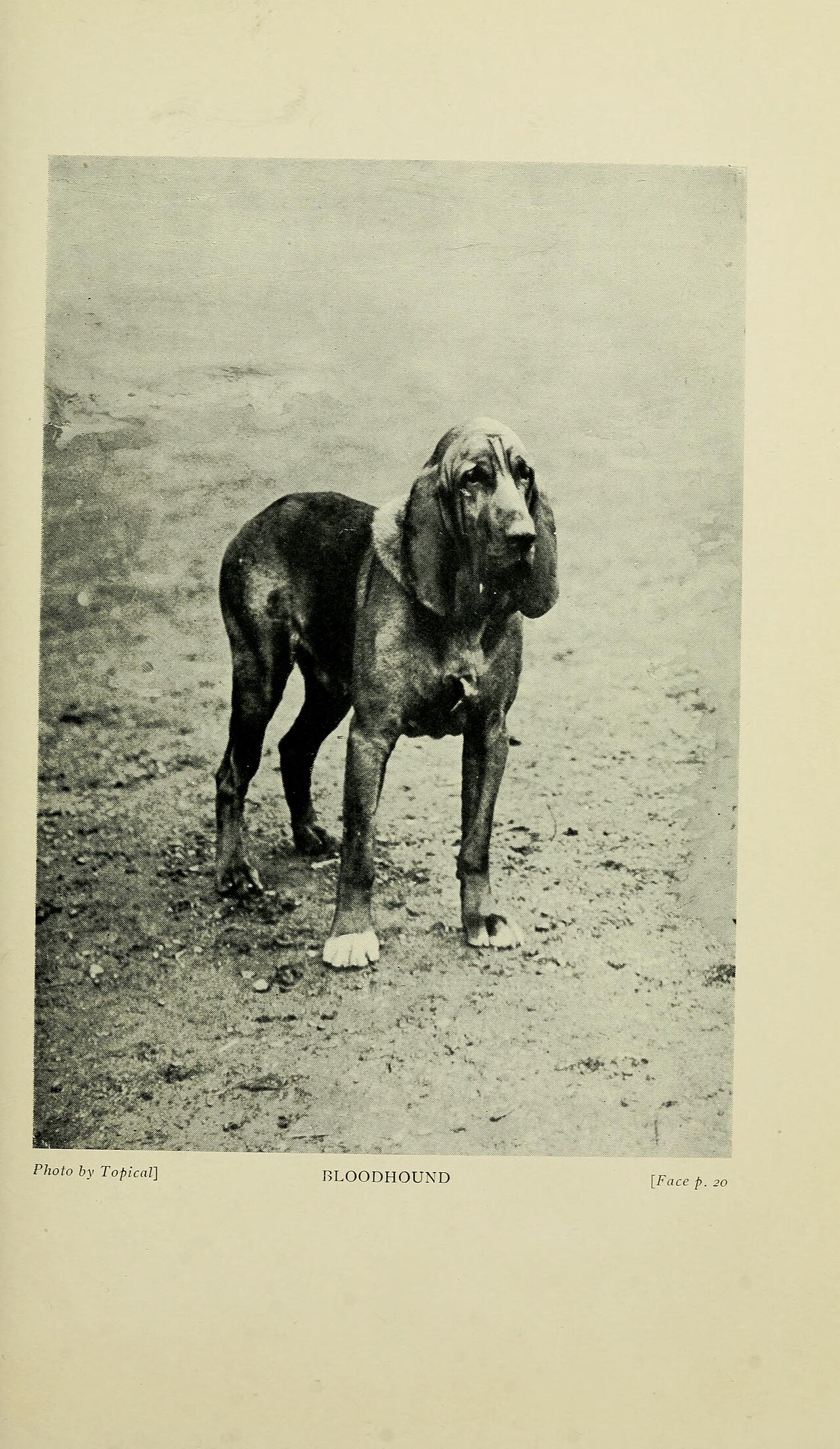
- The Anatomy of the Bloodhound Droopy Face
- Loose, Folding Skin
- The Long, Low-Hanging Ears
- The Drooping Eyes and Eyelids
- The Heavy Jowls and Drooling
- Why the Bloodhound Droopy Face Is a Scent-Tracking Superpower
- Real-World Tracking Records
- The Bloodhound's History and Origins
- What Bloodhounds Are Really Like: Size, Temperament, and Behavior
- Size and Appearance
- Temperament
- Vocalization and Behavior
- Health Considerations Tied to the Droopy Face
- Common Myths About the Bloodhound Droopy Face
- Caring for a Dog With a Bloodhound Droopy Face
- Conclusion: The Droopy Face Is a Feature, Not a Flaw
- ❓ Frequently Asked Questions
The bloodhound droopy face is one of the most recognizable sights in the entire dog world — those long, velvety ears, the heavy wrinkled brow, the sad-looking eyes with their drooping lower lids, and the loose, folding skin that seems to slide forward whenever the dog lowers its nose to the ground. It is a face that has launched a thousand memes and made bloodhounds the unofficial mascots of melancholy. But that famous expression is not really about sadness at all. Every fold, flap, and wrinkle on a bloodhound's head exists for a reason, and most of those reasons trace back to one extraordinary talent: the ability to follow a scent trail that may be days old and miles long. Understanding the bloodhound droopy face means understanding how one of the oldest scent-hound breeds on Earth turned its entire head into a precision smelling instrument.
The Anatomy of the Bloodhound Droopy Face
To understand why a bloodhound looks the way it does, you have to break that face down into its component parts. Each feature is exaggerated far beyond what you see in most breeds, and each one contributes to the dog's scenting ability in a specific way.
Loose, Folding Skin
The most striking feature of the breed is its loose, wrinkly skin, especially across the forehead, cheeks, and neck. A bloodhound's skin is so abundant that it forms deep folds and dewlaps — the heavy, hanging flaps of skin under the jaw and throat. This looseness is not decorative. When a bloodhound puts its nose to the ground, the folds of skin around the face and neck trap and hold scent particles close to the nose, effectively creating a concentrated scent pocket that the dog can sample continuously as it moves. The wrinkles also channel moisture and scent toward the olfactory receptors instead of letting them disperse into the air.
The Long, Low-Hanging Ears
Bloodhound ears are famously long — often reaching well past the jawline and sometimes measuring close to the length of the dog's head. They are thick, soft, and heavy, and they hang low rather than standing upright like those of a German Shepherd or a Husky. Those pendulous ears serve a real function: as the dog swings its head from side to side while tracking, the ears sweep the ground and gently stir up scent particles, wafting them toward the nose. The ears also help shield the face and keep scent from dissipating too quickly in windy conditions.
The Drooping Eyes and Eyelids
Bloodhounds typically have deep-set eyes with loose lower eyelids that droop downward, exposing part of the red inner lining — the conjunctiva. This is what gives the breed its trademark sorrowful, "crying" look. The drooping lids are a byproduct of the same loose skin that covers the rest of the face. In most bloodhounds this is purely cosmetic, though it does make the eyes more prone to collecting dust and discharge, which is why owners need to check and clean around the eyes regularly.
The Heavy Jowls and Drooling
Heavy, hanging jowls surround the bloodhound's large, wide nose and long muzzle. These loose lips and cheeks are part of the scent-trapping system, but they also come with a well-known side effect: bloodhounds drool, sometimes copiously, especially after drinking or eating or when excited. The loose jowls simply cannot hold saliva the way tighter lips do. It is one of the breed's less glamorous but entirely predictable traits.
Why the Bloodhound Droopy Face Is a Scent-Tracking Superpower
The bloodhound's nose is widely considered the finest scenting instrument in the canine world, and the droopy face is built around supporting it. A bloodhound's olfactory system is extraordinary: the breed is estimated to have around 230 million to 300 million scent receptors in its nasal cavity, compared with roughly 5 million in a human and perhaps 100 million to 200 million in many other dog breeds. The portion of the brain devoted to processing smell is proportionally enormous.
All of those receptors need a steady, concentrated supply of scent-laden air to work at full capacity, and that is where the droopy features earn their keep. The long ears, loose neck skin, and heavy jowls work together like a funnel and a trap. As the dog moves with its nose near the ground, the folds of skin create a semi-enclosed zone around the muzzle where scent particles linger. The ears stir the air. The jowls hold moisture that helps scent molecules adhere. The result is a dog that can follow a trail with almost mechanical reliability.
Real-World Tracking Records
Bloodhounds have documented tracking feats that seem almost unbelievable. Well-trained bloodhounds are routinely used by law enforcement and search-and-rescue teams to follow human scent trails that are several days old and many miles long. In one frequently cited case, a bloodhound in the United States reportedly followed a trail more than 130 miles (about 210 kilometers) over rough terrain. Police departments around the world, from the United Kingdom to the United States, have long relied on bloodhounds for man-trailing, and the breed's evidence in court has historically been treated with unusual seriousness because of its reputation for accuracy. The droopy face, in other words, is not a design flaw — it is the physical architecture of one of nature's best scent detectors.
The Bloodhound's History and Origins
The bloodhound is an ancient breed, and its lineage is often traced back to medieval Europe, particularly to the St. Hubert Hound, a scent hound developed by monks at the Abbey of St. Hubert in what is now Belgium. These dogs were bred for centuries with a single-minded focus on tracking ability, and the physical traits that helped them follow scent — loose skin, long ears, heavy jowls, a large nose — were selected for generation after generation. The breed was later refined in England and France, where it became known as the bloodhound, a name that likely refers to its "blooded" or purebred status rather than to any association with violence.
Because bloodhounds were bred for function rather than appearance, their droopy features became more pronounced over time. Dogs with looser skin and longer ears tracked better, so those dogs were bred, and the exaggerated face we know today is the cumulative result of centuries of deliberate selection. The American Kennel Club recognized the breed in 1885, and the bloodhound remains one of the oldest scent-hound breeds in the registry.
What Bloodhounds Are Really Like: Size, Temperament, and Behavior
The droopy face can be misleading. Bloodhounds look slow, sad, and sluggish, but in reality they are large, powerful, and remarkably stubborn working dogs with a gentle streak.
Size and Appearance
Adult male bloodhounds typically stand about 25 to 27 inches (63 to 69 centimeters) at the shoulder and weigh between 90 and 110 pounds (41 to 50 kilograms). Females are somewhat smaller, usually 23 to 25 inches (58 to 64 centimeters) and 80 to 100 pounds (36 to 45 kilograms). They have a short, dense coat that comes in black and tan, liver and tan, or red, often with white markings on the chest, feet, and tail tip. Despite their bulk, they move with a steady, deliberate gait built for long-distance tracking.
Temperament
Bloodhounds are famously gentle, patient, and affectionate with people, including children, and they are generally good-natured with other dogs. They are not aggressive by nature; their working role is trailing, not guarding. That said, they are independent and stubborn, a trait bred into them so they could follow a scent for hours without constant human direction. A bloodhound that catches a scent can become temporarily deaf to its owner's calls, which is why secure fencing and leashed walks are essential.
Vocalization and Behavior
Bloodhounds are vocal dogs with a deep, melodious bay that carries for long distances — a sound designed to let hunters know where the dog is. They also snore loudly, drool freely, and shed moderately. They are not high-energy indoors, but they need daily exercise and, ideally, scent-based activities that let them use their extraordinary noses.
Health Considerations Tied to the Droopy Face
The very features that make the bloodhound such a superb tracker also create some predictable health issues that owners should understand.
- Ear infections: The long, heavy ears trap moisture and warmth, creating an ideal environment for yeast and bacteria. Regular ear cleaning is essential.
- Eye irritation: The drooping lower eyelids (a condition called ectropion) can expose the eye to dust and debris, leading to discharge and irritation. Some bloodhounds require veterinary attention if the condition is severe.
- Skin fold dermatitis: Deep wrinkles, especially around the face and neck, can trap moisture and dirt and become infected if not kept clean and dry.
- Bloat (gastric dilatation-volvulus): Like many large, deep-chested breeds, bloodhounds are at elevated risk for bloat, a life-threatening emergency. Owners should feed smaller meals and avoid vigorous exercise right after eating.
- Hip and elbow dysplasia: The breed's size makes it prone to joint problems, so responsible breeders screen for these conditions.
- Lifespan: Bloodhounds typically live about 10 to 12 years, which is average for a large breed.
None of these issues mean bloodhounds are unhealthy dogs — they are generally robust — but the droopy face does require a bit more grooming and vigilance than a tight-skinned breed would.
Common Myths About the Bloodhound Droopy Face
Because the bloodhound's expression is so distinctive, several myths have grown up around it. The most persistent is that the droopy face means the dog is sad. It does not. The "sad" look is purely structural — it comes from loose skin and drooping eyelids, not from emotion. A bloodhound with a relaxed, happy temperament still looks mournful, and a bloodhound that is genuinely unhappy looks much the same as always.
Another myth is that the droopy face makes bloodhounds lazy or slow-witted. In fact, bloodhounds are intelligent in a specific, independent way. They are problem-solvers when a scent is involved, and their stubbornness is a form of focus. They may ignore a command, but they are rarely confused.
A third misconception is that the wrinkles are a sign of age. Bloodhound puppies are already wrinkly; the folds develop early and deepen as the dog matures. The face is a breed characteristic, not a symptom of aging.
Caring for a Dog With a Bloodhound Droopy Face
Living with a bloodhound means accepting a certain amount of maintenance. Owners should plan to clean the ears at least weekly, check and wipe the eyes daily, and keep the facial folds clean and dry to prevent dermatitis. A damp cloth or pet-safe wipe works well for the folds, and a veterinarian can recommend an ear cleaner suited to the breed. Because bloodhounds drool, many owners keep towels handy near the food and water bowls and around the couch.
Exercise should include plenty of sniffing time. A bloodhound that is allowed to track — even just following a scent trail in a park or a fenced yard — is a happier, more fulfilled dog. Scent games, nose work classes, and hide-and-seek with treats are excellent outlets for the breed's instincts. Grooming needs are modest: the short coat requires only occasional brushing, though the ears and eyes need regular attention.
Conclusion: The Droopy Face Is a Feature, Not a Flaw
The bloodhound droopy face is one of the most distinctive and misunderstood features in the dog world. What looks like permanent sadness is actually a brilliantly engineered scenting system — loose skin that traps scent, long ears that stir the air, heavy jowls that hold moisture, and drooping eyelids that are simply part of the package. Centuries of breeding for tracking ability produced a dog whose entire head is optimized for following a trail that other dogs, and certainly humans, could never detect. So the next time you see a bloodhound with its mournful expression and its nose glued to the ground, remember: that face is not sad. It is working. And it is one of the most remarkable pieces of natural engineering you will ever meet.
❓ Frequently Asked Questions
💬 Why do Bloodhounds have so much loose, wrinkly skin on their faces?
The loose skin and long ears are largely the result of centuries of selective breeding for scent-tracking ability. Those folds and flaps help trap and channel scent particles toward the nose, and the heavy jowls keep scent lingering near the muzzle as the dog works a trail.
💬 Do a Bloodhound's droopy eyes mean it's sad or unhealthy?
Not usually—droopy eyes and visible lower lids (ectropion) are a normal breed trait, and the mournful look doesn't reflect the dog's mood. However, because the eyes are more exposed, Bloodhounds are prone to eye irritation and infection, so routine cleaning and vet checks are important.
💬 Why do Bloodhounds drool so much, and is it related to their droopy faces?
Yes, it's directly related. The loose, heavy jowls and pendulous lips don't hold saliva in as tightly as tighter-lipped breeds, so drool escapes easily, especially after eating, drinking, or exercise. It's normal for the breed, though excessive drooling can sometimes signal a health issue.
💬 Does all that loose facial skin cause health problems in Bloodhounds?
It can. The deep folds trap moisture and debris, making skin fold dermatitis and ear infections more common, and the droopy eyelids can leave eyes prone to irritation. Regular cleaning of the wrinkles and ears, plus vet monitoring, keeps most of these issues manageable.