- The Short Answer: Corgi Short Legs Are a Herding Adaptation
- Why Not Just Use a Taller Dog?
- The Genetics Behind Those Stubby Legs
- It Is Not a Disease — But It Does Carry Risks
- How Corgi Short Legs Helped Drive Cattle
- Ducking, Darting, and Dropping
- Physical Traits That Go With the Short Legs
- Why the Long Body Matters Too
- A Brief History of the Welsh Cattle Dog
- From Farm to Family
- Behavior and Temperament: A Big Dog in a Small Package
- Exercise and Diet
- Common Myths About Corgi Short Legs
- Myth: Corgis Were Bred to Look Cute
- Myth: Short Legs Make Corgis Slow
- Myth: All Short-Legged Dogs Are the Same
- Health and Lifespan: Living Well With a Long, Low Body
- Conclusion: Small Legs, Big Purpose
- ❓ Frequently Asked Questions
The question of why corgis have such corgi short legs has charmed dog lovers for centuries, and the answer is far more interesting than simple cuteness. These stubby, powerful little dogs were not bred to look adorable on the internet — they were engineered by Welsh farmers to do a specific, demanding job on the cattle farm. Their short legs are a working trait, a piece of living agricultural technology that helped a small dog survive kicks, control unruly cows, and move through a rugged landscape. In this article, we will dig into the genetics, history, and behavior behind those famous low-slung frames, and explain why the corgi's proportions are a near-perfect solution to the problem of herding cattle.
The Short Answer: Corgi Short Legs Are a Herding Adaptation
Corgis belong to the AKC Herding Group, and everything about their body shape reflects that heritage. The two recognized breeds — the Pembroke Welsh Corgi and the Cardigan Welsh Corgi — were developed in Wales to drive cattle, sheep, and ponies from one pasture to another. A taller dog working cattle faces a serious hazard: a cow's kick can land squarely on the dog's ribs or head. A dog with a low center of gravity can drop under the swinging hoof and the flailing leg, avoiding the most dangerous part of the blow.
Short legs also let a corgi move in a way that cattle find irritating and motivating. When a corgi nips at the heels of a cow, it ducks low and darts away before the animal can retaliate. That combination of speed, agility, and a low profile makes the corgi an effective "heeler" — a dog that drives stock forward by working the rear of the herd rather than the front.
Why Not Just Use a Taller Dog?
Farmers did use taller herding dogs, and many still do. But corgis filled a niche that larger dogs could not. On small Welsh farms, cattle often had to be moved along narrow lanes, through gates, and across uneven ground. A compact dog could squeeze through gaps, turn on a dime, and work in tight spaces where a bigger dog would be clumsy. The corgi's size was not a limitation — it was a specialized tool.
The Genetics Behind Those Stubby Legs
The scientific explanation for corgi short legs comes down to a genetic condition called chondrodysplasia, sometimes described more broadly as chondrodystrophy. This is the same type of genetic change that produced dachshunds, basset hounds, and Scottish terriers. In these breeds, a mutation affects the development of cartilage, particularly in the long bones of the legs. The result is that the leg bones stop growing earlier than they otherwise would, while the rest of the body develops normally.
In corgis, this is caused largely by a mutation involving a gene known as FGF4 (fibroblast growth factor 4), which acts as a retrovirus-derived insertion in the dog genome. This mutation is inherited in a dominant pattern, meaning a dog only needs one copy of the gene to show the short-legged trait. Breeders deliberately selected for this trait for generations because it produced dogs that worked well with cattle.
It Is Not a Disease — But It Does Carry Risks
Chondrodysplasia in corgis is considered a breed characteristic rather than a defect, but it does come with health considerations. The same cartilage abnormality that shortens the legs can affect the spine. Corgis are prone to intervertebral disc disease (IVDD), a condition in which the discs between the vertebrae degenerate and can rupture, causing pain, weakness, or even paralysis. Responsible owners manage this risk by keeping their corgis lean, limiting high-impact jumping, and using ramps or steps instead of letting the dog leap off furniture.
It is worth noting that the Pembroke and the Cardigan carry this trait somewhat differently, and the two breeds have separate breed standards and histories. Both, however, share the low-slung, long-bodied silhouette that defines the corgi look.
How Corgi Short Legs Helped Drive Cattle
To understand the corgi's working style, you have to picture a Welsh farm in the 10th century or earlier. Cattle were valuable, semi-wild animals, and moving them was dangerous work. The corgi's job was to control the herd through a method called heeling — nipping at the heels of the cattle to push them forward and keep them in line.
A heeling dog must be fast and evasive. When a corgi darts in to nip, the cow will often kick backward. A taller dog would take that kick to the chest or head. The corgi's short legs and long body let it flatten itself close to the ground and slip under the kick, then spring back into position. Farmers quickly recognized that the low-slung dogs were not just surviving the work — they were thriving at it.
Ducking, Darting, and Dropping
Corgis are famous for their ability to "drop" — to flatten themselves instantly against the ground when threatened. This behavior, combined with their short legs, makes them hard targets. A cow's kick often passes harmlessly over the dog's back. The corgi then pops up and resumes working, herding the animal exactly where the farmer wants it.
This is also why corgis are known for their speed and surprising athleticism. Despite their stubby legs, Pembroke Welsh Corgis can run at impressive speeds for short bursts, and they are capable of herding not just cattle but also sheep, ducks, and even ponies. Their low build gives them a mechanical advantage: a lower center of gravity means better balance and quicker direction changes.
Physical Traits That Go With the Short Legs
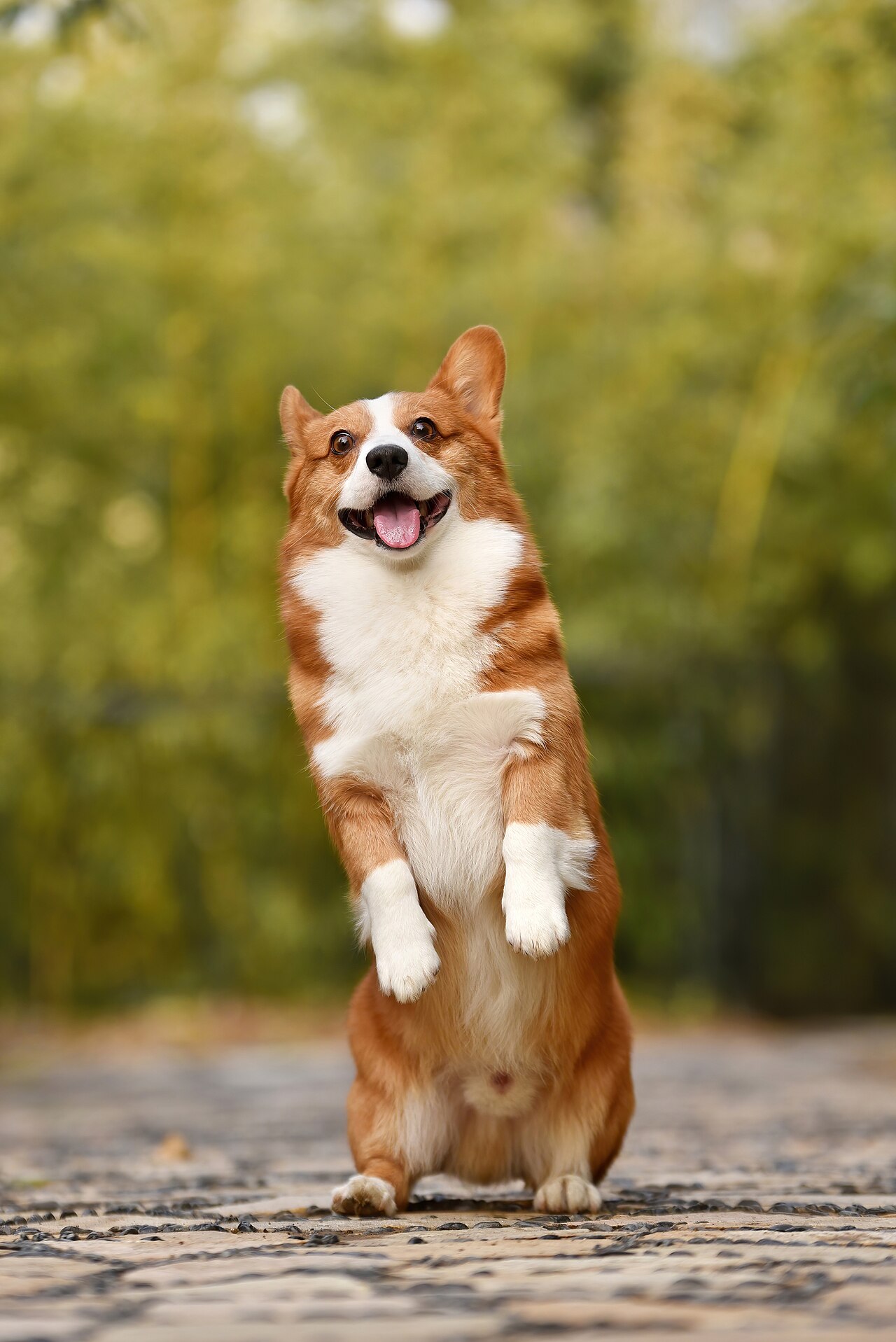
The corgi's short legs are only one part of a carefully balanced working design. Breed standards describe a dog that is "long and low," with a body roughly 40 percent longer than it is tall at the shoulder. A typical Pembroke Welsh Corgi stands about 10 to 12 inches (25 to 30 cm) at the shoulder and weighs between 22 and 30 pounds (10 to 14 kg). The Cardigan Welsh Corgi is slightly larger, standing 10.5 to 12.5 inches (27 to 32 cm) and weighing 25 to 38 pounds (11 to 17 kg).
Other features support the herding job:
- A deep chest: Provides room for the heart and lungs a working dog needs for stamina.
- Strong, well-muscled hindquarters: Give the corgi the power to accelerate and turn quickly.
- A thick double coat: Insulates against the cold, wet Welsh climate and protects against brambles and bites.
- Large, erect ears: Capture sound from many directions, helping the dog track stock and respond to the farmer's voice.
- A fox-like, alert face: Reflects the breed's intelligence and constant readiness to work.
Why the Long Body Matters Too
The corgi's elongated body is not just a side effect of short legs. A longer body gives the dog a longer stride relative to its height, which helps it keep up with moving cattle. It also provides space for the powerful muscles needed to drive forward and change direction. In other words, the corgi is built like a small, sturdy all-terrain vehicle: low to the ground, stable, and surprisingly quick.
A Brief History of the Welsh Cattle Dog
The corgi's story begins in Wales, where the breed was developed by farmers and drovers. The name "corgi" is often translated from Welsh as "dwarf dog" or "cor dog," with "cor" meaning dwarf or small. Some sources connect the word to the Welsh "cur" or "curgi," referring to a working dog. Whatever the exact origin, the name reflects the dog's defining trait: it was a small dog doing a big dog's job.
The Pembroke Welsh Corgi and the Cardigan Welsh Corgi were once considered the same breed, but they were separated in the 1930s. The Pembroke is the more familiar of the two, largely because of its association with Queen Elizabeth II, who owned more than 30 corgis during her reign. The Queen's first corgi, Susan, was a gift for her 18th birthday in 1944, and the line continued for decades. That royal connection helped turn the Pembroke into one of the most recognizable dog breeds in the world.
From Farm to Family
As farming practices changed and mechanical equipment replaced drovers, the corgi's working role declined. But the breed's intelligence, loyalty, and distinctive look made it a popular family companion. Today, corgis rank among the most beloved small breeds in the United States and the United Kingdom. The Pembroke Welsh Corgi consistently appears in the AKC's top 20 most popular breeds.
Behavior and Temperament: A Big Dog in a Small Package
Corgis are famously bold, alert, and intelligent. They are herding dogs at heart, which means they are often busy, vocal, and eager to have a job to do. Owners frequently describe them as "a big dog in a small body." Without adequate exercise and mental stimulation, corgis can become bored, which may lead to barking, herding family members, or destructive behavior.
Their herding instinct shows up in everyday life. A corgi may try to herd children, cats, or other pets by nipping at their heels — a behavior that needs gentle redirection through training. Corgis are highly trainable and respond well to positive reinforcement, which is why they excel in dog sports such as agility, obedience, rally, and herding trials.
Exercise and Diet
A healthy adult corgi needs roughly 30 to 60 minutes of activity per day, split into walks, play sessions, and training games. Because they are prone to obesity, portion control matters. Most adult corgis do well on 1 to 1.5 cups of high-quality dog food per day, divided into two meals, though the exact amount depends on age, activity level, and body condition. Treats should be limited and counted as part of the daily calorie total. Keeping a corgi slim is one of the best ways to reduce stress on its long spine and short legs.
Common Myths About Corgi Short Legs
Because corgis are so popular online, a number of myths have grown up around their legs. Let's clear up a few of the most common ones.
Myth: Corgis Were Bred to Look Cute
Cuteness was never the goal. The corgi's proportions were selected for function. Farmers wanted a dog that could work cattle without getting injured, and the short-legged, long-bodied shape was the result. The fact that the same shape looks adorable to humans is a happy accident of evolution and selective breeding.
Myth: Short Legs Make Corgis Slow
Corgis are not slow. They are quick, agile, and capable of impressive acceleration. Their low build gives them excellent balance and turning ability. In herding trials, corgis move with remarkable speed and precision, cutting off stock and controlling movement with practiced skill.
Myth: All Short-Legged Dogs Are the Same
Chondrodysplasia appears in many breeds, but corgis are not simply "small dachshunds." Each breed was developed for a different job, with different body proportions, temperaments, and health profiles. The corgi's herding heritage shaped its personality and working style in ways that set it apart.
Health and Lifespan: Living Well With a Long, Low Body
A well-cared-for corgi typically lives 12 to 15 years, with some individuals reaching 16 or more. That is a long lifespan for a dog of its size, and it means owners should plan for a decade and a half of care. The most important health issues to monitor include:
- Intervertebral disc disease (IVDD): The leading concern for long-backed breeds. Symptoms include back pain, reluctance to move, wobbling, or loss of bladder control. Early veterinary care is critical.
- Hip dysplasia: Abnormal development of the hip joint, which can cause lameness and arthritis.
- Degenerative myelopathy: A progressive spinal cord disease that affects some corgis in old age.
- Obesity: A major aggravating factor for joint and spine problems.
- Von Willebrand disease: A bleeding disorder seen in some lines, especially in Pembrokes.
Regular veterinary checkups, a healthy weight, and safe exercise habits go a long way toward keeping a corgi comfortable throughout its life. Owners should also be careful about stairs and furniture, using ramps or carrying the dog when possible to protect the spine.
Conclusion: Small Legs, Big Purpose
Corgi short legs are not a quirk of fashion or a random accident of breeding. They are the result of centuries of careful selection by Welsh farmers who needed a dog that could herd cattle without being kicked to pieces. The same chondrodysplasia mutation that shortened the corgi's legs also gave it a low center of gravity, quick reflexes, and the agility to duck under a cow's hooves and keep working. Add a long body, a bold personality, and a thick weatherproof coat, and you have one of the most effective small herding dogs ever developed. Today, most corgis live as beloved family pets rather than farm workers, but their short legs remain a living reminder of their working past — a piece of agricultural history trotting happily across the living room floor.
❓ Frequently Asked Questions
💬 Are corgi short legs caused by a health problem?
No, short legs in Corgis are caused by a naturally bred genetic trait called chondrodysplasia, not a disease. Breeders selected for this trait over centuries because it helped Corgis herd cattle effectively.
💬 Why were short legs useful for herding cattle?
A Corgi's low profile lets it duck under a cow's kicking hooves and nip at the heels while staying out of reach. This made them agile, hard-to-hit herders in the field.
💬 Do Corgis with short legs have more health issues?
Their short legs can increase the risk of back problems like intervertebral disc disease, so weight management and limiting jumping or stairs are important. Otherwise, Corgis are generally sturdy, healthy dogs.
💬 Can Corgis still run and exercise with short legs?
Yes, Corgis are surprisingly fast and athletic despite their short legs and were bred to work all day. They just need regular, moderate exercise and joint-friendly activities to stay healthy.