- What Is Cud, and Why Do Cows Chew Cud?
- The Chewing Cycle in Numbers
- Inside the Four-Stomach Truth: The Rumen, Reticulum, Omasum, and Abomasum
- The Rumen: A Fermentation Vat
- The Reticulum: The Sorting Gate
- The Omasum: The Water Press
- The Abomasum: The True Stomach
- Why Do Cows Chew Cud Instead of Chewing Properly the First Time?
- Rumination and the Microbiome
- How Cows Chew Cud: The Mechanics of Rumination
- Signs of Healthy Rumination
- Diet, Habitat, and the Daily Life of a Cud Chewer
- Lifespan and Life Stages
- When Cud Chewing Goes Wrong: Bloat, Acidosis, and Other Problems
- What Farmers Do to Support Rumination
- The Four-Stomach Truth in Perspective
- ❓ Frequently Asked Questions
If you have ever stood at a pasture fence and watched a herd of cattle, you have probably noticed that many of them seem to be chewing something long after breakfast is over — a slow, rhythmic, sideways grinding that looks almost like chewing gum. The truth is that cows chew cud as part of one of the most remarkable digestive systems in the animal kingdom: a four-chambered stomach that turns tough, fibrous grass into usable energy. This process, called rumination, is not a quirky habit or a sign of boredom. It is a biological necessity that has shaped the cow's body, its behavior, and even its daily schedule for millions of years. In this article, we will walk through the four-stomach truth behind cud chewing, explain what cud actually is, explore why cattle regurgitate their food on purpose, and look at what happens when this system goes wrong.
What Is Cud, and Why Do Cows Chew Cud?
Cud is a small, soft ball of partially digested plant material that a cow brings back up from its stomach into its mouth to chew again. When a cow first eats, it does not chew grass into a fine paste the way a human chews a salad. Instead, it tears off mouthfuls of grass or hay with its tongue and lower teeth, swallows them quickly with only a rough, cursory grind, and moves on to the next bite. The swallowed material, called the bolus, travels down the esophagus into the first chamber of the stomach, where it soaks in fluid and begins to be broken down by microbes.
Later, often while resting or lying down, the cow regurgitates a bolus of this softened material back into its mouth. It chews this cud slowly and thoroughly — around 50 to 70 chews per bolus, though counts vary — mixing it with saliva before swallowing it again. This second, more thorough chewing is the key to the entire system: it dramatically increases the surface area of the plant material, making it far easier for the cow's gut microbes to ferment and extract nutrients from it. A cow may spend six to eight hours a day chewing cud, producing 100 to 150 liters of saliva in the process, which helps buffer the acids produced during fermentation.
The Chewing Cycle in Numbers
- Chews per minute: roughly 55 to 65 during active rumination.
- Time spent ruminating: about 6 to 8 hours per day in most adult cattle.
- Boli per day: a cow may regurgitate 400 to 600 cuds daily.
- Saliva production: 100 to 150 liters per day, much of it during chewing.
- Resting rumination: most cud chewing happens when the cow is lying down and relaxed.
Inside the Four-Stomach Truth: The Rumen, Reticulum, Omasum, and Abomasum
People often say cows have four stomachs, but technically they have one stomach with four distinct chambers. Each chamber has a specialized job, and understanding them explains why cows chew cud in the first place. The four chambers are the rumen, the reticulum, the omasum, and the abomasum, and food passes through them in roughly that order.
The Rumen: A Fermentation Vat
The rumen is the largest chamber, holding roughly 100 to 150 liters in a mature cow — about the volume of a large bathtub. It is essentially a fermentation tank packed with trillions of bacteria, protozoa, and fungi that break down cellulose, the tough structural carbohydrate in plant cell walls that humans and most animals cannot digest. These microbes are the real reason cows chew cud: the cow is not digesting grass itself so much as farming microbes that digest it on the cow's behalf. The rumen is warm, anaerobic, and constantly churning, and its microbial population can weigh several kilograms.
The Reticulum: The Sorting Gate
The reticulum is a smaller, honeycomb-lined chamber that sits next to the rumen and works closely with it. It acts as a sorting gate, separating fine, well-fermented particles from coarse, fibrous material. The fine material moves onward, while the coarse material is pushed back up the esophagus to be re-chewed as cud. This is why rumination is so closely tied to particle size: the cow keeps regurgitating and re-chewing until the material is small enough to pass through the reticulum's filter.
The Omasum: The Water Press
The omasum, sometimes called the "manyplies" because of its folded, book-like interior, absorbs water and some minerals from the digesta and grinds it further. It is a relatively small chamber compared with the rumen, but its folded structure gives it a large surface area for absorption.
The Abomasum: The True Stomach
The abomasum is the only chamber that works like a human stomach, secreting acid and enzymes to break down proteins. By the time food reaches the abomasum, it has been fermented, re-chewed, and processed, so the cow can extract nutrients from plant material that would otherwise be almost completely indigestible.
Why Do Cows Chew Cud Instead of Chewing Properly the First Time?
It seems inefficient to swallow food and then bring it back up, but for a grazing animal, the strategy makes excellent sense. Cows are prey animals that live in open grassland, and standing still for hours to chew every mouthful would leave them exposed to predators. By grabbing large mouthfuls quickly and swallowing them, a cow can fill its rumen in a relatively short time and then retreat to a safe place to chew cud at leisure. The rumen acts as a storage tank, letting the cow eat fast and digest slowly.
There is also a mechanical reason. Grass is abrasive and full of silica, and chewing it thoroughly in one pass would wear down a cow's teeth quickly. By softening the plant material in the rumen first and then chewing it as cud, the cow reduces wear on its molars. Cud chewing also stimulates saliva production, and saliva is essential for keeping the rumen's pH stable — without enough buffering saliva, the rumen becomes acidic and the microbial community suffers.
Rumination and the Microbiome
The relationship between a cow and its rumen microbes is a true symbiosis. The microbes get a warm, food-rich environment, and the cow gets energy from volatile fatty acids produced during fermentation, plus a supply of microbial protein that is digested later in the abomasum and intestines. When a cow chews cud, it is not just breaking down food — it is tending the microbial garden inside its stomach, keeping the fermentation running smoothly.
How Cows Chew Cud: The Mechanics of Rumination
Rumination is a coordinated reflex that involves the esophagus, the diaphragm, and the stomach chambers. A bolus of material is pushed up from the reticulum into the esophagus by a reverse wave of contraction, and the cow then opens its mouth slightly and lets the bolus drop onto its tongue. It chews the cud with a slow, circular motion of the jaw, mixing it with saliva, and then swallows it again. The whole cycle takes about a minute or so per bolus.
Cows are not the only ruminants; sheep, goats, deer, giraffes, and bison all chew cud. But cattle are among the most efficient, and their rumination is closely tied to their diet. Cattle are grazers rather than browsers, and their diet of grass and hay is high in fiber, which requires extensive microbial fermentation and repeated chewing. When cattle are fed a diet that is too high in grain and too low in fiber, rumination decreases, and the risk of digestive problems such as rumen acidosis rises.
Signs of Healthy Rumination
- Steady chewing: a relaxed cow chewing cud with a regular rhythm is usually a healthy cow.
- Lying down: most rumination happens when cattle are resting, often in a sternal position with legs tucked under.
- Full rumen: a healthy rumen has a rounded, firm feel on the left side of the cow's abdomen.
- Normal appetite: cows that stop chewing cud often stop eating, which is an early warning sign of illness.
Diet, Habitat, and the Daily Life of a Cud Chewer
Cattle are domesticated descendants of wild aurochs, and their digestive system is built for a diet of grasses, legumes, and other forage. A typical cow eats roughly 2 to 2.5 percent of its body weight in dry matter each day, so a 600-kilogram cow may consume 12 to 15 kilograms of dry feed — the equivalent of a large bale of hay — and drink 40 to 80 liters of water. The cow's daily routine revolves around grazing, resting, and ruminating, with rumination filling much of the time between meals.
Domestic cattle live in herds and are highly social, and group living influences when they chew cud. Cattle tend to synchronize their activities, so a herd may graze together, then lie down together to ruminate. This synchronized behavior helps protect individuals from predators, since some animals are always alert while others rest. Wild ruminants such as wildebeest and bison show the same pattern, and the habit of chewing cud in a relaxed, communal setting is one of the most distinctive features of herd life.
Lifespan and Life Stages
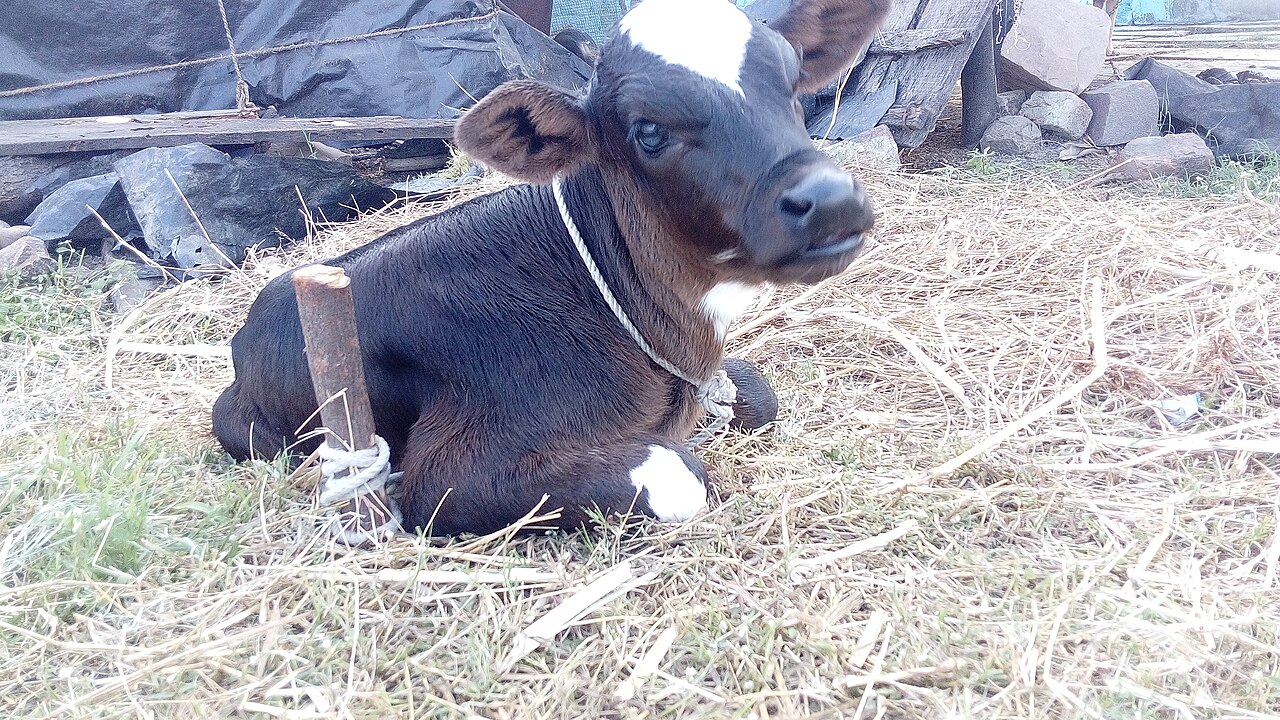
Cattle typically live 15 to 20 years, though beef cattle are usually slaughtered much earlier and dairy cows may be culled after several lactations. Calves are born without a fully developed rumen; for the first few weeks of life, they function more like monogastric animals, digesting milk in the abomasum. As they begin eating solid food, the rumen develops and the microbial population establishes itself, and calves start chewing cud at around three to four weeks of age. This transition is a critical period, and farmers often provide calves with hay and starter feed to encourage healthy rumen development.
When Cud Chewing Goes Wrong: Bloat, Acidosis, and Other Problems
Because rumination is so central to bovine health, problems with the process are serious. One of the most common is bloat, in which gas produced by fermentation becomes trapped in the rumen and causes the left side of the abdomen to swell. Bloat can be life-threatening if not treated, and it often occurs when cattle graze lush legumes such as clover or alfalfa. Cows that cannot chew cud effectively may also develop rumen acidosis, a condition in which the rumen becomes too acidic, often after eating too much grain or highly fermentable feed. Acidosis can reduce rumination, cause lameness, and even lead to death in severe cases.
Other issues include hardware disease, in which cattle accidentally swallow sharp metal objects that pierce the reticulum, and rumen stasis, in which the rumen stops contracting. Farmers and veterinarians monitor rumination carefully, and modern technology has made this easier: some dairy farms use rumination collars or ear tags that track chewing activity and alert managers when a cow's rumination drops, which can be an early sign of illness. A cow that stops chewing cud is often the first cow in the herd to show signs of a problem.
What Farmers Do to Support Rumination
- Provide adequate fiber: long forage such as hay and grass stimulates chewing and saliva flow.
- Manage grain carefully: gradual introduction of concentrates helps prevent acidosis.
- Monitor rumination: sensor technology can detect drops in chewing activity before other symptoms appear.
- Ensure fresh water: hydration supports saliva production and rumen function.
- Watch for bloat: especially when cattle graze legume-rich pastures.
The Four-Stomach Truth in Perspective
The image of a cow standing in a field, chewing rhythmically with a faraway look, is one of the most familiar sights in agriculture, yet it represents an extraordinary biological process. Cows chew cud because their four-chambered stomach allows them to eat quickly, store food in the rumen, and then digest it slowly with the help of trillions of microbes. Rumination turns fibrous grass into energy, buffers the rumen with saliva, and keeps the whole system running smoothly. It is a partnership between animal and microbe that has allowed cattle and other ruminants to thrive on grasslands around the world, and it explains why a cow's day is organized around grazing, resting, and chewing.
Far from being a strange habit, cud chewing is a sign of health and a window into one of nature's most efficient digestive strategies. Whether you are watching a dairy herd in the Netherlands, a beef herd in Texas, or a herd of wild bison on the American plains, the slow, steady rhythm of rumination is a reminder that even the most ordinary farmyard behavior can hide a remarkable story. The next time you see a cow chewing cud, you will know exactly what is happening inside those four stomach chambers — and why it matters so much.
❓ Frequently Asked Questions
💬 Why do cows chew cud?
Cows chew cud to break down tough plant material that their stomachs can't digest in one pass. After initially swallowing grass, they bring it back up and chew it again to expose more surface area to digestive microbes. This rumination lets them extract far more nutrients from fibrous food than a single chewing would allow.
💬 How many stomachs does a cow actually have?
A cow has one stomach with four distinct compartments: the rumen, reticulum, omasum, and abomasum. The rumen is where cud formation and fermentation mainly happen, while the abomasum is the true acid-digesting stomach. So it's one stomach in four parts, not four separate stomachs.
💬 How long does a cow spend chewing cud each day?
Cows typically spend around six to eight hours a day chewing cud, usually while resting. They may produce 40 to 60 chews per minute and regurgitate dozens of cud boluses daily. This schedule is a normal sign of a healthy, well-fed cow.
💬 Is chewing cud a sign a cow is healthy?
Yes, regular cud chewing is a good indicator of a healthy rumen and a balanced diet. A cow that stops chewing cud may be stressed, sick, or eating feed that's too low in fiber. Farmers often watch cud-chewing activity as an early warning sign of digestive problems.