- The Anatomy of a Bray: Why Donkeys Bray With Such Power
- Emotional Triggers: The Most Common Reasons Donkeys Bray
- Separation Anxiety and the Call for Companionship
- Excitement and Anticipation
- Warning and Territorial Defense
- Do All Donkeys Bray? Unpacking the "Silent" Donkey Myth
- The Social Context: How Donkeys Use Braying to Manage Their Herd
- Coordination and Movement
- Greeting Rituals
- The Honest Truth About "Stubborn" Braying: Misunderstanding Silence and Sound
- Braying in the Wild vs. Domestication: An Evolutionary Perspective
- Health and Behavioral Implications: When Braying Becomes a Problem
- Conclusion: Listening to the Language of the Donkey
- ❓ Frequently Asked Questions
The question of why donkeys bray is one that has echoed through farmyards and rural landscapes for thousands of years, and the honest truth is that this iconic, raucous call is far more complex than a simple noise—it is a sophisticated language of emotion, communication, and survival. When you hear that distinctive, rhythmic "hee-haw," you are listening to a donkey expressing everything from loneliness and excitement to a warning of danger, all shaped by their evolution as desert dwellers.
The Anatomy of a Bray: Why Donkeys Bray With Such Power
To understand the purpose of the donkey's bray, you first have to appreciate the physical machinery behind it. Unlike a horse's neigh, which is typically a sharp, nasal exhale, a donkey's bray is a two-part vocalization that requires immense control over the respiratory system. The call begins with a series of deep, guttural "hee" sounds produced as the donkey forces air out of its lungs, causing the vocal cords to vibrate at a low frequency. This is immediately followed by a high-pitched, piercing "haw," which is created by a rapid contraction of the laryngeal muscles.
The result is a sound that can reach up to 90 decibels—roughly the volume of a lawnmower or a heavy truck passing by—and it can travel for over two miles in open terrain. This is no accident. Donkeys evolved in the arid, rocky landscapes of North Africa and the Middle East, where visual contact is often blocked by hills and valleys. Their bray is designed to be a long-distance communication tool, cutting through wind and heat shimmer to reach companions or rivals that may be out of sight.
Furthermore, the bray's unique, sawing rhythm is not random. Each donkey has a slightly different vocal signature, much like a human fingerprint. Research into animal acoustics has shown that the frequency and duration of the "hee" and "haw" segments vary from individual to individual, allowing donkeys to recognize each other by sound alone, even in a large herd. This is crucial for maintaining social bonds in environments where separation is common.
Emotional Triggers: The Most Common Reasons Donkeys Bray
While the physical ability to bray is impressive, the true reason for the behavior lies in the donkey's emotional state. Donkeys are not indiscriminate noisemakers; they bray with purpose and intention. Understanding the context is key to deciphering what your donkey is trying to tell you.
Separation Anxiety and the Call for Companionship
The most frequent and heart-wrenching reason a donkey brays is loneliness. Donkeys are intensely social animals, forming lifelong pair bonds with other donkeys, horses, or even goats and cattle. In the wild, a solitary donkey is a vulnerable donkey. When a bonded companion is moved out of sight, the remaining donkey will often bray repeatedly, for minutes or even hours, in a desperate attempt to re-establish contact. This is not a sign of stubbornness, but a genuine panic response. The bray acts as a beacon, saying, "I am here, where are you?"
Excitement and Anticipation
Not all brays are born of distress. Many donkeys bray with sheer joy. The sound of a feed bucket rattling, the sight of a familiar human approaching with a halter, or the return of a pasture mate after a day apart can trigger a series of enthusiastic brays. These brays are typically shorter, higher-pitched, and delivered in rapid succession. You may even notice a donkey "talking" to itself with a low, grumbling bray as it anticipates a treat, a behavior that owners often find endearing.
Warning and Territorial Defense
Donkeys have a well-earned reputation as excellent guardians for sheep and cattle, largely because of their vocal warnings. When a donkey perceives a threat—be it a stray dog, a coyote, or an unfamiliar person—it will emit a sharp, aggressive bray that is fundamentally different from a distress call. This warning bray is often accompanied by a stiff posture, laid-back ears, and a direct stare. The sheer volume and harsh tone are designed to startle the predator and alert the rest of the herd to danger. In this context, the bray is a defensive weapon, not a plea for help.
Do All Donkeys Bray? Unpacking the "Silent" Donkey Myth
A common misconception is that donkeys bray constantly. In reality, the frequency of braying varies drastically between individuals and breeds. Some donkeys are naturally more vocal, while others may go days without making a sound. This has led to the myth of the "silent" donkey, but the truth is that these animals are simply more selective about when they vocalize.
Age and sex play significant roles in braying behavior. A mature jennet (female donkey) will often bray to call her foal, while a jack (male donkey) will bray loudly and repeatedly to announce his presence to females in heat, especially during the breeding season. This territorial braying is often more frequent in ungelded males, as they are driven by hormonal instincts to compete for mates. Geldings (castrated males), on the other hand, tend to bray less frequently, reserving their voices for moments of genuine excitement or anxiety.
It is also worth noting that the environment influences vocalization. A donkey kept in a quiet, stable environment with constant access to a companion may bray only rarely. However, that same donkey, if isolated in a new barn or left alone for a weekend, will become a vocal powerhouse. The bray is a barometer of the donkey's mental well-being; a sudden increase in braying is often the first sign that something is wrong in their world.
The Social Context: How Donkeys Use Braying to Manage Their Herd
In a herd setting, the bray is a crucial tool for maintaining social order and coordinating group movements. Donkeys are not hierarchical in the same aggressive way as horses, but they do have a distinct social structure. The bray helps to reinforce these bonds without resorting to physical conflict.
Coordination and Movement
When a herd decides to move from one grazing area to another, the lead donkey will often bray a short, low-volume call that signals "follow me." This is a subtle sound, barely audible to humans at a distance, but perfectly clear to the other donkeys. If a young donkey strays too far, its mother will bray a specific, sharp call that brings the foal trotting back to her side. This vocal coordination is essential for survival in the wild, where staying together means safety in numbers.
Greeting Rituals
Observe two donkeys that have been separated for a time. When they reunite, they rarely rush to each other silently. Instead, they engage in a ritualized greeting that involves mutual sniffing, gentle nuzzling, and a soft, low-pitched bray. This is not the loud, piercing call of distress, but a gentle, almost melodic sound that signifies recognition and relief. This greeting bray reinforces their pair bond and confirms their social status within the group, ensuring that the herd remains a cohesive unit.
The Honest Truth About "Stubborn" Braying: Misunderstanding Silence and Sound
The phrase "stubborn as a mule" is often unfairly applied to donkeys, and this perception is directly linked to their vocal habits. Many people interpret a donkey's refusal to move or its sudden, loud braying as an act of defiance. However, the honest truth is that a donkey's bray is rarely about stubbornness; it is usually about communication and self-preservation.
Consider a scenario where a rider tries to force a donkey to cross a shallow, fast-moving stream. The donkey may plant its feet and bray loudly. To an untrained eye, this looks like stubbornness. In reality, the donkey is assessing the risk. Its bray is a signal of anxiety, a vocalization that says, "I am not comfortable with this situation." Donkeys have an incredible memory for danger, and if a stream looks or sounds like a place where a predator might be hiding, they will refuse to proceed. Their bray is a negotiation tactic, a way of expressing their refusal to participate in something they perceive as unsafe.
This intellectual approach to communication is what sets donkeys apart. They do not bray simply to make noise; they bray to solve problems. When a donkey is asked to do a task it does not understand, it will often bray in frustration. This is not a lack of intelligence, but rather a sign of their analytical nature. They are saying, "I need more information," or "This does not make sense to me." Understanding this distinction is vital for any donkey owner. Punishing a braying donkey for refusing to move will only increase its anxiety and lead to more vocalizing. Instead, listening to the context of the bray and addressing the root cause of the fear is the only effective solution.
Braying in the Wild vs. Domestication: An Evolutionary Perspective
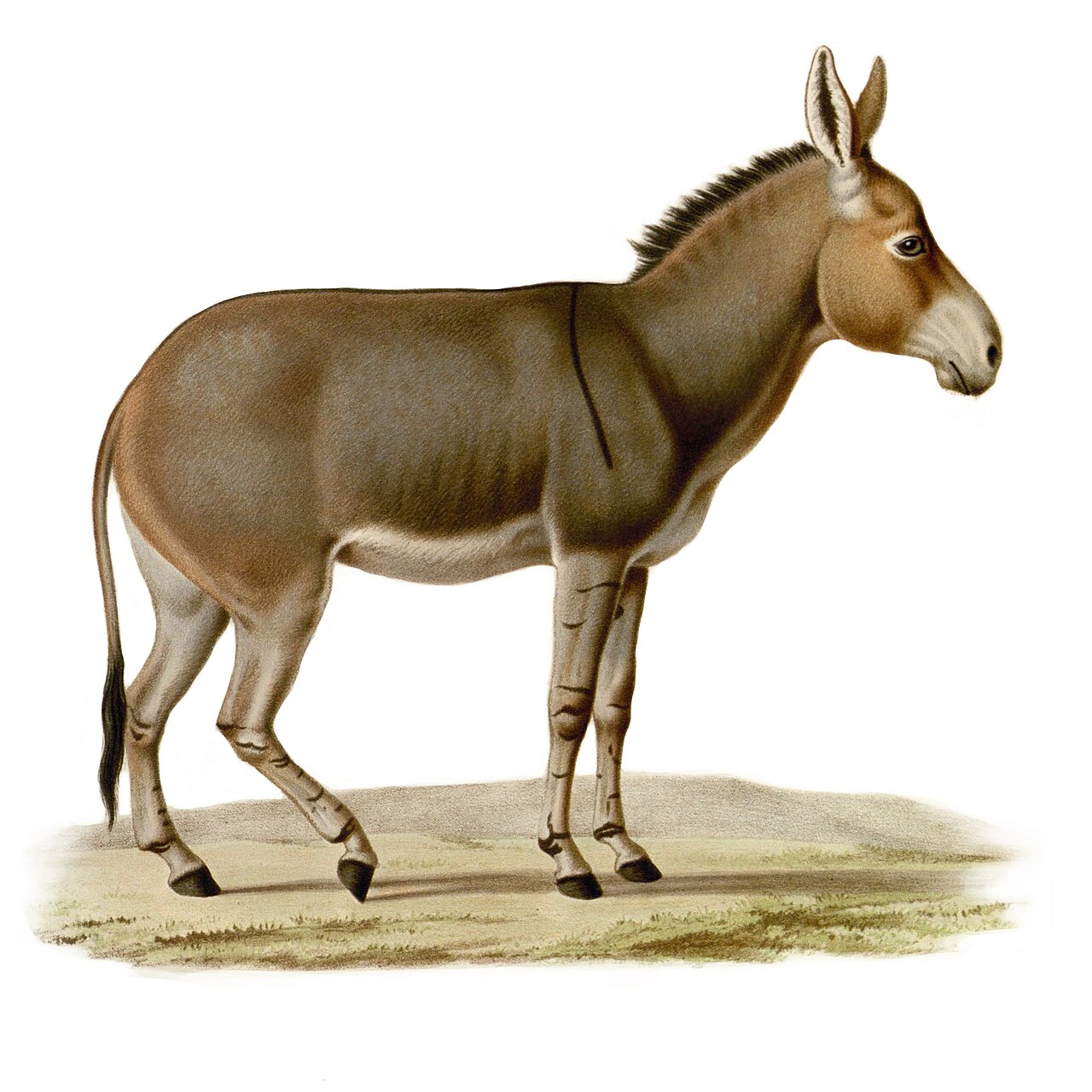
To fully grasp why donkeys bray, we must look back at their ancestors. The African wild ass, the ancestor of the domestic donkey, lives in some of the harshest environments on Earth, including the deserts of Ethiopia and Somalia. In these vast, featureless landscapes, water sources are scarce and scattered. A wild ass may need to travel many miles to find a drink, and it is during these critical journeys that the bray becomes a lifeline.
In the wild, the bray serves two primary evolutionary functions. First, it maintains contact between mothers and their offspring during long migrations. A foal that becomes separated from its mother in a sandstorm or at night has little chance of survival unless it can vocalize its location. Second, the bray establishes and defends territory. A jack will bray to warn other males to stay away from his herd and his water source, thus reducing the risk of physical combat, which could result in injury and death.
Domestication has not erased these deep-seated instincts. Even a donkey living in a lush, safe pasture in Ohio retains the genetic memory of its desert ancestors. The bray is a hardwired response to specific environmental triggers. When a domestic donkey brays at the sound of a distant train whistle, it is not reacting to the train itself, but to the unfamiliar, potentially threatening sound. Its brain processes the noise as a potential predator and initiates the ancient alarm call. Therefore, when we hear a domestic donkey bray, we are hearing an echo of its wild past—a past where vocalizing could mean the difference between life and death.
Health and Behavioral Implications: When Braying Becomes a Problem
While braying is a normal and healthy behavior, a sudden change in braying patterns can be a red flag for health issues. A donkey that is normally quiet and suddenly begins braying incessantly may be in pain. Conditions such as dental problems, hoof abscesses, or gastrointestinal discomfort (colic) can cause a donkey to vocalize its distress. Conversely, a donkey that stops braying altogether, especially one that is usually vocal, may be lethargic or depressed, indicating an underlying illness.
For owners, excessive braying can become a nuisance, particularly in suburban areas with noise ordinances. It is crucial to address the cause, not the symptom. If a donkey is braying because it is lonely, the solution is to provide a companion—another donkey, a goat, or even a llama. If it is braying out of hunger, a consistent feeding schedule will help. If it is braying due to a lack of stimulation, providing toys, grazing opportunities, or simply changing its pasture can reduce the behavior.
It is also important to remember that donkeys are crepuscular, meaning they are most active at dawn and dusk. This is when they are naturally inclined to bray the most, as these are the times when they would be moving to water sources in the wild. An owner who is annoyed by early morning braying should understand that this is a natural part of the donkey's circadian rhythm, not a deliberate attempt to be disruptive. In fact, many donkey owners grow to love the sound, finding it a reassuring and characterful part of their daily routine.
Conclusion: Listening to the Language of the Donkey
The honest truth about why donkeys bray is that it is a multifaceted, essential form of expression. From the desperate call of a lonely animal to the triumphant announcement of a jack, the bray is a window into the donkey's complex emotional and social world. It is a product of millions of years of evolution, finely tuned for survival in harsh deserts, and yet it remains perfectly adapted for life on a modern farm. The next time you hear a donkey bray, do not dismiss it as mere noise. Listen carefully. You will hear the echoes of ancient instincts, the subtle nuances of individual personality, and the simple, honest truth that this remarkable animal is trying to tell you something important about its life, its fears, and its joys. Understanding and respecting this vocalization is the key to a deeper, more rewarding relationship with one of the most intelligent and misunderstood creatures on the planet.
❓ Frequently Asked Questions
💬 Why do donkeys bray so loudly and for so long?
Donkeys bray loudly and for extended periods to communicate over long distances, especially in open landscapes, and to signal their presence, alert others to danger, or express loneliness, hunger, or excitement. The volume and duration help ensure the message reaches other donkeys or their human caregivers.
💬 What does a donkey's bray mean?
A bray can mean different things depending on context, but it often signals a greeting, a call for attention, or a sign of distress, such as when separated from a companion or in pain. It can also be a territorial warning to other donkeys or a response to unfamiliar sounds.
💬 Why does my donkey bray at night?
Night braying is commonly triggered by loneliness, boredom, or a need for social contact, as donkeys are herd animals and can become anxious when alone. It may also be a response to nocturnal predators, unfamiliar noises, or a lack of food and water.
💬 Do all donkeys bray, and can they stop?
All healthy donkeys have the physical ability to bray, but individual frequency varies by personality, breed, and environment—some are naturally more vocal. You can reduce excessive braying by ensuring your donkey has a companion, regular routine, adequate forage, and a comfortable, safe space, but you cannot completely stop a donkey from braying, as it is an instinctive behavior.