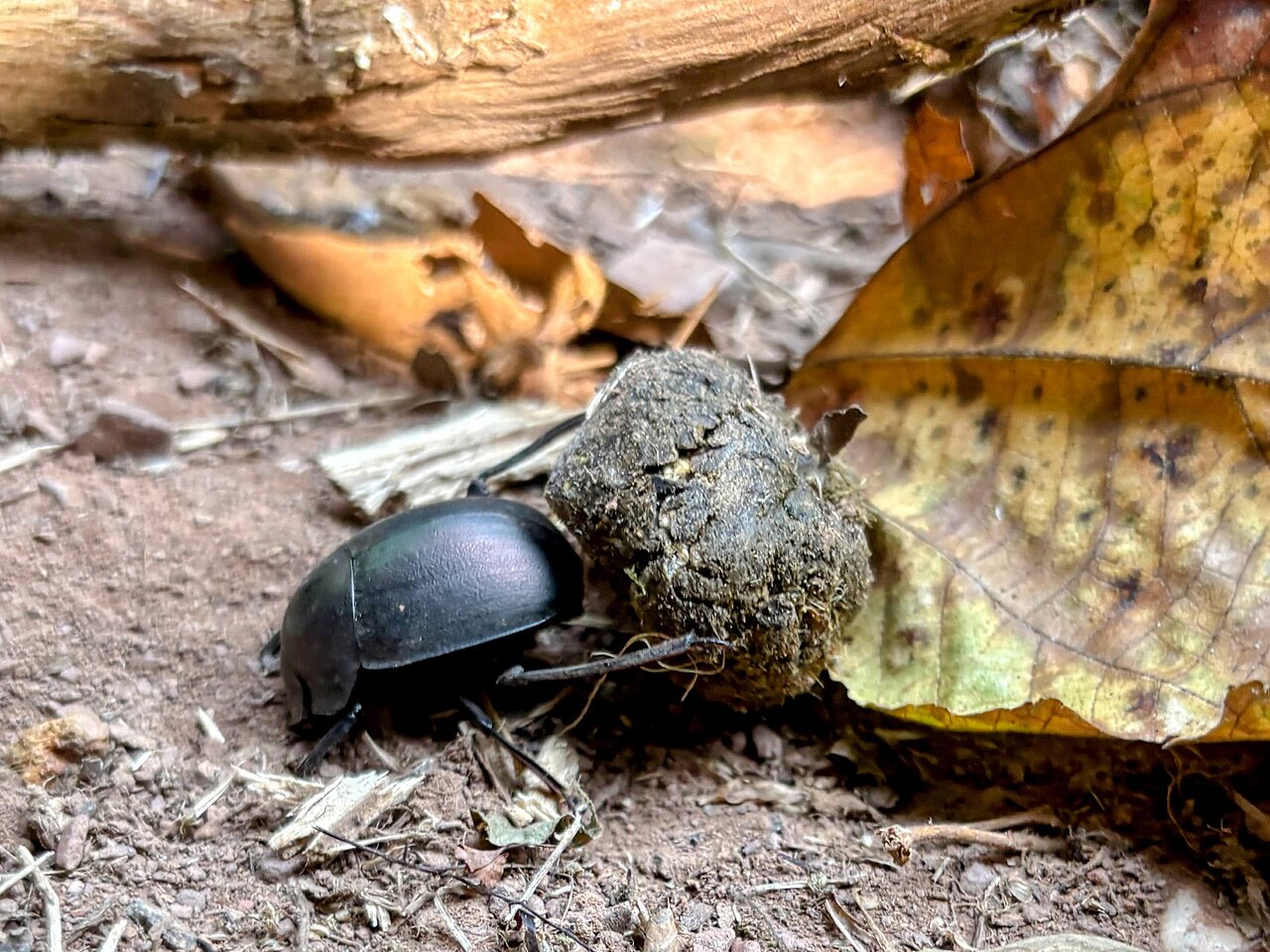
- What Exactly Are Dung Beetles?
- Why Do Dung Beetles Roll Poop? The Core Reasons
- Food Storage and Brood Provisioning
- Avoiding Theft and Competition
- How Dung Beetles Roll Poop Balls So Perfectly
- Strength and Body Design
- Navigating With the Sun, Moon, and Stars
- What Happens to the Poop Ball After It Is Rolled?
- A Meal That Keeps on Giving
- The Ecological Superpowers of Dung Beetles
- Economic Value to Farmers
- Myths and Misconceptions About Dung Beetles
- Are They Dangerous to Humans?
- How to Observe Dung Beetles in the Wild
- Attracting Beneficial Beetles to Your Land
- The Amazing Truth Behind the Rolling
- ❓ Frequently Asked Questions
When you first see a beetle patiently pushing a perfectly round ball of animal droppings across a dusty path, it looks like one of nature's strangest jokes. Yet the truth behind why dung beetles roll poop is far more fascinating than the sight itself. These small, unassuming insects are among the hardest-working creatures on Earth, and their habit of rolling dung has shaped ecosystems, inspired scientific research, and even helped ancient civilizations navigate the night sky.
What Exactly Are Dung Beetles?
Dung beetles are insects belonging to the superfamily Scarabaeoidea, which includes thousands of species found on every continent except Antarctica. Scientists have described more than 6,000 species worldwide, and they come in a remarkable range of sizes. The smallest are barely 1 millimeter long, while the largest, such as certain African species in the genus Scarabaeus, can exceed 5 centimeters and are powerful enough to move balls many times their own weight.
These beetles feed primarily on the liquid portion of animal dung, along with the microscopic organisms and undigested plant material it contains. Their diet may sound unappealing to us, but for a beetle it is a rich, nutritious meal. Dung is packed with bacteria, fungi, yeasts, and partially broken-down plant matter, all of which provide proteins, fats, and sugars. Some species are generalists that will take almost any mammal dropping they find, while others are specialists that prefer the dung of a single animal, such as kangaroos, elephants, or cattle.
Dung beetles generally fall into three behavioral groups, and understanding these groups helps explain the famous rolling behavior:
- Rollers (telecoprids): These beetles shape dung into a ball and roll it away from the pile before burying it. This is the group most people picture.
- Tunnelers (paracoprids): These beetles dig tunnels directly beneath the dung pile and drag pieces of dung down into them.
- Dwellers (endocoprids): These beetles simply live and breed inside the dung pat itself, without moving it far.
Only the rollers perform the iconic ball-rolling journey, and even among them, the reasons for rolling are more complex than simple transportation.
Why Do Dung Beetles Roll Poop? The Core Reasons
The most important reason dung beetles roll poop is to secure food and a safe place to raise their young. A fresh pile of dung is a crowded, competitive place. Within minutes of a cow, elephant, or monkey producing a dropping, dozens of beetles, flies, and other insects may descend on it. Competition is intense, and the best strategy for a roller is to grab a portion and get out fast.
Food Storage and Brood Provisioning
Once a roller has shaped its ball, it rolls it away from the main pile to a spot it considers safe. There, it burrows into the soil and buries the ball. The ball serves two purposes depending on the beetle's situation. A beetle may eat the ball itself over the following days, drawing moisture and nutrients from it. Or, if it is a female preparing to reproduce, the ball becomes a brood ball.
In many species, a male and female work together. The male often does the pushing while the female rides on top or helps steer, and together they bury the ball. The female then lays a single egg inside it. When the larva hatches, it feeds on the dung ball from the inside, safe underground from predators and the drying sun. The ball is, in effect, a packed lunch and a nursery rolled into one.
Avoiding Theft and Competition
Rolling is also a defensive strategy. Dung is a limited resource, and other beetles will happily steal a ball that is left unattended. By rolling the ball away quickly and burying it, a beetle reduces the chance that a rival will take it. Some species even roll in a relatively straight line to put distance between themselves and the crowded pile as efficiently as possible.
How Dung Beetles Roll Poop Balls So Perfectly
Shaping a sphere from a messy, uneven pile is no small feat, and the beetles have evolved specialized anatomy for the job. Their front legs are flattened and toothed, acting like scoops and rakes. They use these to gather dung and pat it into shape, while their powerful hind legs rotate the growing ball and keep it steady.
Strength and Body Design
Dung beetles are among the strongest animals relative to their body size. A beetle weighing just a few grams can push a ball that weighs 10 to 50 times its own mass, and some males can move loads over 1,000 times their body weight when you account for the forces involved in pushing. Their hind legs are positioned to push the ball backward while the beetle walks forward on its front legs, a slightly awkward but highly effective gait.
Navigating With the Sun, Moon, and Stars
Rolling in a straight line is critical, because a beetle that wanders in circles may end up back at the crowded pile it just escaped. To stay on course, dung beetles use celestial cues. During the day, they orient themselves using the sun and the pattern of polarized light in the sky. At night, some species use the moon, and one African species, Scarabaeus satyrus, was famously shown to navigate using the Milky Way galaxy itself. It is one of the only known animals confirmed to use the galaxy as a compass.
This discovery, published in 2013, made headlines because it revealed that even a tiny insect with a brain smaller than a grain of rice can process faint celestial information to solve a practical problem. The beetles also perform a curious behavior called a "dance" on top of their ball, rotating around it before setting off. Researchers believe this dance helps them take a mental snapshot of the sky so they can maintain a straight path.
What Happens to the Poop Ball After It Is Rolled?
Once the ball is buried, the story continues underground. If the ball is a food ball, the beetle consumes it over several days, extracting moisture and nutrients. If it is a brood ball, the sequence is more elaborate. The female typically lays one egg per ball, and the larva that hatches feeds on the dung for weeks or even months, depending on the species and climate.
The larva eventually pupates inside the remains of the ball, transforming into an adult beetle. The entire life cycle, from egg to adult, can take anywhere from a few weeks in warm tropical regions to several months in cooler climates. Adult dung beetles typically live for a few months to about a year, though some species can survive longer in captivity.
A Meal That Keeps on Giving
Because dung is moist and nutrient-rich, a single well-packed ball can sustain a larva through its entire development. The parent beetles sometimes coat the ball with a layer of soil or saliva to prevent it from drying out, and in some species the female stays nearby to guard it. This level of parental care is unusual among insects and shows how valuable the ball is as a resource.
The Ecological Superpowers of Dung Beetles
Dung beetles are not just interesting curiosities; they are essential ecosystem engineers. By burying animal waste, they perform services that benefit farms, forests, and grasslands around the world.
- Nutrient cycling: Burying dung moves nitrogen, phosphorus, and organic matter into the soil, where plants can use it.
- Pest control: Dung left on the surface breeds flies and parasites. Beetles that bury it quickly break that cycle.
- Soil aeration: Their tunnels loosen compacted soil and improve water infiltration.
- Seed dispersal: Some beetles inadvertently bury seeds along with dung, helping plants spread.
- Greenhouse gas reduction: By burying waste, they reduce methane emissions from livestock dung.
In Australia, the introduction of dung beetles in the 1960s and 1970s helped solve a serious problem. Cattle introduced by European settlers produced dung that native Australian beetles could not process, so the waste piled up and bred enormous numbers of bush flies. Scientists imported dung beetles from Africa and Europe that specialized in cattle dung, and the results were dramatic. The flies declined, pastures improved, and the project became a classic example of biological control.
Economic Value to Farmers
Studies in the United States and Europe have estimated that dung beetles save the livestock industry hundreds of millions of dollars each year by improving pasture health and reducing the need for chemical treatments. In some regions, ranchers now manage grazing and deworming practices carefully to protect beetle populations, because healthy beetle communities mean healthier soil and better grass.
Myths and Misconceptions About Dung Beetles
Because their behavior is so unusual, dung beetles have attracted plenty of myths. One common misconception is that they roll balls only for food. In reality, balls serve as food, as nurseries, and sometimes as a combination of both. Another myth is that all dung beetles roll. As we have seen, most species are tunnelers or dwellers, and rolling is a specialized strategy used by a subset of species.
People also sometimes assume dung beetles are pests. The opposite is generally true. While they feed on animal waste, they rarely harm living plants or animals, and their waste-processing work is overwhelmingly beneficial. They are, in many ways, the cleanup crew of the natural world.
Are They Dangerous to Humans?
Dung beetles are harmless to humans. They do not bite, sting, or carry diseases to people, and they avoid contact with humans whenever possible. The only real nuisance they can cause is being attracted to pet waste in a backyard, but even then, they are simply doing what they evolved to do.
How to Observe Dung Beetles in the Wild
If you want to see dung beetles roll poop for yourself, you do not need to travel to Africa or Australia. Dung beetles live on every continent except Antarctica, and many species are active in gardens, farms, and parks. The best time to look is on warm days after rain, when fresh animal droppings are available. Horse paddocks, cattle pastures, and even dog parks can attract them.
Watch for a small beetle pushing a ball backward with its hind legs. It may be alone or in a pair, and it will often stop, climb onto the ball, and rotate around it before continuing. That little dance is the beetle checking the sky to make sure it is heading in the right direction.
Attracting Beneficial Beetles to Your Land
If you keep livestock or horses, you can encourage dung beetles by avoiding unnecessary deworming chemicals, which can be toxic to beetles, and by leaving some natural vegetation around pastures. These simple steps help build a healthy beetle population that will, in turn, improve your soil and reduce fly problems naturally.
The Amazing Truth Behind the Rolling
Dung beetles roll poop for reasons that combine survival, reproduction, and navigation in ways that scientists are still uncovering. What looks like a simple act of pushing a ball is actually a sophisticated behavior shaped by millions of years of evolution. These insects compete for scarce resources, build nurseries for their young, navigate by the sun, moon, and stars, and in the process, they keep ecosystems healthy and farms productive.
The next time you spot a dung beetle rolling its prize across a path, take a moment to appreciate what you are seeing. You are watching one of nature's most efficient recyclers, a tiny engineer with a brain smaller than a grain of rice, solving problems that would challenge far larger creatures. The amazing truth is that the humble dung beetle, and the balls it rolls, quietly help hold the natural world together.
❓ Frequently Asked Questions
💬 Why do dung beetles roll poop balls?
They roll dung into balls mainly to have a portable food supply and a safe place to lay their eggs. The ball is packed with nutrients and moisture, and a female often lays an egg inside a brood ball that becomes food for the developing larva.
💬 How do dung beetles roll a ball in a straight line?
Dung beetles can navigate using the sun, the moon, and even the pattern of light from the Milky Way. They also track their position relative to the ball, so they can keep rolling in a consistent direction even when obstacles force them to detour.
💬 Do dung beetles eat the poop balls they roll?
Yes, many species feed on the dung ball, drinking the nutrient-rich liquid inside it. Some balls are eaten by the adult, while others are buried as brood balls that feed the larvae after they hatch.
💬 Why do dung beetles steal other beetles' poop balls?
Dung is a valuable and contested resource, so some beetles try to hijack a ball that another beetle has already rolled. The owner usually defends its ball by pushing it faster or climbing on top to guard it, and fights can break out over a good ball.