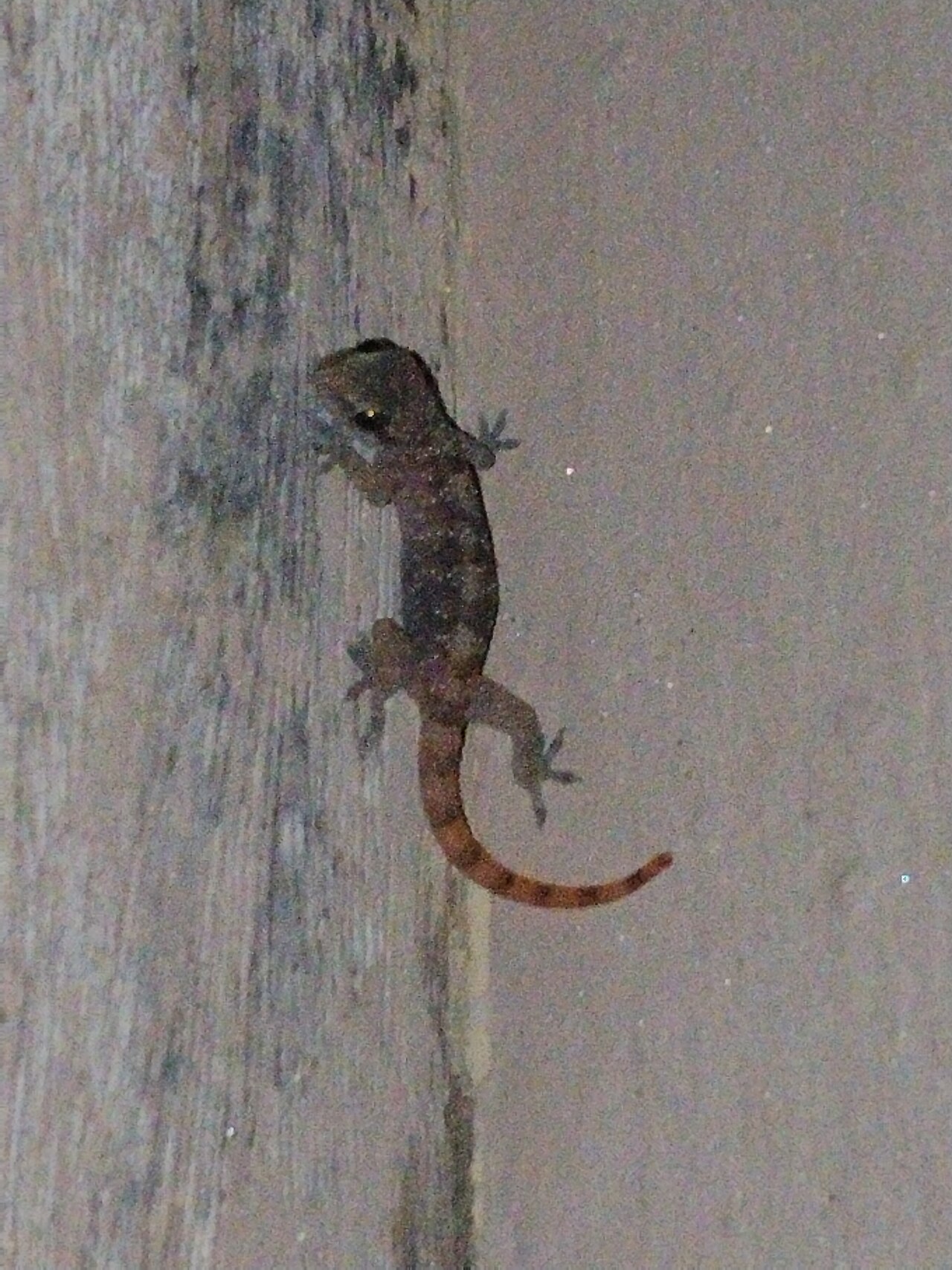
- The Basics: What Exactly Is a Gecko?
- How Do Geckos Stick to Walls? The Science Behind the Grip
- The Structure of a Gecko Toe Pad
- Why Size Matters at the Nanoscale
- How Geckos Stick to Walls Without Getting Stuck Forever
- Self-Cleaning Feet
- What Geckos Actually Do With Their Sticky Feet
- Real-World Examples
- How Scientists Study Gecko Adhesion
- Common Myths and Misconceptions About Geckos Stick to Walls
- Myth: Geckos use suction cups
- Myth: Geckos produce glue or sticky secretions
- Myth: Bigger geckos stick better
- Myth: Geckos can stick to anything
- Why Gecko Adhesion Matters Beyond the Lizard World
- Conclusion: The Sticky Truth About Geckos
- ❓ Frequently Asked Questions
Geckos stick to walls with a grip that seems to defy physics, and humans have been puzzling over it for centuries. These small lizards scamper up smooth glass, hang upside down from ceilings, and sprint across polished tile without slipping. Unlike spiders that ooze glue or insects that use suction cups, geckos rely on a mechanism so elegant that scientists are still studying it today. Understanding how geckos stick to walls opens a window into one of the most remarkable examples of natural engineering on Earth.
The Basics: What Exactly Is a Gecko?
Geckos are lizards belonging to the family Gekkonidae, one of the most diverse reptile groups on the planet. There are roughly 1,500 to 2,000 known species, found on every continent except Antarctica. Most species live in warm, tropical, and subtropical regions, though some have adapted to deserts and even cool mountain climates.
They range dramatically in size. The tiny dwarf gecko (Sphaerodactylus ariasae) of the Caribbean measures just 1.6 centimeters (0.6 inches) from snout to vent, making it one of the smallest reptiles alive. At the other extreme, the New Caledonian giant gecko (Rhacodactylus leachianus) can reach 43 centimeters (17 inches) including its tail and weigh over 250 grams.
Most geckos are nocturnal insectivores. A typical house gecko (Hemidactylus frenatus) eats crickets, moths, beetles, spiders, and roaches. Larger species, like the leopard gecko (Eublepharis macularius), may also take small vertebrates. In captivity, leopard geckos commonly live 10 to 20 years, while many wild geckos survive only a few years due to predators and disease.
What sets geckos apart from most other lizards is not just their climbing ability but the structures that make it possible: specialized toe pads covered in millions of microscopic hairs.
How Do Geckos Stick to Walls? The Science Behind the Grip
The secret lies in a phenomenon called van der Waals forces, a type of weak intermolecular attraction that exists between all atoms and molecules. It is the same subtle force that lets a piece of plastic wrap cling to a bowl, but geckos have refined it into something extraordinary.
The Structure of a Gecko Toe Pad
A gecko's toe pad is a masterpiece of hierarchical design. If you look at a gecko's foot with the naked eye, you will see rows of overlapping ridges called lamellae or scansors. Each lamella is packed with thousands of tiny hair-like structures called setae. A single seta is about 5 micrometers thick — roughly one-tenth the width of a human hair.
Each seta then branches at its tip into hundreds of even smaller structures called spatulae. A spatula is roughly 200 nanometers wide, which is smaller than the wavelength of visible light. This means each gecko toe carries around a billion spatulae in total.
Why Size Matters at the Nanoscale
Van der Waals forces are extremely weak between two large flat surfaces. But when you split a surface into billions of tiny contact points, the cumulative force becomes enormous. This is because the force depends on how closely the molecules of the gecko's spatulae come to the molecules of the surface. At a distance of just a few angstroms — less than the width of an atom — the attraction becomes significant.
What makes this so clever is that the mechanism does not rely on glue, suction, or friction. It works on nearly any surface, wet or dry, smooth or rough, conductive or insulating. Geckos stick to walls made of glass, metal, wood, and even Teflon, which is famously difficult for adhesives to bond with.
How Geckos Stick to Walls Without Getting Stuck Forever
If geckos generate such powerful adhesion, why can they still lift their feet and run at high speed? The answer is angle and direction.
Gecko adhesion only works when the setae are dragged or pressed at a specific angle. To attach, the gecko rolls its toe forward and pushes slightly inward. To detach, it simply changes the angle of the toe and peels it upward, much like peeling a piece of tape from a surface. This peeling motion reduces the contact area instantly and breaks the van der Waals bonds.
This directional control allows geckos to run upside down at speeds of up to 1 meter per second — roughly 15 body lengths per second — while attaching and detaching each foot dozens of times per second. A gecko can hang from a single toe if needed, yet never gets permanently glued to its perch.
Self-Cleaning Feet
Another remarkable feature is that gecko toe pads are self-cleaning. In experiments, scientists have coated gecko feet with microscopic glass beads and watched the animals walk on clean glass. Within a few steps, the dirt particles migrated off the spatulae and onto the walking surface, leaving the feet clean again. This self-cleaning property is something human engineers are eager to replicate in reusable adhesives.
What Geckos Actually Do With Their Sticky Feet
Climbing is not just a party trick. For geckos stick to walls is a matter of survival — it helps them escape predators, hunt prey, and exploit habitats that other lizards cannot reach.
- Escape from predators: When threatened, a gecko can dash up a vertical wall or across a ceiling, leaving snakes, birds, and mammals behind.
- Hunting in three dimensions: Nocturnal geckos can chase moths and spiders across ceilings and around corners, using all surfaces as hunting ground.
- Living in human homes: House geckos thrive on walls and ceilings in tropical and subtropical cities worldwide, where they eat mosquitoes, cockroaches, and other pests.
- Surviving in extreme habitats: Desert geckos climb loose sand and rock faces, while some species in Southeast Asia live on vertical cliff walls near the sea.
- Bridging gaps: Some geckos, like the flying gecko (Ptychozoon kuhli), use their sticky feet along with skin flaps to glide between trees in rainforests.
Real-World Examples
The Tokay gecko (Gekko gecko) of Southeast Asia is one of the largest geckos that uses adhesion, reaching 30 to 40 centimeters in length. It can climb smooth vertical glass with ease and is known for its loud, distinctive "to-kay" call. The crested gecko (Correlophus ciliatus) from New Caledonia has toes and a prehensile tail tipped with a sticky pad, allowing it to grip branches and leap between them. Even the common Mediterranean house gecko (Hemidactylus turcicus), which is only about 10 centimeters long, can scale painted walls and walk across ceilings without losing grip.
How Scientists Study Gecko Adhesion
Research into gecko adhesion exploded in the early 2000s. Biologist Kellar Autumn and his team at Lewis & Clark College published landmark studies measuring the force of a single seta. They found that one seta can generate about 200 microNewtons of adhesive force — enough that a million setae could support the weight of a small child.
Since then, engineers have created synthetic adhesives inspired by gecko feet. These include gecko tape, reusable dry adhesives, and even climbing robots. In 2014, researchers at Stanford University built a robot called Stickybot that could scale glass walls using gecko-inspired foot pads. More recently, scientists have developed medical bandages and surgical grippers that use the same principle to handle delicate tissues without chemical adhesives.
However, no synthetic material has yet matched the full performance of a real gecko foot. The combination of self-cleaning, directional adhesion, and durability remains difficult to reproduce at scale.
Common Myths and Misconceptions About Geckos Stick to Walls
Because gecko adhesion is so unusual, several myths have grown around it. Here are the most common ones and what the evidence actually says.
Myth: Geckos use suction cups
This is false. Suction requires a sealed vacuum and a smooth surface, but geckos can stick to rough, porous surfaces and even underwater. Van der Waals forces do not require air pressure or a perfect seal.
Myth: Geckos produce glue or sticky secretions
Geckos do not secrete adhesive fluids from their toes. The grip is entirely physical and dry. This is why their feet stay clean and do not leave residue on walls.
Myth: Bigger geckos stick better
Adhesion scales with the total number of spatulae in contact, not body size alone. A large gecko has more setae but also more mass to support. In fact, some of the largest geckos, like the New Caledonian giant gecko, rely more on claws and gripping than on pure adhesion. The relationship between size and sticking ability is more complex than most people assume.
Myth: Geckos can stick to anything
Geckos cannot stick effectively to surfaces that are extremely rough at the microscopic scale, such as loose sand or certain fabrics, because the spatulae cannot make close enough contact. They also struggle on surfaces coated with powders or oils. A gecko's grip is powerful but not universal.
Why Gecko Adhesion Matters Beyond the Lizard World
The study of geckos stick to walls has implications far beyond biology. Understanding van der Waals adhesion at the nanoscale has inspired advances in:
- Robotics: Climbing robots for inspection, rescue, and maintenance in hazardous environments.
- Medicine: Reusable surgical adhesives that do not damage tissue or leave chemical residue.
- Manufacturing: Dry adhesives for handling delicate electronic components and glass panels.
- Space exploration: Grippers for astronaut tools and robots operating in microgravity, where suction and magnetism may not work.
- Consumer products: Reusable tape, wall mounts, and phone cases that rely on gecko-inspired microstructures.
There is also a conservation angle. Many gecko species are threatened by habitat loss, climate change, and the pet trade. Understanding their unique biology can support efforts to protect them and their ecosystems.
Conclusion: The Sticky Truth About Geckos
Geckos stick to walls not through glue, suction, or magic, but through billions of microscopic hairs that exploit the fundamental forces of physics. Their feet are self-cleaning, directional, and strong enough to support many times their body weight. From the tiny dwarf gecko to the hefty New Caledonian giant gecko, these lizards have evolved one of the most efficient climbing systems in nature. As scientists continue to unlock the secrets of gecko adhesion, the lessons learned may one day change how humans build, heal, and explore — all thanks to a small lizard that can walk up a pane of glass without slipping.
❓ Frequently Asked Questions
💬 How do geckos stick to walls without glue?
Geckos use millions of tiny hair-like structures called setae on their toe pads, each splitting into even smaller spatulae. These create weak electrical attractions called van der Waals forces between the toe and the surface, which add up to a strong grip.
💬 Are gecko feet sticky or suction cups?
Neither—gecko toes don't use glue or suction. Their grip comes from van der Waals forces created by microscopic hairs, which is why they can stick even in a vacuum where suction would fail.
💬 Why don't geckos fall off walls or ceilings?
Their toe pads generate enough force to support many times their body weight, and they can peel their toes off at an angle to release quickly. This lets them run across ceilings and slick glass with ease.
💬 Do geckos leave sticky residue on walls?
No, gecko feet leave no residue because they rely on physical forces rather than adhesive chemicals. Their self-cleaning toe hairs also shed dirt, helping them keep their grip over time.