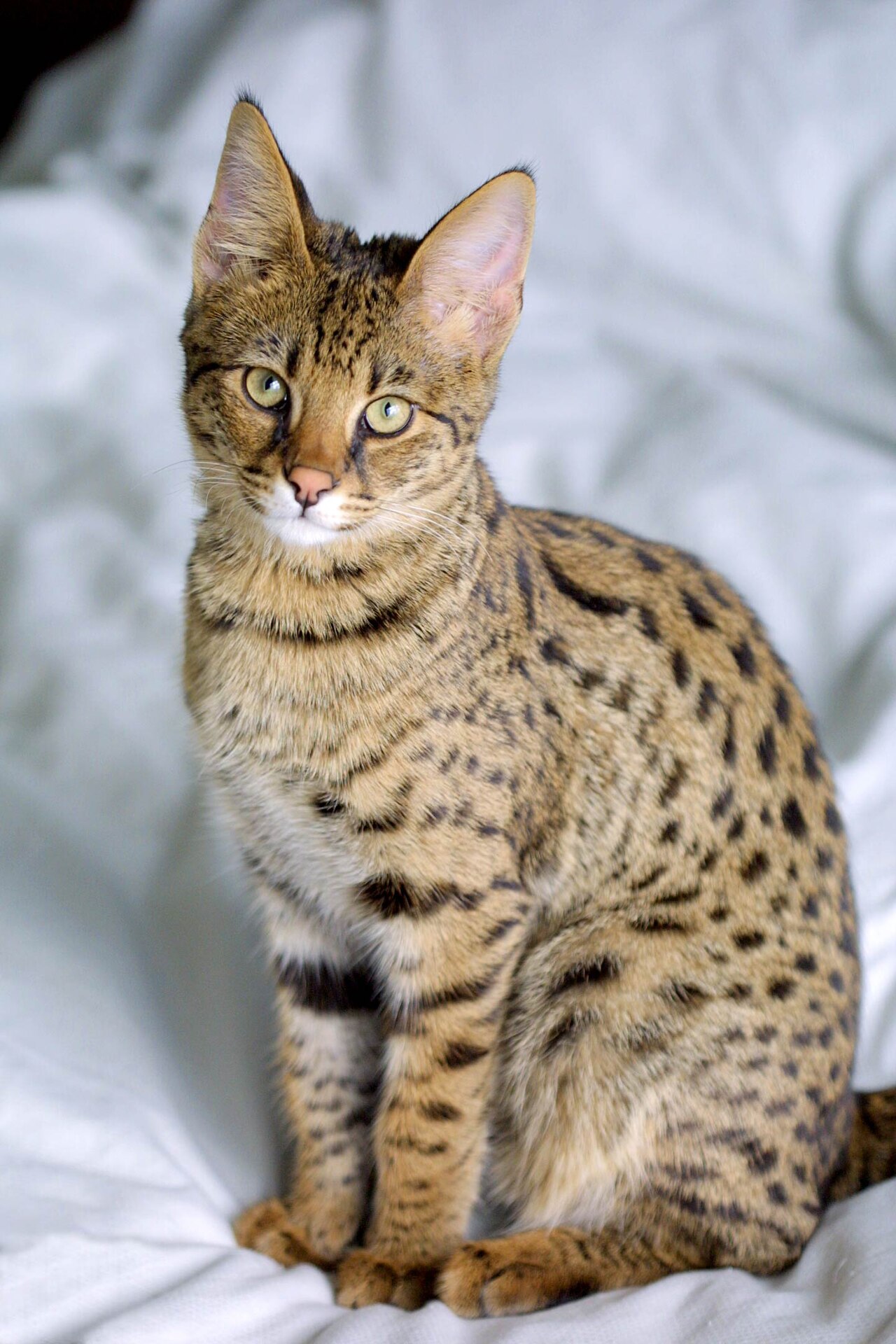
- The Serval Connection: Where Savannah Cats Water Love Begins
- How Much Serval Is in a Savannah Cat?
- Why Savannah Cats Water Behavior Is Genuinely Instinctive
- Hunting Instinct and Moving Water
- Thermoregulation and Cooling
- Curiosity and High Intelligence
- Novelty-Seeking Temperament
- How Savannah Cats Water Fascination Shows Up at Home
- Are Savannah Cats Actually Good Swimmers?
- Safety Rules for Water-Loving Savannahs
- Do Savannah Cats Need More Water Than Other Breeds?
- Grooming, Bathing, and the Practical Side of a Water-Loving Cat
- Common Myths About Savannah Cats and Water
- Living Happily With a Water-Obsessed Savannah
- Final Thoughts: The Wild Truth Behind the Splash
- ❓ Frequently Asked Questions
If you have ever watched a Savannah cat bat a stream of tap water across the kitchen or leap into a bathtub without a moment's hesitation, you have witnessed one of the breed's most talked-about quirks: Savannah cats water fascination is real, and it is not a coincidence. While most domestic cats treat a puddle like a mild personal insult, Savannahs often treat water like a toy, a drink, and occasionally a swimming pool. The explanation for this behavior reaches back to the breed's wild ancestry — specifically to the African serval, a tall, long-legged wildcat that hunts in wetlands and shallow rivers. In this article, we will unpack the genetics, instincts, and practical realities behind why Savannah cats love water, how that love shows up in daily life, and what owners should know before filling the bathtub.
The Serval Connection: Where Savannah Cats Water Love Begins
The Savannah cat is a hybrid breed created by crossing a domestic cat with an African serval (Leptailurus serval). The breed was established in the 1980s, with the first documented successful breeding attributed to Judee Frank in 1986, and it gained formal recognition from The International Cat Association (TICA) in 2001. That wild heritage is the single biggest reason Savannah cats behave so differently around water.
Servals are native to the grasslands and wetlands of sub-Saharan Africa, where they occupy a very specific ecological niche. They are tall and slender, standing roughly 54 to 62 centimeters (21 to 24 inches) at the shoulder, with legs proportionally longer than almost any other cat species. Those long legs are not just for show — they allow servals to wade through shallow water and marshy ground while keeping their bodies dry, and to pounce on prey from a great height.
Servals are also famously efficient hunters. They can leap up to 3 meters (about 10 feet) horizontally and roughly 1 meter (3 feet) vertically from a standing start, and they use those abilities to snatch birds and rodents mid-air. Their diet includes frogs, fish, crabs, and aquatic insects alongside terrestrial prey such as rodents, hares, and reptiles. In other words, water is not an obstacle for a serval — it is a hunting ground.
How Much Serval Is in a Savannah Cat?
Savannah cats are classified by "filial generation," which describes how many generations removed they are from the serval ancestor:
- F1: One serval parent, one domestic parent — roughly 50% serval blood. These cats are large, intense, and often difficult to keep as pets.
- F2: Serval grandparent — roughly 25% serval blood.
- F3: Serval great-grandparent — roughly 12.5% serval blood.
- F4 and F5: Roughly 6.25% and 3.125% serval blood respectively. F5 is the generation TICA accepts for full championship status in show halls.
The general pattern is simple: the higher the serval percentage, the stronger the wild behaviors — and water attraction is one of them. F1 and F2 Savannahs are the most likely to splash, wade, and genuinely swim. Later generations often retain a strong interest in water, but individual personality matters enormously. Some F5 Savannahs are obsessed with faucets; others barely notice a water bowl.
Why Savannah Cats Water Behavior Is Genuinely Instinctive
It is tempting to dismiss water play as a cute accident of breeding, but the behavior has real functional roots. Several overlapping instincts explain it.
Hunting Instinct and Moving Water
Cats are hardwired to notice movement, and few things move more hypnotically than running water. For a serval, a stream or shallow pool is a live pantry: fish, frogs, and crabs all reveal themselves through ripples and splashes. A Savannah cat watching a dripping tap is responding to the same trigger — movement equals potential prey. Many Savannahs will paw at the surface, stare intently, and even dunk a toy before "killing" it, which is classic predatory play behavior redirected onto water.
Thermoregulation and Cooling
Servals live in a warm climate, and standing or wading in cool water is an efficient way to regulate body temperature. Domestic cats pant and seek shade when hot, but a cat with serval ancestry may simply step into the water. Owners in hot climates frequently report their Savannahs lying in a shallow basin or walking through a running shower during summer.
Curiosity and High Intelligence
Savannah cats are widely considered one of the most intelligent domestic breeds. They solve puzzles, open cabinets, learn to turn on faucets, and often learn to walk on a leash. Water is endlessly variable — it splashes, ripples, reflects, and changes temperature — which makes it an ideal source of mental stimulation for a cat that gets bored easily.
Novelty-Seeking Temperament
Behaviorally, Savannahs tend to score high on boldness and low on neophobia (fear of new things). Where a cautious domestic cat avoids an unfamiliar sensation, a Savannah investigates it. That temperament makes water just another interesting thing to poke.
How Savannah Cats Water Fascination Shows Up at Home
If you share your home with a Savannah, you have probably already met some of these behaviors. The most common include:
- Drinking from running taps: Many Savannahs refuse still water in a bowl and prefer a stream. Some learn to turn on the faucet themselves.
- Paw-dipping: The cat scoops water with a front paw and licks it off, rather than lowering its head. This is a genuine serval-style drinking technique.
- Bathtub and sink occupation: Some Savannahs nap in dry tubs; others wait for a trickle of water and then chase it.
- Shower supervision: A Savannah may sit on the shower ledge, walk through the spray, or yowl to be let in.
- Toilet bowl raids: Unpleasant but extremely common. Keep lids down.
- Swimming: A minority of Savannahs — most often F1 to F3 — will actually swim voluntarily in pools, ponds, or lakes.
- Water bowl chaos: Splashing, tipping, and "bailing" water out of bowls with a paw is a near-universal Savannah hobby.
It is worth noting that not every Savannah loves water. Breeders frequently point out that individual variation is huge: two kittens from the same litter can have completely opposite attitudes. The breed tendency is real, but it is a tendency, not a guarantee.
Are Savannah Cats Actually Good Swimmers?
Yes — and this is where the serval inheritance becomes most visible. Servals are capable swimmers, and they readily enter water to hunt. Savannah cats inherit much of that physical capability: long legs, a lean athletic build, and strong shoulders. An adult Savannah typically weighs between 5 and 11 kilograms (11 to 25 pounds), with F1 and F2 males sometimes reaching 14 kilograms (about 30 pounds) or more, and stands noticeably taller than a typical domestic cat.
That said, swimming ability varies. A Savannah that has never been introduced to deep water may panic, and even water-loving cats can tire quickly. Never assume your cat can swim safely just because it enjoys batting at a faucet. If you plan to introduce your Savannah to a pool, do it gradually, supervise constantly, and never force the cat into the water.
Safety Rules for Water-Loving Savannahs
- Never leave a filled tub unattended if your cat has access to the bathroom.
- Cover or fence pools. Even strong swimmers can become exhausted or chilled.
- Watch the toilet. Ingesting cleaning chemicals from toilet water is a genuine poisoning risk.
- Rinse after swimming. Chlorine, salt, and lake water can irritate skin and coat; a quick freshwater rinse helps.
- Dry the ears. Moisture trapped in the ear canal can encourage infections.
- Keep water bowls heavy and wide. Ceramic or weighted stainless steel bowls resist tipping better than plastic.
Do Savannah Cats Need More Water Than Other Breeds?
Hydration matters for every cat, but Savannahs present a particular challenge because many of them dislike still water. A cat that refuses to drink from a bowl is at higher risk of dehydration and, over time, urinary and kidney problems.
The good news is that their water obsession can be turned into an advantage. Practical solutions include:
- Pet water fountains: Circulating water mimics a stream and is often irresistible to Savannahs.
- Multiple water stations placed around the house, kept scrupulously clean.
- Wide, shallow bowls so the cat's whiskers do not touch the sides — many cats dislike "whisker fatigue."
- Wet food: Canned or raw diets add significant moisture to the diet.
- Ice cubes: Some Savannahs treat ice as a toy and a slow-release water source.
If your Savannah is drinking unusually large amounts or urinating more than normal, see a veterinarian. Increased thirst can signal diabetes, kidney disease, or hyperthyroidism, and it should never be assumed to be a breed quirk.
Grooming, Bathing, and the Practical Side of a Water-Loving Cat
Most cats fight baths. Many Savannahs tolerate them, and a few appear to enjoy them. Because the breed has a short, dense coat that sheds relatively little compared with a Persian or Maine Coon, Savannahs generally need less grooming than longhaired breeds — a weekly rubdown with a rubber curry brush is usually enough.
Bathing should be occasional: if the cat has gotten into something toxic, if a veterinarian advises it, or if the coat is genuinely soiled. Use a cat-safe shampoo, lukewarm water, and a non-slip mat. Because Savannahs are strong and clever, a two-person approach is often safer. Never use human shampoo, which can disrupt feline skin pH, and never leave a wet cat unattended near a pool or open water.
One more practical note: because Savannahs are so drawn to water, they are also more likely to knock over glasses, investigate dishwashers, and "help" while you wash dishes. Childproof-style latches on cabinets and a closed bathroom door solve most of these problems.
Common Myths About Savannah Cats and Water
Myth: All Savannah cats swim. False. Interest in water is common; full swimming is not. Many Savannahs stop at paw-dipping and faucet chasing.
Myth: Savannah cats love water because they are part wildcat, and all wildcats swim. Partly true but oversimplified. Servals are water-associated hunters, but not all wildcats are. Tigers and jaguars swim readily; many small wildcats avoid water entirely. The Savannah trait traces specifically to the serval's wetland hunting lifestyle.
Myth: A Savannah that plays in water will drink enough on its own. Not necessarily. Play and hydration are separate behaviors. Always confirm your cat is actually drinking.
Myth: Water love means a Savannah is "more wild" and harder to keep. Not exactly. Water fascination is a temperament trait, not a measure of wildness. Plenty of high-generation Savannahs are affectionate, leash-trained house cats.
Living Happily With a Water-Obsessed Savannah
Owning a Savannah is a bit like owning a small, athletic, extremely curious dog that happens to purr. They need stimulation, vertical space, interactive play, and — ideally — a catio, leash walks, or puzzle feeders to burn off energy. Their lifespan is typically 12 to 20 years, with good care and indoor housing pushing toward the upper end.
Water can be a fantastic enrichment tool. Consider a shallow tray of water with floating toys, a pet fountain, or supervised play with a running hose in summer. These activities satisfy natural instincts and keep a highly intelligent cat mentally engaged. Just pair the fun with clear household rules: closed toilet lids, no unattended full bathtubs, and secure pool fencing.
The Savannah cats water connection is one of the breed's most charming and most misunderstood traits. It is not random, and it is not just a party trick — it is a direct echo of an African wildcat that learned to hunt in the shallows. Understanding that heritage helps owners meet their cats' needs instead of fighting them, which is the difference between a frustrated household and a happy, well-adjusted Savannah.
Final Thoughts: The Wild Truth Behind the Splash
Savannah cats love water for reasons that are equal parts genetics, instinct, and personality. Their serval ancestor was a tall, wetland-hunting specialist that waded into streams to catch frogs and fish, and that heritage survives in the modern breed as paw-dipping, faucet obsession, and the occasional voluntary swim. The trait is strongest in early generations like F1 and F2, but it can appear in any Savannah, and it varies dramatically from cat to cat.
For owners, the takeaway is practical. Enjoy the splashing, provide safe outlets for the behavior, keep fresh water available in forms your cat will actually drink, and take sensible precautions around pools, toilets, and bathtubs. Do that, and you will have one of the most entertaining, engaged, and genuinely unique cats on the planet — one that will happily join you in the bathroom and, on a good day, in the water itself.
❓ Frequently Asked Questions
💬 Do all Savannah cats like water?
No, it varies by individual, but many Savannahs show a strong interest in water because of their African serval ancestry. Some will happily play in sinks, showers, or pools, while others are indifferent or even dislike getting wet.
💬 Why do Savannah cats like water so much?
Their serval heritage is the main reason, since servals are known to hunt in and around wetlands and are comfortable wading and playing in water. Savannahs also tend to be highly curious and energetic, so moving water is naturally fascinating to them.
💬 Is it safe to let my Savannah cat play in water?
Yes, supervised water play is generally safe and can be enriching, but never force a cat into water and always watch them closely. Avoid deep water, chlorinated pools unless rinsed afterward, and any situation where the cat could panic or get trapped.
💬 Why does my Savannah cat play with its water bowl or turn on taps?
This is common Savannah behavior driven by curiosity and a love of moving water, and many learn to paw at bowls or operate faucets. Providing a pet water fountain and sturdy, weighted bowls can satisfy the urge while reducing mess.