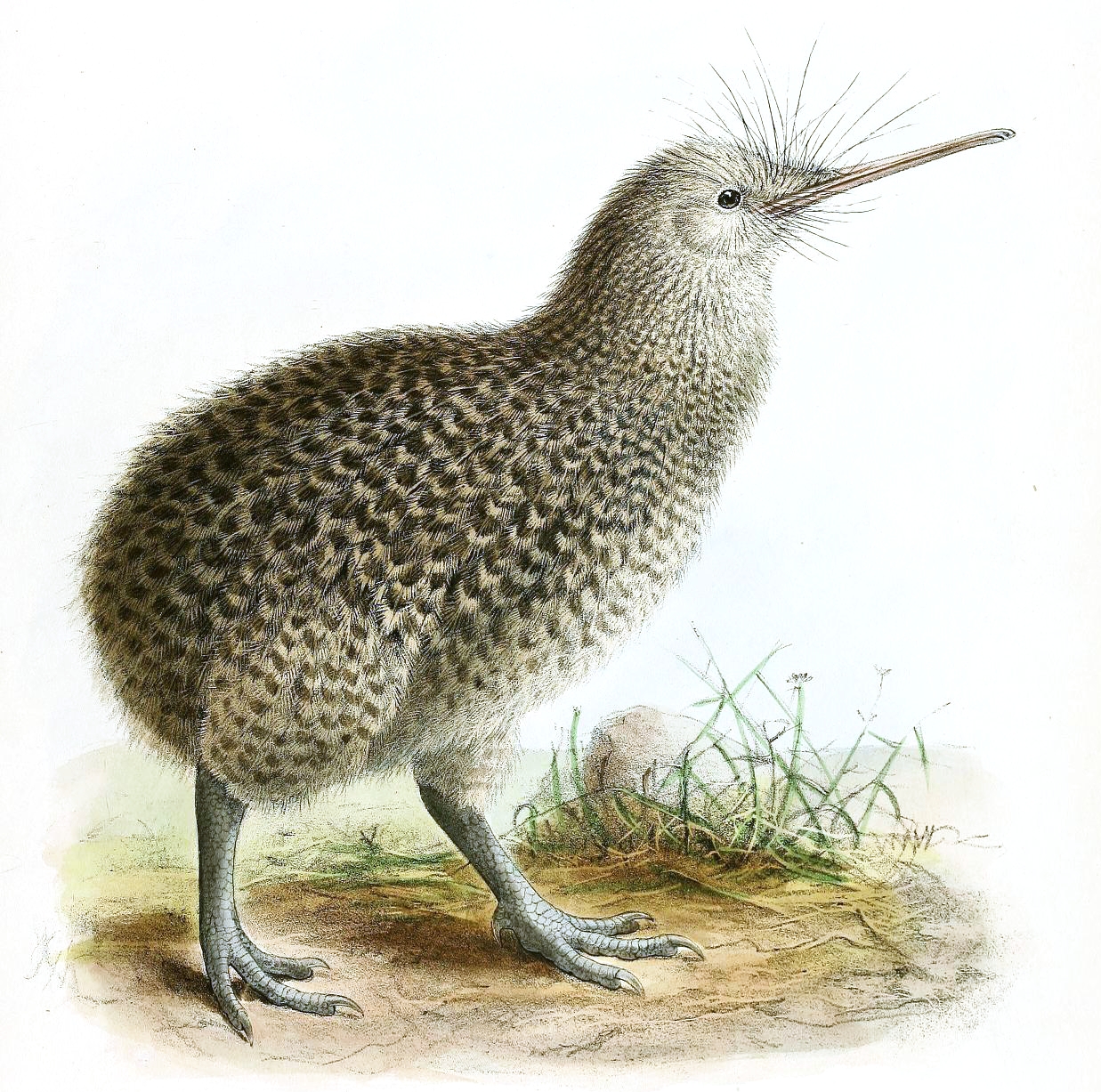
- The Quick Answer: Why the Kiwi Bird Has No Wings It Can Use
- What the Kiwi Bird's No Wings Really Look Like
- Anatomy of a Vestigial Wing
- Feathers Like Hair, Bones Like a Mammal
- Evolution Explained: How the Kiwi Bird No Wings Trait Arose
- An Ancient Breakaway
- Why Flightlessness Is Not a Dead End
- Life Without Flight: How the Kiwi Survives on the Ground
- A Nocturnal Forest Specialist
- The Egg That Defies Belief
- Meet the Five Species: Real Kiwi Examples
- The Threats Facing a Bird That Cannot Fly
- Introduced Predators
- Conservation That Works
- Common Myths About the Kiwi Bird's No Wings
- Conclusion: The Flightless Truth About the Kiwi
- ❓ Frequently Asked Questions
The phrase "kiwi bird no wings" sounds like an exaggeration, but it is closer to the truth than most people realise. New Zealand's national bird is a genuine oddity among birds: it belongs to a group called ratites, has no visible wings, no keel on its breastbone, and no functional flight feathers. Yet the kiwi is not a freak of nature — it is the product of millions of years of evolution on an isolated island archipelago where flying away was never the best survival strategy. This article explains why kiwis lost the ability to fly, what their bodies look like instead, and why their wingless design is a remarkable evolutionary success story rather than a defect.
The Quick Answer: Why the Kiwi Bird Has No Wings It Can Use
Kiwis do technically have wings, but they are tiny — usually under 5 centimetres (about 2 inches) long — and completely hidden beneath the bird's shaggy, hair-like feathers. The wings have no keel bone to anchor flight muscles, no long flight feathers, and no ability to generate lift. Functionally, the kiwi is a wingless bird.
The reason comes down to three intertwined factors: isolation, lack of ground predators, and energy economics. New Zealand separated from the supercontinent Gondwana roughly 80 million years ago, long before mammals spread across most of the planet. With no foxes, cats, badgers or snakes to hunt them, birds on the islands faced little pressure to fly away from danger. At the same time, flight is expensive: it demands huge breast muscles, strong bones and constant food intake. A bird that can feed on the forest floor and hide in dense undergrowth can survive perfectly well — and often better — by investing that energy in reproduction instead.
What the Kiwi Bird's No Wings Really Look Like
Anatomy of a Vestigial Wing
If you could part the kiwi's dense plumage and look closely, you would find a small, stubby appendage with a few thin, hair-like feathers. It cannot fold, flap or extend usefully. Internally, the kiwi's skeleton shows the tell-tale signs of flightlessness: the breastbone (sternum) is flat rather than keeled, and the wing bones are reduced and simplified compared with those of a flying bird such as a sparrow or a gull.
This is a textbook example of vestigial structures — body parts that have lost most or all of their original function through evolution. The kiwi's wings are not useless leftovers in a broken animal; they are the natural endpoint of a species that has simply stopped needing them.
Feathers Like Hair, Bones Like a Mammal
The kiwi's plumage is unlike that of almost any other bird. Its feathers are loose, shaggy and lack the interlocking hooks (barbules) that give most birds their smooth, aerodynamic surface. They look and feel more like coarse hair, which helps the bird stay dry and camouflaged in damp forest litter.
Its bones are also unusually heavy and filled with marrow, rather than hollow and air-filled like those of flying birds. That extra weight is a disadvantage in the air but an advantage on the ground, giving the kiwi stability and strength for digging and running.
Evolution Explained: How the Kiwi Bird No Wings Trait Arose
An Ancient Breakaway
New Zealand's landmass drifted away from Gondwana around 80–85 million years ago. For tens of millions of years, the only land mammals present were bats; the ecological roles normally filled by rodents, rabbits and small deer were instead occupied by birds and reptiles. In that world, flight was optional.
Genetic and fossil evidence suggests the ancestors of modern kiwis arrived in New Zealand by flying or gliding from elsewhere, then gradually lost that ability. Over many generations, birds with smaller wings and lighter flight muscles saved energy, and those traits spread through the population because they carried no survival cost.
Why Flightlessness Is Not a Dead End
Flightlessness has evolved independently on islands around the world — in the dodo of Mauritius, the moa of New Zealand, the elephant bird of Madagascar and the flightless cormorant of the Galápagos. In each case, the pattern is similar: no ground predators plus abundant food equals birds that trade flight for other advantages. The kiwi is one of the most extreme examples, having also lost any meaningful external wing structure.
Far from being "broken," the kiwi has thrived for millions of years. Its lineage is ancient: genetic studies suggest kiwi ancestors split from those of other ratites around 50–60 million years ago, and the birds have been evolving independently in New Zealand ever since.
Life Without Flight: How the Kiwi Survives on the Ground
A Nocturnal Forest Specialist
Kiwis are nocturnal, emerging at dusk to forage in native forest, scrub and sometimes pine plantations. Their eyesight is relatively poor, but they have an extraordinary sense of smell — unique among birds, with nostrils located at the very tip of the bill rather than at the base. They use this to sniff out earthworms, insects, spiders, weta, fallen fruit and small crayfish in the leaf litter.
Their strong legs and powerful claws let them dig burrows, probe the soil and even defend themselves. A kiwi can run surprisingly fast for short distances and will kick with both feet when threatened.
The Egg That Defies Belief
Flightlessness freed up body space and energy, and the kiwi has used it in spectacular fashion. A female brown kiwi weighing around 2–3 kilograms can lay an egg weighing up to 450 grams — roughly 20% of her body weight, and one of the largest eggs relative to body size of any bird. The egg takes about 70–80 days to incubate, and in most species the male takes on the bulk of incubation duty, sitting on the nest for weeks at a time.
Because the kiwi does not need a streamlined, lightweight body for flight, it can afford to carry such a large egg — a clear illustration of how the "no wings" design reshapes the entire animal's biology.
Meet the Five Species: Real Kiwi Examples
There are five recognised species of kiwi, all endemic to New Zealand and all flightless:
- North Island brown kiwi (Apteryx mantelli) — the most numerous, found in the northern North Island; females weigh about 2.8 kg, males about 2.2 kg.
- Southern brown kiwi (Apteryx australis) — includes the Stewart Island and Fiordland populations, among the largest kiwis.
- Great spotted kiwi / roroa (Apteryx haastii) — the largest species, with females reaching around 3.3 kg and standing up to 45 cm tall.
- Little spotted kiwi (Apteryx owenii) — the smallest, around 1 kg; now largely confined to predator-free offshore islands such as Kapiti Island.
- Rowi (Apteryx rowi) — the rarest, with a population of only a few hundred birds centred on the Ōkārito forest on the South Island's West Coast.
Kiwis typically live 25–50 years in the wild, and some individuals have been recorded reaching 60 years in protected sanctuaries. They are territorial, with pairs often calling to each other at night with shrill, whistling cries — the sound that gives the kiwi its Māori name, said to echo the call itself.
The Threats Facing a Bird That Cannot Fly
Introduced Predators
The kiwi's greatest vulnerability today is the very thing that made flightlessness possible: the absence of ground predators. Since humans arrived, stoats, ferrets, possums, rats, cats and dogs have been introduced to New Zealand, and they prey heavily on kiwi chicks. In unmanaged areas, around 95% of wild kiwi chicks die before reaching six months old, mostly killed by stoats. Adults are also attacked by dogs and ferrets.
Habitat loss from logging and land clearance has added further pressure, and vehicle strikes are a local hazard where roads cut through kiwi territory.
Conservation That Works
New Zealand has responded with one of the world's most intensive bird conservation programmes. Organisations including the Department of Conservation, Kiwis for kiwi and local community groups run predator-trapping networks, Operation Nest Egg (which incubates and hand-rears chicks before releasing them into predator-free areas) and fenced sanctuaries such as Zealandia in Wellington. The results are measurable: in well-managed sites, chick survival has risen dramatically, and some populations are now stable or growing.
The kiwi's unusual biology — its slow reproduction, long lifespan and large eggs — makes it vulnerable but also manageable: protect enough adults and chicks, and populations can recover over decades.
Common Myths About the Kiwi Bird's No Wings
Myth 1: Kiwis have no wings at all. They do have wings, but they are tiny, hidden and functionless. The "no wings" description is a practical shorthand, not a literal anatomy lesson.
Myth 2: Kiwis are closely related to chickens or emus. Kiwis are ratites, related to emus, ostriches and cassowaries, but their closest living relatives are actually the extinct elephant birds of Madagascar — a surprising link revealed by DNA studies.
Myth 3: Kiwis cannot defend themselves. They are shy, but a cornered kiwi can deliver powerful kicks and use its sharp claws. Their main defence, however, is hiding and staying still.
Myth 4: Flightlessness makes them "primitive." Losing flight is a derived, specialised trait — an adaptation to a particular environment, not a sign of backwardness. In the right conditions, it is highly successful.
Conclusion: The Flightless Truth About the Kiwi
The kiwi bird's lack of working wings is not a flaw but a finely tuned adaptation. Isolated on predator-free islands for millions of years, its ancestors traded the costly machinery of flight for stronger legs, sharper smell, bigger eggs and a quiet life in the undergrowth. The result is a bird that walks, sniffs, digs and kicks its way through the New Zealand night — and has done so for millions of years.
Today, that same evolutionary bargain leaves the kiwi exposed to introduced predators, and its survival depends on human effort. Understanding why the kiwi has no wings is more than a curiosity: it explains both the bird's remarkable design and the urgent need to protect it, so that this flightless icon continues to call through the forest long into the future.
❓ Frequently Asked Questions
💬 Do kiwi birds really have no wings at all?
Kiwis do have wings, but they are tiny, stubby vestiges—usually only a few centimeters long—that are completely hidden beneath their shaggy feathers. They are useless for flight and barely visible externally.
💬 Why did kiwi birds evolve to be flightless?
Kiwis evolved in New Zealand, which had no native land mammals to prey on them, so flying was not needed for escape and their ancestors lost the costly muscle and bone mass required for flight. With no ground predators, they could safely forage on the forest floor and invest energy in other traits.
💬 Are kiwi birds the only birds without wings?
No—every bird has wings in some form, but several flightless species have reduced them, including the kiwi, the extinct moa, and the penguin (which has flipper-like wings). Kiwis are unusual for having wings so small they are essentially invisible.
💬 Can kiwi birds fly even a little?
No, kiwis cannot fly at all—their tiny wings and lack of a keeled breastbone for flight muscles make flight impossible. They are built for walking and running on the forest floor, with strong legs and powerful claws.