- Why Do Koalas Sleep So Much? The Core Answer
- The Energy Budget of a Leaf-Eater
- Why Do Koalas Sleep 20 Hours a Day? Digestion, Toxins, and a Slow Metabolism
- A Fermentation Tank on Four Legs
- Detoxing a Poisonous Diet
- A Low-Power Metabolism
- When Are Koalas Actually Awake?
- Where Do Koalas Live, and Does Habitat Affect Their Sleep?
- Real Examples of Koala Habitat
- Koala Life History: Lifespan, Breeding, and Behaviour
- Threats That Interrupt the Sleepy Routine
- Common Myths About Koala Sleep
- How Koalas Compare With Other Sleepy Mammals
- The Sleepy Truth: Conservation and Coexistence
- Conclusion
- ❓ Frequently Asked Questions
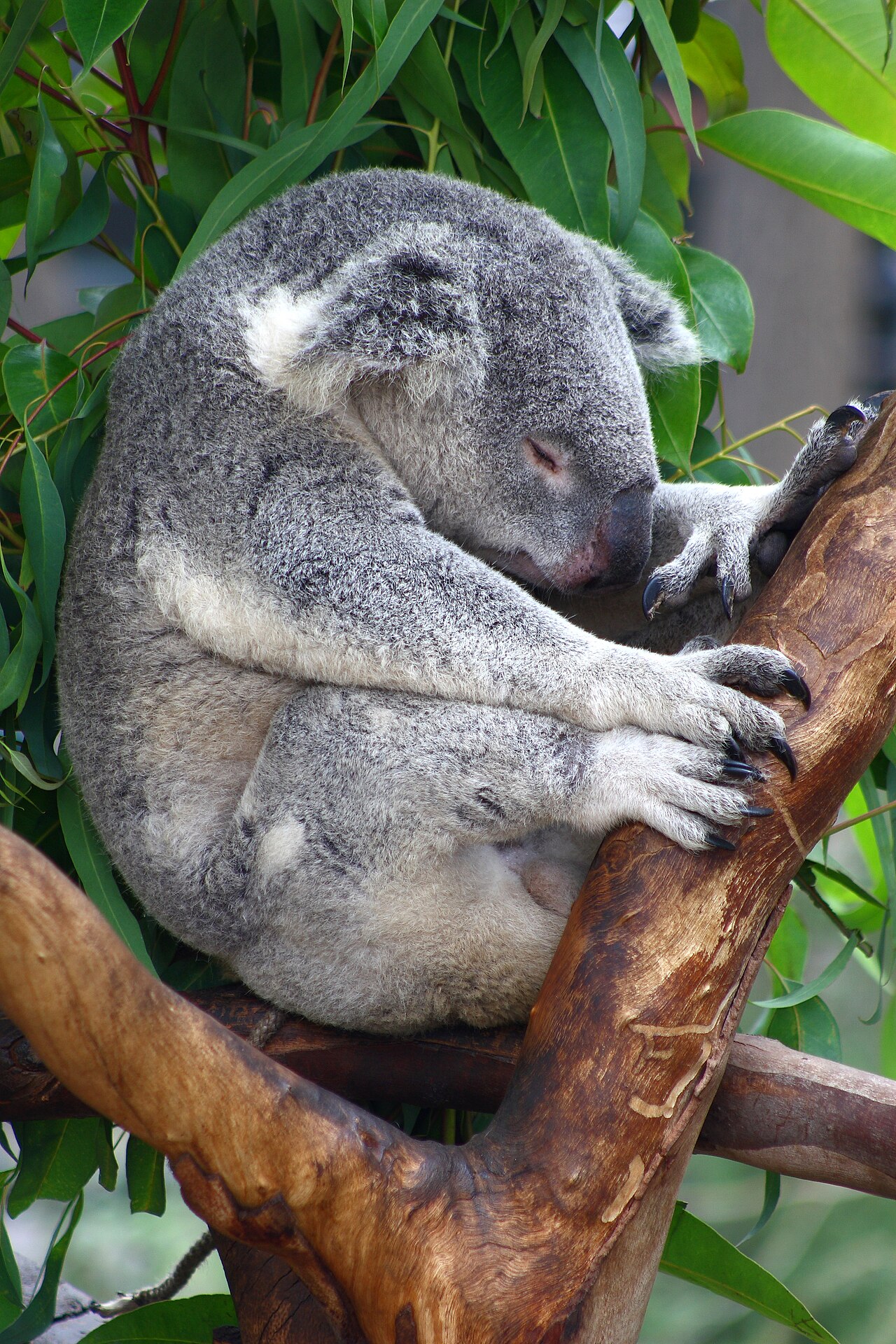
If you've ever watched a koala at a zoo, you've probably seen it doing one of two things: clinging to a branch or fast asleep. There's a good reason for that. When people ask why do koalas sleep so much, the short answer is that their entire survival strategy is built around a low-energy food source, and sleep is how they balance the books. Koalas routinely sleep or rest for 18 to 22 hours a day, making them one of the sleepiest mammals on Earth. But that famous drowsiness is not laziness, and it's not boredom. It's a finely tuned biological compromise shaped by millions of years of evolution in the eucalyptus forests of eastern Australia. Let's dig into the science behind those long, leafy naps.
Why Do Koalas Sleep So Much? The Core Answer
Koalas are folivores, meaning they eat leaves, and their leaves of choice come almost exclusively from eucalyptus trees. Eucalyptus foliage is one of the toughest diets in the mammal world. It is low in protein and available energy, high in indigestible fibre and lignin, and loaded with toxic plant compounds called terpenes and phenolics that would poison most animals. A koala's body has to work hard to extract a modest amount of nutrition from every mouthful, and the digestive process is slow and energy-hungry.
Because the food yields relatively little usable energy, koalas cannot afford to burn much. Running, climbing, fighting, or even staying awake and alert for long stretches costs calories they simply don't have to spare. Sleeping dramatically reduces metabolic demand: heart rate and breathing slow, body temperature regulation eases, and the animal conserves the energy it has slowly harvested from its leaves. In other words, sleep is not a luxury for a koala — it's an energy-management strategy.
The Energy Budget of a Leaf-Eater
Think of a koala's daily life as a strict budget. A typical adult koala weighs around 4 to 15 kilograms (9 to 33 pounds), with southern koalas generally larger than northern ones. It may eat roughly 400 to 500 grams (about 0.9 to 1.1 pounds) of leaves per day, though intake varies with the season and the tree species. From that modest harvest, the animal must power digestion, temperature regulation, climbing, and reproduction. There is very little left over for sustained activity. The result is a lifestyle of long rest periods punctuated by short, focused feeding bouts, usually at night.
Why Do Koalas Sleep 20 Hours a Day? Digestion, Toxins, and a Slow Metabolism
The 20-hour figure is often quoted, and while it's at the upper end of the range, it captures the essence of koala behaviour. Wild koalas typically rest or sleep for 18 to 22 hours per day, depending on the individual, the weather, and the season. Several interlocking factors explain this extreme pattern.
A Fermentation Tank on Four Legs
Koalas are hindgut fermenters. They have an unusually large caecum — a pouch-like section of the large intestine — where symbiotic bacteria break down fibrous plant material the koala's own enzymes cannot digest. This fermentation process is slow. Food can take many hours, sometimes well over a day, to pass through the digestive tract. Resting quietly, rather than expending energy on movement, supports this slow internal factory and helps the animal get the most nutrition out of every leaf.
Detoxing a Poisonous Diet
Eucalyptus leaves contain compounds that are toxic to most mammals. Koalas have evolved a specialised liver that helps process these chemicals, and they are selective about which leaves they eat, favouring species and individual trees with lower toxin levels and higher moisture. Detoxification itself is metabolically expensive. A koala that spent its day racing through the canopy would have little energy left to neutralise the poisons in its food. Sleep and rest help balance this chemical workload.
A Low-Power Metabolism
Compared with similar-sized mammals, koalas have a relatively low metabolic rate. They also conserve water cleverly: they obtain much of their moisture from leaves and dew, and they can survive on relatively little drinking water — though they do drink, especially during hot, dry periods, and research has shown they sometimes seek out free water in tree trunks after rain. A low metabolic rate plus a low-energy diet equals a very sleepy animal.
When Are Koalas Actually Awake?
Koalas are crepuscular and nocturnal in their activity patterns. They are most active around dawn and dusk and during the night, when temperatures are cooler and the risk of overheating and water loss is lower. During the heat of the day, they tend to be inactive, often curled into a ball high in a tree fork. This schedule makes sense: moving in the cool hours reduces the energy and water cost of activity.
Even when "awake," koalas are not exactly energetic. They move deliberately and spend long periods simply sitting still, chewing, or dozing. A feeding bout may last 20 to 40 minutes before the animal settles back into rest. Observers often describe koalas as having short windows of activity scattered through the night, with long recovery periods in between.
Where Do Koalas Live, and Does Habitat Affect Their Sleep?
Koalas are native to eastern and south-eastern Australia, from far north Queensland down through New South Wales and Victoria to parts of South Australia. They live in eucalypt woodlands and forests, and their range closely tracks the distribution of the tree species they prefer to eat. There are regional differences in size and appearance: northern koalas tend to be smaller and lighter-coloured, while southern koalas are larger and shaggier, with thicker fur for colder winters.
Habitat quality directly influences sleep behaviour. Koalas in areas with abundant, high-quality food trees can afford a more relaxed routine. In degraded habitat, animals may need to travel further between food trees, which costs energy and can increase stress. Habitat loss and fragmentation are among the biggest threats to koala populations, and they matter not just for food but for the animal's whole energy balance.
Real Examples of Koala Habitat
In Victoria, koalas are strongly associated with forests dominated by species such as manna gum and river red gum. On French Island in Victoria, a long-isolated koala population became famous for its high density and for the management challenges that followed. In Queensland, koalas favour trees such as forest red gum and tallowwood. On Kangaroo Island in South Australia, koalas were introduced in the 1920s and became so numerous that they heavily browsed certain tree species, prompting population management programs. These examples show how tightly koala fortunes are tied to specific trees.
Koala Life History: Lifespan, Breeding, and Behaviour
Wild koalas typically live around 10 to 12 years, though some individuals live longer, and females generally outlive males. They are largely solitary, maintaining home ranges that overlap but avoiding close contact except during breeding. Males mark territory with scent from a chest gland and communicate with a deep, rumbling call that can carry a surprising distance through the forest.
Breeding is slow and energy-intensive, which is another reason a koala cannot afford a wasteful lifestyle. Females usually produce one joey per year at most, and the joey spends months developing in the pouch before riding on its mother's back. Reproduction, like everything else in a koala's life, has to fit within a tight energy budget.
Threats That Interrupt the Sleepy Routine
Koalas face serious pressures: habitat clearing, urban development, bushfires, drought, vehicle strikes, dog attacks, and disease — notably chlamydial infection, which can cause blindness and infertility. The 2019–2020 Australian bushfires destroyed vast areas of koala habitat and killed or injured thousands of animals, drawing global attention to their plight. When koalas are stressed, sick, or forced to travel across cleared land, their carefully balanced routine breaks down, and their reserves of energy and time are stretched thin.
Common Myths About Koala Sleep
Because koalas are so famously drowsy, several myths have grown up around them. Here are a few corrections:
- Myth: Koalas are "drunk" on eucalyptus. Reality: the drowsiness comes from a low-energy diet and slow digestion, not intoxication. Eucalyptus toxins are real, but koalas process them with specialised physiology.
- Myth: Koalas are bears. Reality: koalas are marsupials, not bears. They give birth to tiny, underdeveloped young that complete development in a pouch.
- Myth: Koalas never drink water. Reality: they get much of their moisture from leaves, but they do drink, particularly in hot or dry conditions.
- Myth: Koalas are lazy by choice. Reality: sleeping is an essential survival adaptation, not a character flaw.
How Koalas Compare With Other Sleepy Mammals
Koalas are often ranked among the sleepiest mammals, alongside sloths, which may sleep around 15 to 20 hours in captivity (wild sloth sleep is often less), and some bats, which can sleep for very long periods. But comparisons are tricky: sleep measurements vary between studies and between wild and captive animals. The key point is that koala sleep is not an outlier of laziness — it is a predictable outcome of eating a poor-quality, toxic diet.
The Sleepy Truth: Conservation and Coexistence
The next time someone asks why koalas sleep so much, the answer is richer than "because they're lazy." A koala's long rest is the visible sign of an extraordinary evolutionary bargain: a specialised gut, a detoxifying liver, a low metabolic rate, and a selective appetite for eucalyptus leaves. Every one of those adaptations points toward energy conservation, and sleep is the simplest way to conserve energy.
That also means koala conservation is about more than protecting cute animals. It is about protecting the specific trees, connected forests, and healthy ecosystems that make this delicate energy balance possible. When habitat disappears, the sleepy routine becomes a struggle for survival. Protecting koala habitat protects one of the most distinctive mammals on Earth — and preserves the fascinating biology behind its famous 20-hour nap.
Conclusion
Koalas sleep so much because their food gives them so little to work with. A diet of tough, toxic eucalyptus leaves demands slow digestion, costly detoxification, and careful energy budgeting, so koalas spend 18 to 22 hours a day resting or sleeping and reserve their limited active hours for feeding and breeding. Their low metabolic rate, specialised gut, and selective eating habits all reinforce this pattern. Far from being lazy, koalas are masters of efficiency — and their sleepy lifestyle is a survival strategy worth understanding and protecting.
❓ Frequently Asked Questions
💬 Are koalas really awake for only 4 hours a day?
It varies, but koalas commonly sleep or rest around 18–22 hours per day, so roughly 2–6 waking hours is a fair estimate. They are most active around dusk and at night, and even then they move slowly and rest often between feeds.
💬 Why does a low-energy diet make koalas sleep so much?
Koalas eat almost nothing but eucalyptus leaves, which are low in energy, high in indigestible fibre, and toxic to most animals. Digesting them takes a lot of time and energy, so koalas conserve energy by resting and sleeping for most of the day.
💬 Do koalas sleep so much because eucalyptus makes them drunk or high?
No, that's a myth. Eucalyptus does contain toxic compounds, but koalas have specialised liver enzymes and gut microbes that detoxify them; the long sleep is mainly about saving energy and digesting a poor-quality diet, not intoxication.
💬 Do koalas sleep more than sloths or cats?
Koalas are among the sleepiest mammals, typically resting 18–22 hours a day, which is similar to or slightly more than sloths and well above the roughly 12–16 hours typical of domestic cats. Exact figures vary between studies and individual animals.