- Why Do People Think Sea Turtles Cry?
- The Real Reason Sea Turtles Cry: It Is About Salt, Not Sorrow
- Why Sea Turtles Cannot Simply Drink Seawater
- What the Tears Actually Contain
- Why Nesting Females Cry the Most
- Why Do Sea Turtles Cry Sand Out of Their Eyes?
- Meet the Salt Gland: Nature's Desalination Plant
- How the Gland Works
- How It Compares to Other Marine Animals
- Sea Turtle Basics: The Animals Behind the Tears
- Size, Range, and Lifespan
- Diet and Habitat
- Other Sea Turtle Behaviors That Get Misread
- The "Grieving Mother" Story
- Temperature-Dependent Sex Determination
- Natal Homing
- Conservation: Why the Salt Gland Story Matters
- The Truth Behind Sea Turtles Cry
- ❓ Frequently Asked Questions
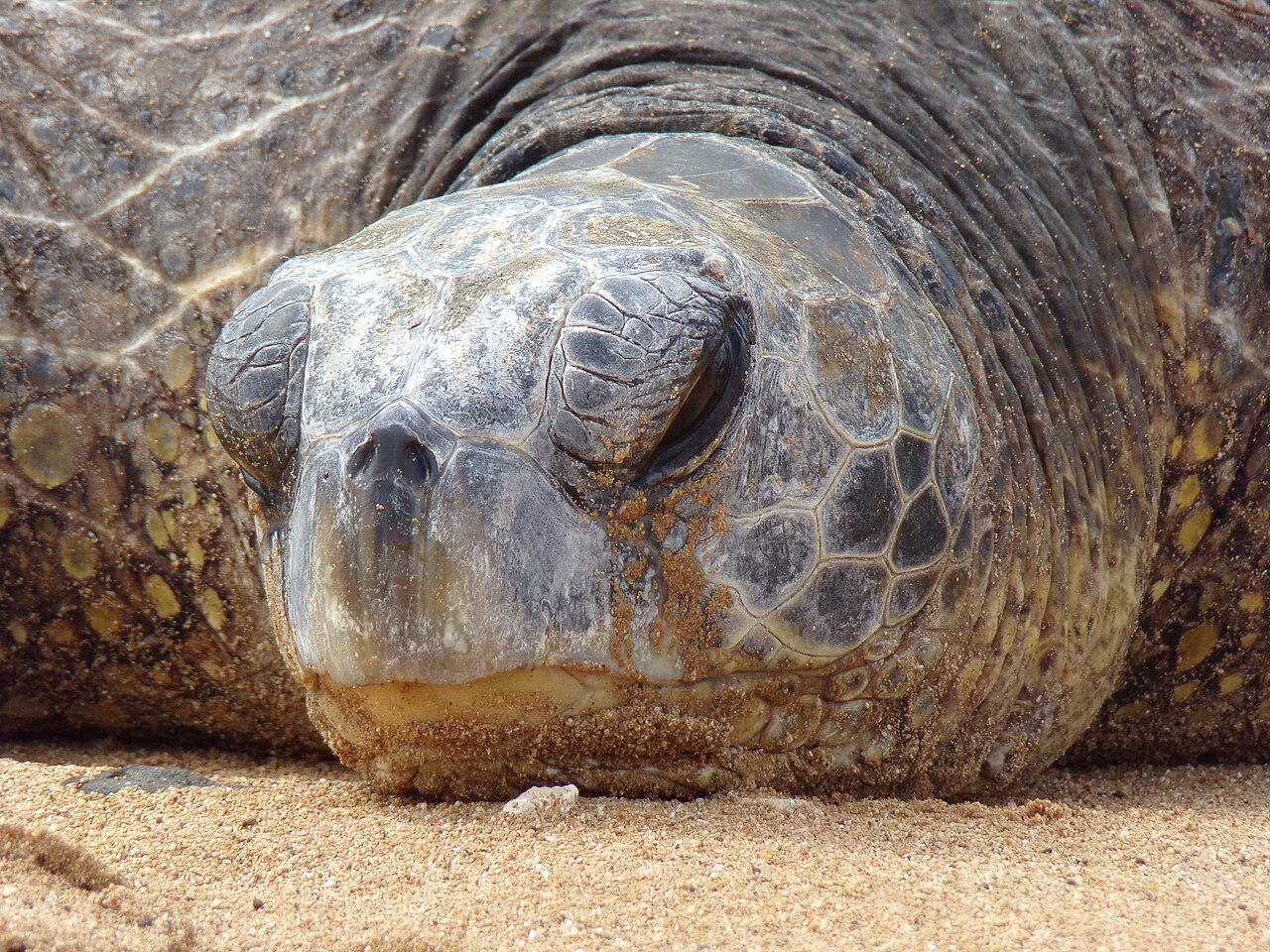
If you have ever watched a female green sea turtle haul herself onto a moonlit beach, dig a nest with her rear flippers, and then sit there with tears streaming down her face, you have witnessed one of the most misunderstood scenes in nature. People say sea turtles cry because they are in pain, because they are mourning the eggs they will never see hatch, or because they are simply sad. It is a beautiful, human story — and it is almost entirely wrong. The real reason is far stranger, far more practical, and honestly more impressive than heartbreak.
Why Do People Think Sea Turtles Cry?
The myth is old and it is global. Sailors, beachgoers, and even some early naturalists watched nesting females weep what looked like heavy tears and assumed the animals were grieving. The timing seems to demand it: a mother turtle spends hours crawling out of the surf, excavating a hole up to 60 centimeters (about 2 feet) deep, laying 80 to 120 leathery eggs the size of ping-pong balls, and covering them again. Then she drags herself back to the ocean and never returns. If any animal had a reason to weep, it would be her.
The problem is that this interpretation projects human emotions onto a reptile with a brain roughly the size of a walnut. Sea turtles are not social in the way mammals are. They do not form pair bonds, they do not raise their young, and they never meet their hatchlings. There is no evidence that they experience grief in the way the myth requires. What they do experience — reliably, every single time they come ashore — is sand.
The Real Reason Sea Turtles Cry: It Is About Salt, Not Sorrow
The tears you see are produced by a special organ called the salt gland, sometimes called the lachrymal gland, located near the corner of each eye. Its entire job is to remove excess salt from the turtle's body. Sea turtles cry to stay alive, not to express emotion.
Why Sea Turtles Cannot Simply Drink Seawater
Seawater is roughly three times saltier than the fluids inside a sea turtle's body. If a turtle drank seawater and retained all that salt, its cells would steadily lose water to the surrounding brine and the animal would dehydrate while surrounded by water — a lethal paradox. Reptiles cannot produce the concentrated urine that mammals and birds use to dump salt, so sea turtles evolved a different solution: they push salt out through their eyes.
The chemistry is remarkable. The salt gland can secrete a fluid that is more concentrated than seawater itself, which means the turtle loses salt while losing very little water. That is the trick that lets a reptile survive in an environment that would kill most land animals within days. A sea turtle that never came ashore would still "cry" constantly, because the gland runs around the clock.
What the Tears Actually Contain
Those tears are not the watery, mildly salty film that forms in a human eye. They are a thick, highly concentrated brine loaded with sodium and chloride, plus trace amounts of other ions. Researchers who have sampled the fluid describe it as viscous and notably saltier than the ocean. If you have ever accidentally gotten seawater in your mouth, imagine something considerably stronger.
Why Nesting Females Cry the Most
The crying is most obvious on the beach for two reasons. First, a nesting female has usually just spent weeks or months feeding in the open ocean, swallowing prey whole and taking in seawater along with it, so her salt load is high. Second, she is out of the water and in bright sunlight, and the tears have nowhere to go — they stream down her face and drip onto the sand instead of dispersing into the sea. Males, juveniles, and turtles that never leave the water cry just as much; we simply cannot see it as easily.
Why Do Sea Turtles Cry Sand Out of Their Eyes?
There is a second, smaller reason the tears show up at nesting time: they help flush away grit. A female digging a body pit kicks up clouds of dry sand, and she uses her rear flippers to scoop and pack earth directly beneath her face. Sand grains, dust, and debris get into her eyes. The constant flow of fluid from the salt gland doubles as a rinse, carrying particles away from the cornea.
So the answer to "why do sea turtles cry" is layered. The gland is always working to manage salt, and on the beach that same flow happens to keep the eyes clear of abrasive sand. It is an elegant bit of biological multitasking rather than a display of emotion.
Meet the Salt Gland: Nature's Desalination Plant
The salt gland is one of the most specialized organs in the reptile world, and sea turtles are not the only animals that have one — but they have refined it to an extreme degree.
How the Gland Works
Blood carrying excess sodium and chloride flows through a dense network of tiny vessels inside the gland. Specialized cells actively pump those ions out of the blood and into a system of ducts, dragging water along with them through osmosis. The resulting brine drains to the surface of the eye through a duct near the tear duct. The process is active, meaning it costs the turtle energy, and it can run continuously for hours.
How It Compares to Other Marine Animals
Other ocean creatures solve the salt problem in different ways, and the variety is fascinating:
- Marine birds such as albatrosses and gulls have salt glands above the eyes that drip concentrated brine out of the nostrils — the "dripping nose" you sometimes see on seabirds.
- Marine iguanas of the Galápagos sneeze salt out through their noses, sometimes leaving a crusty white deposit on their heads.
- Sharks and rays keep their body fluids nearly as salty as seawater, so they face far less of an osmotic problem.
- Sea snakes have salt glands under the tongue and excrete brine into their mouths.
- Whales and dolphins get most of their water from their food and produce concentrated urine rather than relying on a salt gland.
Sea turtles sit in a category of their own among reptiles because of how much brine their glands can produce and how central that output is to their survival.
Sea Turtle Basics: The Animals Behind the Tears
To appreciate the salt gland, it helps to know the animals that depend on it. There are seven living species of sea turtle, and all of them are marine, all of them lay eggs on land, and all of them face serious conservation pressure.
Size, Range, and Lifespan
Sea turtles vary enormously in size. The leatherback is the giant of the group, reaching 1.8 to 2.2 meters (6 to 7 feet) in shell length and weighing 250 to 700 kilograms (550 to 1,540 pounds); the largest reliably measured individuals have exceeded 900 kilograms. The green sea turtle typically grows to about 1 to 1.2 meters (3 to 4 feet) and 130 to 180 kilograms (290 to 400 pounds). The hawksbill is smaller, usually 60 to 90 centimeters (2 to 3 feet), and the Kemp's ridley — the smallest and most endangered species — rarely exceeds 65 centimeters (about 2 feet) and 45 kilograms (100 pounds).
Their ranges are vast. Leatherbacks cross the entire Atlantic and Pacific, diving to depths of more than 1,200 meters (nearly 4,000 feet) in pursuit of jellyfish. Green turtles graze seagrass meadows from the Caribbean to the Indo-Pacific. Flatbacks live only in the waters around northern Australia and Papua New Guinea, while Kemp's ridleys are concentrated almost entirely in the Gulf of Mexico.
Lifespans are long but hard to pin down precisely. Green sea turtles are thought to live 60 to 70 years or more, and some species may reach 80. Sexual maturity is slow — greens may not breed until they are 20 to 50 years old, depending on the population — which is one reason recovery from population declines is so painfully slow.
Diet and Habitat
Diet varies dramatically by species and often shifts with age:
- Green sea turtles are the only largely herbivorous adults, cropping seagrass and algae. Juveniles eat a mix of plants and small invertebrates.
- Leatherbacks feed almost exclusively on jellyfish and other soft-bodied plankton, which is why floating plastic bags are so deadly to them.
- Hawksbills specialize in sponges on coral reefs, using their narrow, beak-like jaws to reach into crevices.
- Loggerheads crush hard-shelled prey such as whelks, crabs, and conchs with powerful jaws.
- Olive ridleys and Kemp's ridleys are omnivorous bottom feeders, taking crabs, shrimp, mollusks, and occasionally fish.
Habitat ranges from shallow coastal seagrass beds and coral reefs to the open pelagic zone. Hatchlings of most species spend their early years drifting in seaweed mats such as Sargassum, feeding at the surface and hiding from predators — a phase sometimes called the "lost years" because it is so difficult for scientists to study.
Other Sea Turtle Behaviors That Get Misread
Sea turtle tears are not the only behavior people misinterpret. Several other habits get wrapped in human meaning they do not deserve.
The "Grieving Mother" Story
After laying, a female covers the nest, disguises the site by throwing sand around, and returns to the sea. She does not wait, does not look back, and will never recognize her offspring. This is not coldness — it is a reproductive strategy that works. By leaving immediately, she avoids drawing predators to the nest and returns to feeding grounds to build energy for the next clutch. A single female may lay several clutches in one season, sometimes four to seven, spaced about two weeks apart.
Temperature-Dependent Sex Determination
Another surprising fact: the sex of sea turtle hatchlings is not set by chromosomes but by nest temperature. Warmer sand produces more females, cooler sand produces more males, with the pivot point typically around 29 degrees Celsius (about 84 degrees Fahrenheit). As beaches warm with climate change, some populations are producing heavily female-biased clutches, which is a serious long-term concern for breeding.
Natal Homing
Females return to nest on or near the beach where they hatched, sometimes after traveling thousands of kilometers. They navigate using a combination of Earth's magnetic field, ocean currents, wave direction, and possibly chemical cues. How they store a magnetic "map" of their home beach for decades remains an active area of research.
Conservation: Why the Salt Gland Story Matters
Understanding that sea turtles cry salt, not tears, is not just trivia. It matters because it clarifies how fragile these animals are and how specific their needs are.
Because sea turtles must drink seawater and rely on their salt glands to manage it, anything that damages those glands or disrupts their water balance is a serious threat. Oil spills are especially dangerous: petroleum can coat and clog the glands and irritate the eyes, and ingested oil damages the digestive tract. Plastic pollution is another major hazard. A floating plastic bag looks like a jellyfish to a leatherback, and a stomach full of plastic can cause starvation, blockages, and a slow death. Light pollution on nesting beaches disorients hatchlings, which instinctively crawl toward the brightest horizon — historically the moonlit ocean, now often a parking lot or hotel.
All seven species are listed as vulnerable, endangered, or critically endangered by the International Union for Conservation of Nature. Kemp's ridley, once reduced to a few hundred nesting females, has recovered somewhat thanks to protected beaches and turtle excluder devices in shrimp nets, but remains critically endangered. Conservation measures that work include:
- Protecting nesting beaches and restricting nighttime lighting during hatching season.
- Requiring turtle excluder devices (TEDs) in trawl nets so turtles can escape.
- Reducing single-use plastics and cleaning up coastlines.
- Regulating coastal development and beach armoring that destroys nesting habitat.
- Monitoring and treating injured turtles at rehabilitation centers, where staff often flush and examine the salt glands as part of care.
There is a satisfying irony here: the same tears that launched a sentimental myth are one of the clearest signals of how finely tuned these animals are to ocean life — and how much they lose when that ocean is damaged.
The Truth Behind Sea Turtles Cry
Sea turtles cry because they are built to survive in salt water, not because they are heartbroken. The tears streaming down a nesting female's face are concentrated brine pushed out by a specialized salt gland, mixed with the practical benefit of rinsing sand from her eyes. There is no grief in the behavior, but there is something arguably more remarkable: an organ that turns a deadly environment into a livable one, drop by drop.
The next time you watch a turtle on a beach, you can appreciate the scene for what it really is. She has crossed an ocean, navigated by magnetic field, hauled a body weighing well over a hundred kilograms onto land, and dug a nest with her hind flippers in the dark. And all the while, her eyes are running with salt, keeping her alive. That is not a tragedy. It is one of the best-adapted survival stories in the sea — and it is happening right in front of you.
❓ Frequently Asked Questions
💬 Why do sea turtles cry salt water?
Sea turtles have special glands near their eyes, called salt glands, that filter excess salt out of their blood and release it as a concentrated salty tears. Because they drink seawater and absorb salt from their food, this is how they get rid of salt their kidneys can't handle.
💬 Is a sea turtle crying because it's sad?
No, the tears have nothing to do with emotion. It's a purely physical process for removing excess salt from the body, so a 'crying' sea turtle isn't sad or in pain.
💬 Do sea turtles cry only when they're on land?
They release salt water both in the ocean and on land, but you're most likely to notice it on the beach, such as when a female nests. The tears can also help wash sand out of her eyes while she digs.
💬 Do all sea turtles have salt glands?
Yes, all sea turtle species have salt glands, though they are especially large and well developed in sea turtles compared with their freshwater relatives. The glands sit near the eyes and are the reason they can survive drinking salt water.