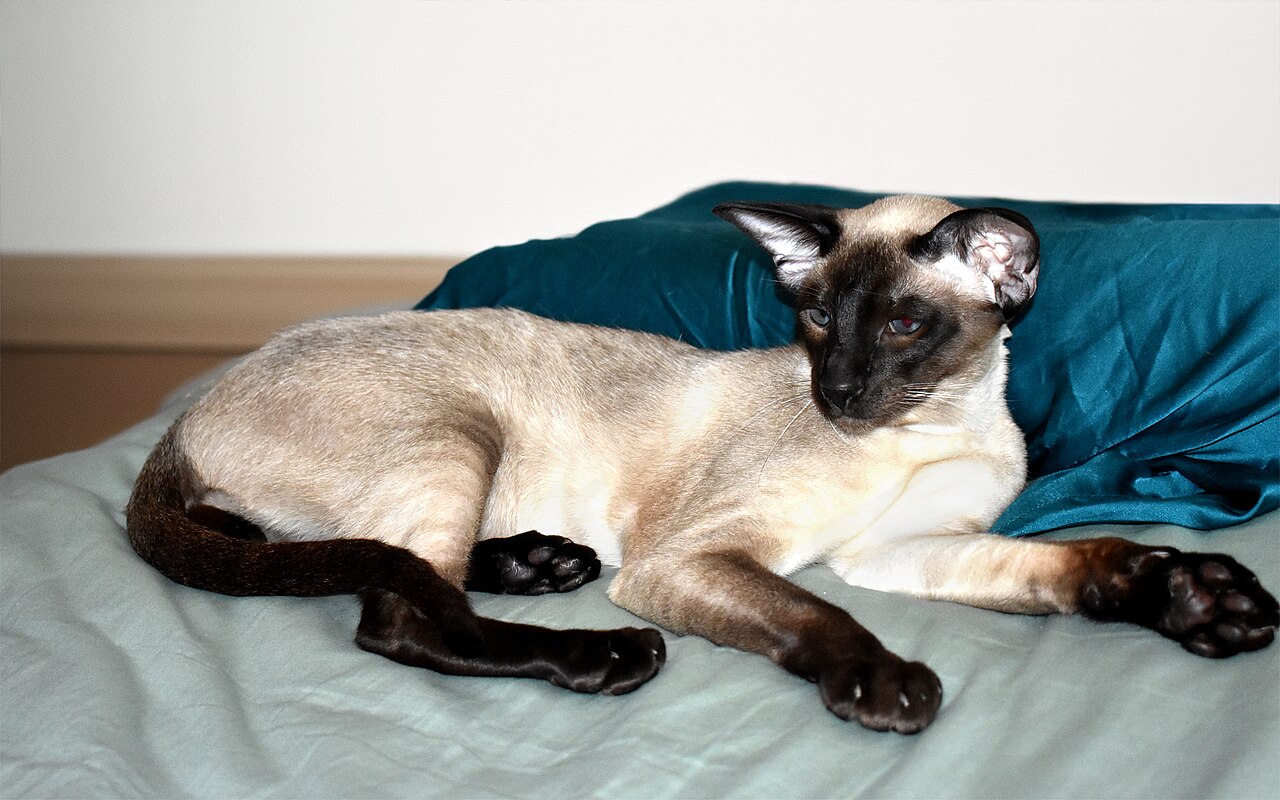
- The Anatomy of Siamese Cat Ears: Built for Sound and Expression
- The Genetics Behind the Points: Why Are the Ears Darker?
- Historical Origins: The Royal Cats of Siam
- Traditional vs. Modern: The Wedge Head and the Ear
- The Traditional (Applehead) Siamese
- The Modern (Wedgehead) Siamese
- Behavioral Traits: What Your Siamese Is Telling You With Its Ears
- Health, Care, and the Pointy Ear
- Lifespan, Diet, and Living with a Pointy-Eared Companion
- Conclusion: The Pointy Ear is a Masterpiece of Form and Function
- ❓ Frequently Asked Questions
When you picture a Siamese cat, the first things that likely come to mind are its striking blue almond-shaped eyes, its sleek color-point coat, and, of course, those unmistakable, large, pointy Siamese cat ears that seem to perk up at the slightest sound. These ears are more than just a cute feature; they are a defining characteristic of the breed, a product of both ancient genetics and modern selective breeding. But the real truth behind those pointy ears is a fascinating story that blends feline anatomy, history, and even a bit of genetic luck. Let’s dig deep into why these cats look the way they do and what those ears are actually telling you.
The Anatomy of Siamese Cat Ears: Built for Sound and Expression
To understand why Siamese cats have pointy ears, we first need to look at the physical structure. The ear of a Siamese is not just "pointy" in a superficial sense; it is a highly specialized organ. The visible part of the ear, called the pinna, is what gives the cat its triangular, pointed silhouette. In Siamese cats, the pinna is notably large and wide at the base, tapering to a sharp point. This shape acts like a satellite dish, funneling sound waves directly into the ear canal.
Compared to a rounded-ear breed like the Scottish Fold, the Siamese pinna is longer and more open. This increased surface area allows for greater sound localization. In the wild, ancestors of domestic cats relied on pinpointing the rustle of a mouse in tall grass. The Siamese, bred for generations in the temples and palaces of Thailand (formerly Siam), retained this acute hearing ability. The pointed shape specifically helps to minimize sound distortion, allowing the cat to rotate its ears up to 180 degrees independently to isolate specific frequencies, a trait that makes them incredibly responsive to their human companions.
Furthermore, the skin on the Siamese ear is very thin and close to the underlying cartilage. This gives the ear a delicate, almost translucent quality, especially at the tips. Because the blood vessels are so close to the surface, the ears are also a highly effective cooling mechanism. When a Siamese cat gets hot, the blood vessels in the ears dilate to release body heat, which is why their ears may feel warm to the touch after a play session. This structural efficiency is a key reason why the pointy shape persisted in the breed’s development.
The Genetics Behind the Points: Why Are the Ears Darker?
You cannot discuss Siamese cat ears without addressing the distinctive color pattern. The ears, along with the face, paws, and tail, are darker than the rest of the body. This is due to a specific gene mutation known as the Himalayan gene (or cs allele). This gene codes for an enzyme called tyrosinase, which is crucial for producing melanin, the pigment that colors fur.
Here is the critical part: this tyrosinase enzyme is temperature-sensitive. It only functions effectively in cooler areas of the body. A Siamese kitten is born completely white because the temperature inside the mother’s womb is uniformly warm, deactivating the enzyme. After birth, the extremities—the ears, paws, tail, and face—cool down significantly because they are furthest from the core body heat. As the kitten grows, the cooler skin on the ears allows the enzyme to activate, producing dark pigment.
This explains why the ears are always the first part of a Siamese to "develop" their color, usually within the first few weeks of life. The pointy shape of the ear actually works in tandem with this genetic quirk. Because the ear is thin and protrudes outward, it loses heat more rapidly than a thick, rounded ear would. This lower temperature ensures that the dark pigment development is most pronounced on the ear tips, creating that stark, elegant contrast against the pale cream body. So, the pointy shape is not just about hearing; it is a physical adaptation that enhances the visual signature of the breed.
Historical Origins: The Royal Cats of Siam
The story of the Siamese cat’s ears begins in ancient Thailand. These cats were held in high esteem, often residing in royal palaces and Buddhist temples. The breed was so revered that they were believed to be guardians of the soul, and upon the death of a royal family member, a Siamese cat was said to receive the soul, which would then be transferred to a new temple or palace.
Historical manuscripts, such as the Tamra Maew (The Cat-Book Poems), date back to the Ayutthaya Kingdom (1351–1767) and depict cats with slender, dark-pointed faces and large, alert ears. These early depictions show that the pointed ear shape was already a recognized trait centuries ago. However, the cats of that era were often described as having a more rounded head and less extreme ear length than modern Siamese.
The breed first appeared in the West in 1884, when the British Consul-General in Bangkok, Edward Blencowe Gould, brought a pair of these cats back to England for his sister. They caused an immediate sensation. Early Western breeders were captivated by the exotic look, but they also began to selectively breed for more exaggerated features. The goal was to enhance the "oriental" look—pushing for a longer, more wedge-shaped head and larger, more prominent ears. This selective pressure over the last 130 years is the primary reason why the modern Siamese has such dramatically pointy ears compared to the traditional "Applehead" Siamese, which still has a rounder face and smaller ears.
Traditional vs. Modern: The Wedge Head and the Ear
To truly understand the truth about Siamese cat ears, you have to recognize that there are two distinct physical types of Siamese cats, and their ears differ significantly.
The Traditional (Applehead) Siamese
This is the older style, closer to the original cats from Thailand. They have a rounded, apple-shaped head and a stockier body. Their ears are still pointed, but they are proportionate to the head—medium-sized and set more to the side. These cats are often considered healthier and have fewer respiratory issues because their facial structure is less extreme.
The Modern (Wedgehead) Siamese
This is the cat you typically see in cat shows today. They have a long, triangular "wedge" head that forms a perfect triangle from the nose to the tips of the ears. The ears are strikingly large, wide at the base, and set very close together on top of the head, continuing the line of the wedge. In this type, the ears are not just a feature; they are the dominant architectural element of the face.
The shift from the traditional to the modern type was driven by breeders in the mid-20th century who wanted a more extreme, elegant silhouette. They selected for cats with longer skulls and larger ear pinnae. Today, a show-quality Siamese must have ears that are "large, pointed at the tip, and wide at the base," according to most breed standards, such as those from the Cat Fanciers' Association (CFA). This extreme breeding has made the pointy ear a non-negotiable aesthetic requirement.
Behavioral Traits: What Your Siamese Is Telling You With Its Ears
Beyond their aesthetic appeal, Siamese cat ears are incredibly expressive communication tools. Siamese cats are known to be one of the most vocal breeds, often engaging in loud, low-pitched "conversations" with their owners. Their ears play a crucial role in this communication, amplifying their moods.
If you watch a Siamese cat closely, you will notice that their large, pointy ears act as emotional barometers. Because the ears are so mobile, they can convey a wide range of signals that are easier to read than in breeds with smaller, less mobile ears.
- Forward and upright: This indicates curiosity and engagement. If you are talking to your Siamese, they will often point their ears directly at your face to catch every nuance of your voice.
- Flattened sideways (airplane ears): This is a sign of fear, irritation, or overstimulation. If your Siamese’s ears are pinned back against their head, it is best to give them space.
- Twitching or rotating: Siamese cats do this constantly to track sounds. If their ears are twitching while they are resting, they are still in "guard mode," monitoring their territory for prey or intruders.
- Backward but not flat: This often indicates a defensive posture or annoyance, often seen during petting when they have had enough.
Their acute hearing also means they are easily startled by loud noises. The large size of the pinna makes them hypersensitive to high-frequency sounds, such as the squeak of a mouse or the opening of a can of wet food. This is why a Siamese cat can wake from a deep sleep in an instant if they hear a sound that interests them, their pointy ears snapping to attention like radar dishes.
Health, Care, and the Pointy Ear
While the pointy ears are beautiful, they do require specific care and come with certain health considerations that every Siamese owner should be aware of.
Because the ears are large and open, they have less natural protection against dirt, debris, and parasites. Siamese cats are prone to ear infections and infestations of ear mites. The thin skin and lack of dense fur inside the ear make them more susceptible to sunburn, particularly on the tips. In fact, a condition called solar dermatitis (sunburn) is common on the pale, exposed skin of the ears. In severe cases, chronic sunburn can lead to squamous cell carcinoma, a type of skin cancer. Owners of white or light-point Siamese cats should be vigilant about limiting sun exposure, especially during peak hours, or using pet-safe sunscreen on the ear tips.
Another unique trait is the presence of ceruminous glands in the ear canal. Siamese cats are known to produce more earwax than some other breeds. This is not necessarily a problem, but it means that regular ear cleaning is essential. You should check your Siamese’s ears weekly for signs of redness, excessive wax, or a foul odor. Using a soft, damp cotton ball or a vet-approved ear cleaner can help prevent infections.
Additionally, the genetic mutation that causes the color points can also be linked to a slight cross-eye (strabismus) or nystagmus (involuntary eye movement) in some lines. This is caused by a misrouting of the optic nerves, which is related to the same albinism gene that affects the ears. While this does not affect their hearing, it is a good reminder that the genetics of the breed are complex and interconnected.
When cleaning your cat’s ears, never insert a cotton swab deep into the canal. Instead, fold the ear back gently and wipe the inner surface. The large size of the pinna makes this process easier than with floppy-eared breeds. Regular grooming of the area also allows you to check for any scratches or bites from fighting, as the ears are often a target during altercations due to their prominence.
Lifespan, Diet, and Living with a Pointy-Eared Companion
Siamese cats are generally healthy and robust, with an average lifespan of 12 to 20 years. Their pointy ears do not affect their longevity, but their active minds and bodies do require specific care to keep them thriving. They are a medium-sized breed, typically weighing between 8 and 15 pounds, with males being larger than females. Their bodies are muscular and athletic, despite their slender appearance.
In terms of habitat, Siamese cats are not suited to being outdoor cats. Their lack of a thick undercoat and their thin, pale fur provide minimal protection against cold weather. They are strictly indoor cats in most climates. However, they are highly territorial and enjoy vertical spaces. Providing cat trees and perches near windows allows them to survey their "kingdom," and their large ears will constantly twitch as they pick up the sounds of birds and traffic outside.
Their diet should be high in animal protein. Because they are so active and vocal, they have a fast metabolism. A Siamese cat’s diet should mimic that of their wild ancestors—high in meat, moderate in fat, and low in carbohydrates. They are not prone to obesity if fed a proper diet, but they are prone to dental issues, so incorporating dry kibble can help scrape away plaque, though wet food is essential for hydration.
Behaviorally, these cats are often described as "dog-like." They are intensely loyal, follow their owners from room to room, and are known to greet people at the door. They are not a breed that tolerates being left alone for long periods; they can develop separation anxiety, which may manifest in destructive behaviors. Their high intelligence means they need puzzle feeders and interactive toys to keep their minds busy. The pointy ears are always on alert, listening for the sound of your car pulling into the driveway or the rustle of a treat bag.
One real-world example of their behavior involves their "talking." A Siamese cat will often look directly at you and meow, waiting for a response. If you reply, they will meow back. This back-and-forth conversation can go on for minutes. Their ears will move forward to listen to your reply, then flatten slightly as they formulate their next vocal response. This interaction is a core part of the joy of owning a Siamese.
Conclusion: The Pointy Ear is a Masterpiece of Form and Function
So, why do Siamese cats have pointy ears? The truth is that it is a perfect storm of evolutionary necessity, genetic mutation, and human aesthetic preference. The pointed shape is an acoustic marvel, funneling sound with incredible precision for a highly social and communicative animal. The temperature-sensitive genetics that darken the ears also favor this thin, protruding shape to ensure the color develops correctly. And finally, our own desire for an exotic, elegant silhouette has exaggerated these ears over the last century, turning a functional trait into a stunning hallmark of the breed.
Whether you own a traditional Applehead or a modern Wedgehead, those pointy ears are your cat’s primary tool for interacting with the world. They are the antennas that pick up your voice, the radiators that cool their body, and the mood rings that tell you exactly how they are feeling. The next time your Siamese cat cocks its head and those massive ears swivel toward you, remember that you are looking at thousands of years of history and biology, perfectly adapted to make them the most captivating companion in the feline world.
❓ Frequently Asked Questions
💬 Are Siamese cats' ears naturally pointy or is it a breed standard?
Siamese cats' ears are naturally pointy due to their genetic build, which features a wedge-shaped head and large, wide-based ears that taper to a fine point. This trait is part of the breed standard, but it's not exaggerated like in some other breeds—it's a natural, elegant feature.
💬 Why do Siamese cats have large, pointy ears compared to other cats?
Siamese cats evolved in warm climates, and their large, pointy ears help dissipate body heat, similar to desert animals like the fennec fox. The shape also enhances their acute hearing, which was useful for hunting in their native Thailand.
💬 Do Siamese kittens have pointy ears from birth?
No, Siamese kittens are born with small, folded ears that gradually unfold and grow into their characteristic pointy shape by around 3-4 months of age. The ear shape becomes more pronounced as the kitten matures and the head lengthens.
💬 Can a Siamese cat's ear shape cause health problems?
Generally, no—the pointy ears of Siamese cats are not linked to health issues. However, because their ears are large and open, they may be more prone to ear infections or sunburn on the ear tips, so regular cleaning and sun protection are recommended.