- What Exactly Is Sloth Fur Algae?
- Not Just One Organism
- Why Do Sloths Have Algae in Their Fur? The Camouflage Advantage
- The Moth Connection
- How the Algae Get There and Stay There
- Do Sloth Fur Algae Help the Sloth Beyond Camouflage?
- Nutrients and the Sloth Diet
- Thermoregulation?
- The Sloth Itself: A Quick Natural History
- Why the Green Coat Matters for Conservation
- What You Can Do
- The Green Truth: A Partnership, Not a Coincidence
- ❓ Frequently Asked Questions
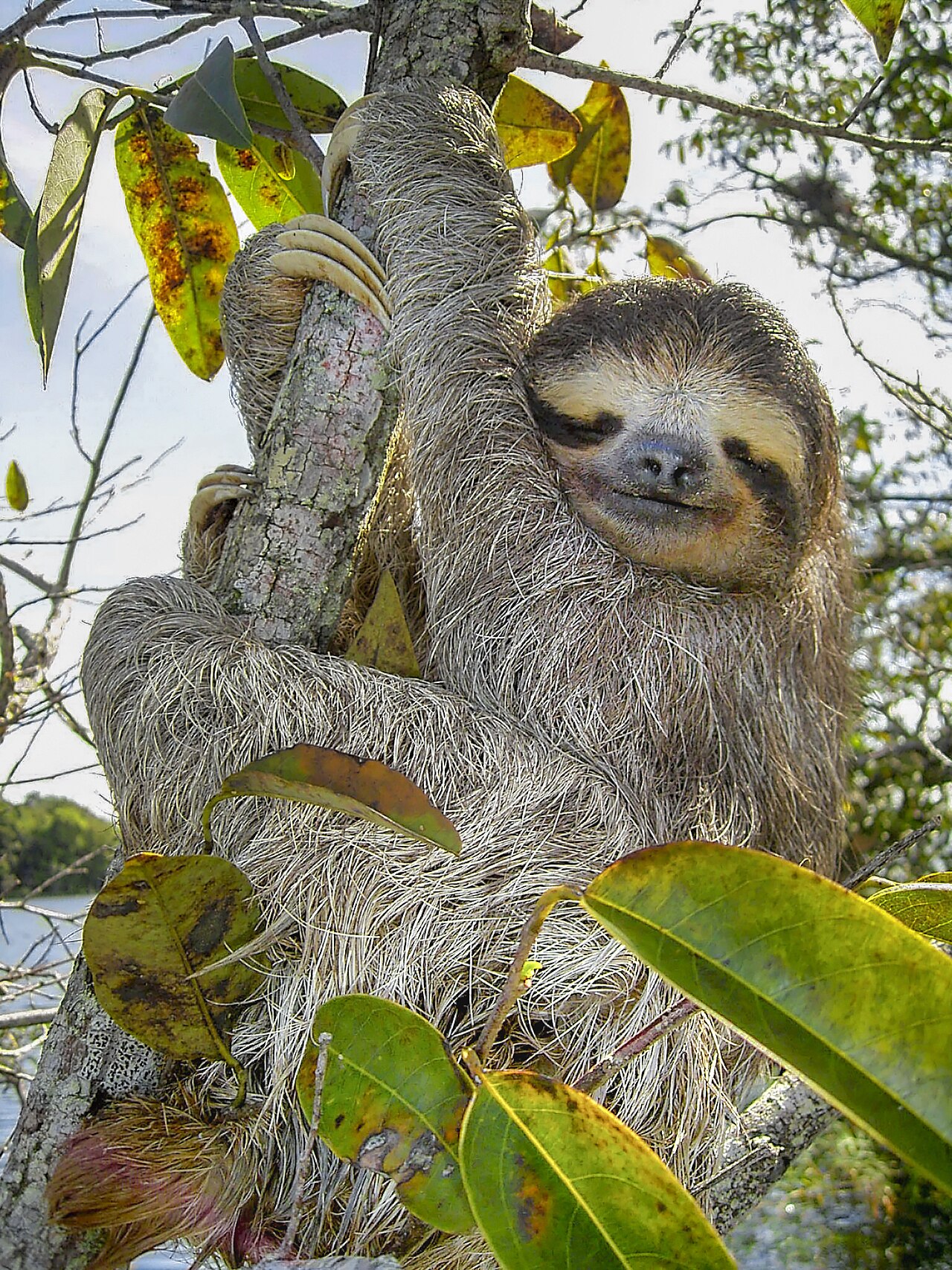
Look closely at a three-toed sloth hanging motionless in a Costa Rican canopy and you may notice something odd: its shaggy coat isn't brown or gray so much as faintly green. That tint is not a trick of the light. Sloth fur algae — a community of green algae living inside the grooves of the animal's hair — give the mammal a mossy camouflage that scientists have studied for decades. The partnership is one of the strangest and most intimate symbioses known among mammals, and it connects the sloth to moths, fungi, and the rainforest itself in ways researchers are still untangling.
What Exactly Is Sloth Fur Algae?
Sloth fur algae are single-celled green algae, primarily species in the genus Trichophilus, that grow in the outer layer of the sloth's hair. They don't merely sit on the surface. The hair of a sloth is unusually structured: it has microscopic cracks and a rough, pitted surface, and the algae colonize those crevices, sometimes penetrating slightly into the hair shaft itself. The result is a permanent greenish wash rather than a loose coating that could be brushed away.
Two-toed sloths (Choloepus species) and three-toed sloths (Bradypus species) both host algae, but the relationship is best documented in the three-toed sloths of Central and South America. Their fur is coarser, longer, and more heavily colonized, and it also harbors a second organism — a type of cyanobacteria — that can tint the coat an even deeper green in wet conditions.
Not Just One Organism
A sloth's coat is closer to a miniature ecosystem than a simple pelt. Researchers have identified dozens of algal strains across sloth species, along with fungi, cyanobacteria, and the ever-present sloth moths. The algae are the most visible residents, but they are part of a consortium that lives, reproduces, and dies on the animal's back.
Why Do Sloths Have Algae in Their Fur? The Camouflage Advantage
The leading explanation for sloth fur algae is camouflage. Sloths are famously slow — a three-toed sloth moves at roughly 0.2 kilometers per hour (about 0.12 mph) when it bothers to move at all — and they spend most of their lives hanging in the canopy. Against a backdrop of leaves, epiphytes, and dappled light, a green-tinged coat blurs the animal's outline and makes it harder for predators such as jaguars, ocelots, and harpy eagles to spot.
The camouflage is reinforced by the sloth's habits. They favor trees draped in vines and bromeliads, and they often sit still for hours. A motionless, green-tinted animal in a mossy tree is extraordinarily difficult to detect, even for a trained human observer standing a few meters away.
The Moth Connection
One of the most surprising findings about sloth fur algae involves moths. Three-toed sloths host a dedicated group of moths, sometimes called sloth moths, that live almost entirely in the sloth's fur. The moths lay eggs in sloth dung, and when they die, their bodies decompose in the fur, releasing nitrogen and other nutrients that fertilize the algae. Studies led by researchers such as Jonathan Pauli at the University of Wisconsin–Madison have suggested that this nutrient cycling is a genuine three-way partnership: moths feed the algae, and the algae help camouflage the sloth.
The system is delicate. A sloth descends to the ground to defecate only about once a week — one of the riskiest moments of its life, since it is slow and vulnerable on the forest floor. The moths depend on that trip, and the algae depend on the moths. It is a chain of dependencies that has evolved over millions of years.
How the Algae Get There and Stay There
Algae are not inherited directly from parent to offspring in a simple way. Instead, young sloths likely acquire their algal communities from the environment and from contact with their mothers. The humid, warm rainforest canopy is rich in airborne algae, and a sloth's fur — with its rough texture and impressive water-holding capacity — is an ideal landing pad.
Once established, the algae thrive because the sloth's lifestyle is almost perfectly designed for them:
- Humidity: Rainforest canopies stay damp, and sloth fur holds moisture for long periods.
- Sunlight: Sloths often rest in sunlit patches, giving photosynthetic algae the light they need.
- Nutrients: Decomposing moths, fungi, and the sloth's own skin secretions provide nitrogen and phosphorus.
- Low disturbance: A sloth grooms far less than most mammals, so the algae are rarely scrubbed away.
The algae also appear to be adapted specifically to sloth hair. Researchers have found that sloth fur algae differ from free-living algae in the same forests, suggesting a degree of specialization rather than random colonization.
Do Sloth Fur Algae Help the Sloth Beyond Camouflage?
Camouflage is the best-supported benefit, but scientists have proposed others. Some studies suggest that the algae and associated microbes may help deter parasites or produce compounds that inhibit harmful bacteria and fungi. The fur's microbial community may act as a kind of living shield.
Nutrients and the Sloth Diet
Sloths eat a low-calorie diet — mainly leaves, buds, and occasionally fruit — and they digest it extremely slowly. Some researchers have speculated that sloths might ingest algae while grooming, gaining a small nutritional supplement. The evidence for this is thin, and most experts consider it a minor or unlikely benefit compared with camouflage. The more widely accepted view is that the algae are primarily a visual adaptation.
Thermoregulation?
Another hypothesis is that a green, algae-covered coat could affect heat absorption, but sloths live in warm tropical environments where overheating is more of a concern than cold. Most researchers treat thermoregulation as a secondary or unproven effect.
The Sloth Itself: A Quick Natural History
Understanding the algae requires understanding the animal. There are six living sloth species in two families:
- Three-toed sloths (Bradypus): four species, including the brown-throated three-toed sloth and the critically endangered pygmy three-toed sloth of Panama's Escudo de Veraguas island. They weigh roughly 3.5–4.5 kg (about 8–10 lb) and are about 40–75 cm (16–30 in) long.
- Two-toed sloths (Choloepus): two species, the Linnaeus's two-toed sloth and Hoffmann's two-toed sloth. They are larger, around 5–9 kg (11–20 lb), and somewhat faster and more active.
Sloths are native to Central and South America, from Honduras and Nicaragua down through the Amazon basin to Brazil and Peru. They live almost entirely in trees, descending only occasionally. Their diet is famously limited: three-toed sloths specialize in leaves from a small number of tree species, while two-toed sloths eat leaves, fruit, and sometimes insects or small prey.
Their metabolism is extraordinarily slow. A sloth may take days or even weeks to digest a meal, and its body temperature fluctuates more than most mammals'. Lifespan in the wild is estimated at 20–30 years, though precise figures are hard to obtain. They are solitary, largely nocturnal or crepuscular depending on species, and they give birth to a single offspring after a gestation of roughly six months (for three-toed sloths) to eleven months (for two-toed sloths).
Why the Green Coat Matters for Conservation
Sloths face growing threats from deforestation, habitat fragmentation, and the illegal wildlife trade. In some regions, sloths are captured for the pet trade or killed when they wander into human-modified landscapes. The algae are a reminder that sloths are not isolated individuals but part of a tightly woven ecological network — one that includes moths, fungi, and microorganisms that may not survive if the sloth does not.
Conservationists also point out that the sloth's camouflage depends on healthy forest structure. A sloth in a fragmented, sun-baked pasture is more visible and more vulnerable than one in a mature, humid canopy. Protecting rainforest habitat protects the algae, the moths, and the sloth together.
What You Can Do
Supporting rainforest conservation organizations, avoiding products linked to deforestation, and never buying a wild-caught sloth as a pet all help. If you encounter a sloth in the wild, keep your distance and let it rest — its green coat is doing its job.
The Green Truth: A Partnership, Not a Coincidence
Sloth fur algae are not a quirk or a parasite problem. They are the visible sign of an ancient partnership between a slow-moving mammal and the microscopic life that shares its coat. The algae gain a stable, sunlit, nutrient-rich home; the sloth gains camouflage in a forest where standing still is its best defense. Add the moths that fertilize the algae and the fungi that round out the microbial community, and you have one of the most elegant examples of symbiosis in the animal kingdom. The next time you see a sloth that looks a little too green, remember: you are looking at a living ecosystem, not just an animal.
❓ Frequently Asked Questions
💬 Why do sloths have algae growing in their fur?
Sloth fur has a rough, grooved structure with cracks that trap moisture and let algae settle and grow. The slow-moving, tree-dwelling lifestyle keeps the fur damp and undisturbed, creating ideal conditions for algae. The algae gives the sloth camouflage, blending its fur with the green canopy.
💬 Is the algae in sloth fur harmful to the sloth?
No, it is generally considered a mutually beneficial relationship rather than a parasite. The algae gets a stable, moist home and nutrients, while the sloth gains camouflage and possibly extra nutrients when it grooms. Some studies suggest the algae may even help supplement the sloth's diet.
💬 Does the algae help sloths avoid predators?
Yes, the greenish tint acts as natural camouflage, helping sloths blend into leaves and branches in the rainforest canopy. This is especially useful because sloths move slowly and cannot easily flee predators. The green fur makes them harder for eagles, jaguars, and other predators to spot.
💬 Do all sloths have green algae in their fur?
Algae is most prominent on brown-throated three-toed sloths, whose specialized grooved hair supports it well. It is less common or absent on maned sloths and two-toed sloths, which have different fur structures. Even among three-toed sloths, the amount of algae varies with humidity, light, and environment.