- Why Snakes Shed Skin: The Core Biological Mechanism
- The Role of Keratin and the Epidermis
- The Detailed Process of How Snakes Shed Skin
- Pre-Shedding Phase: The Cloudy Eyes and Dull Colors
- The Shedding Act: From Snout to Tail
- Health and Hygiene: Another Key Reason Snakes Shed Skin
- Parasite Removal and Wound Healing
- Hydration and Skin Condition
- Behavioral Changes When Snakes Shed Skin
- Environmental and Species-Specific Factors in Shedding
- Habitat and Humidity
- Lifespan and Shedding Frequency
- Common Problems and How to Help Snakes Shed Skin
- Dysecdysis: Incomplete or Difficult Sheds
- Nutrition and Shedding Success
- Conclusion: The Vital Importance of Shedding for Snakes
- ❓ Frequently Asked Questions
Understanding why snakes shed their skin is one of the most fascinating aspects of reptile biology, and the process of ecdysis, as it is scientifically known, is far more complex than simply outgrowing a coat. When snakes shed skin, they are engaging in a vital, multi-stage biological event that affects their health, growth, and even their survival. This complete guide will explore the real reasons behind this remarkable phenomenon, from the microscopic changes in the epidermis to the behavioral adaptations that protect them during this vulnerable time.
Why Snakes Shed Skin: The Core Biological Mechanism
The primary reason snakes shed skin is to accommodate growth. Unlike mammals, whose skin grows continuously with their bodies, a snake's outer layer of skin, called the epidermis, does not stretch or expand. Instead, it is a rigid, protective covering made of a tough protein called keratin—the same material found in human fingernails and hair. As the snake grows, its body becomes too large for the existing skin, forcing the animal to replace it entirely.
However, growth is not the only driver. The skin of a snake is also subject to wear and tear from crawling over rough surfaces, burrowing through soil, and sliding through dense vegetation. When snakes shed skin, they also remove accumulated parasites, such as mites and ticks, which can attach to the outer layers. This periodic renewal helps keep the snake's body clean and free from infections. Furthermore, the process allows the snake to replace damaged or scarred skin, ensuring its protective barrier remains intact.
The Role of Keratin and the Epidermis
The snake's epidermis is composed of multiple layers. The outermost layer, the stratum corneum, is the hard, dry, and scale-covered surface we see. Beneath this lies the stratum germinativum, a living layer of cells that continuously produces new skin cells. When the snake is ready to shed, a new layer of epidermis forms underneath the old one. Specialized enzymes are secreted between these layers, dissolving the connections and loosening the old skin. This process is triggered by hormonal changes linked to growth, metabolism, and environmental factors like temperature and humidity.
Interestingly, the shedding cycle is not uniform across all species. Small, fast-growing snakes, such as the corn snake (Pantherophis guttatus), may shed every 4–6 weeks during their first year of life. In contrast, large, slow-growing species like the green anaconda (Eunectes murinus) may only shed once or twice a year as adults. The frequency also depends on diet: a well-fed snake that grows rapidly will shed more often than one that eats infrequently.
The Detailed Process of How Snakes Shed Skin
The act of shedding, or ecdysis, is a carefully orchestrated sequence that can take anywhere from a few hours to several days. It begins long before the snake actually starts to wriggle out of its old skin. Understanding this process reveals just how precise and energy-intensive the event is.
Pre-Shedding Phase: The Cloudy Eyes and Dull Colors
Several days before shedding, a snake's skin becomes dull and opaque. The most noticeable change occurs in the eyes, which turn a milky blue or grayish color. This is because the fluid that accumulates between the old and new skin layers also seeps under the transparent scale covering each eye (the spectacle or brille). During this "in blue" phase, the snake's vision is significantly impaired. As a result, it becomes more defensive and may refuse food. For example, a ball python (Python regius) in this stage will often hide more than usual and may hiss or strike if approached.
After a few days, the fluid is reabsorbed, and the eyes clear up again. The skin, however, remains dull. At this point, the snake is ready to initiate the physical act of shedding. The snake will seek out a rough surface, such as a rock, a branch, or a piece of bark, to create a tear in the old skin, usually around the snout or lips.
The Shedding Act: From Snout to Tail
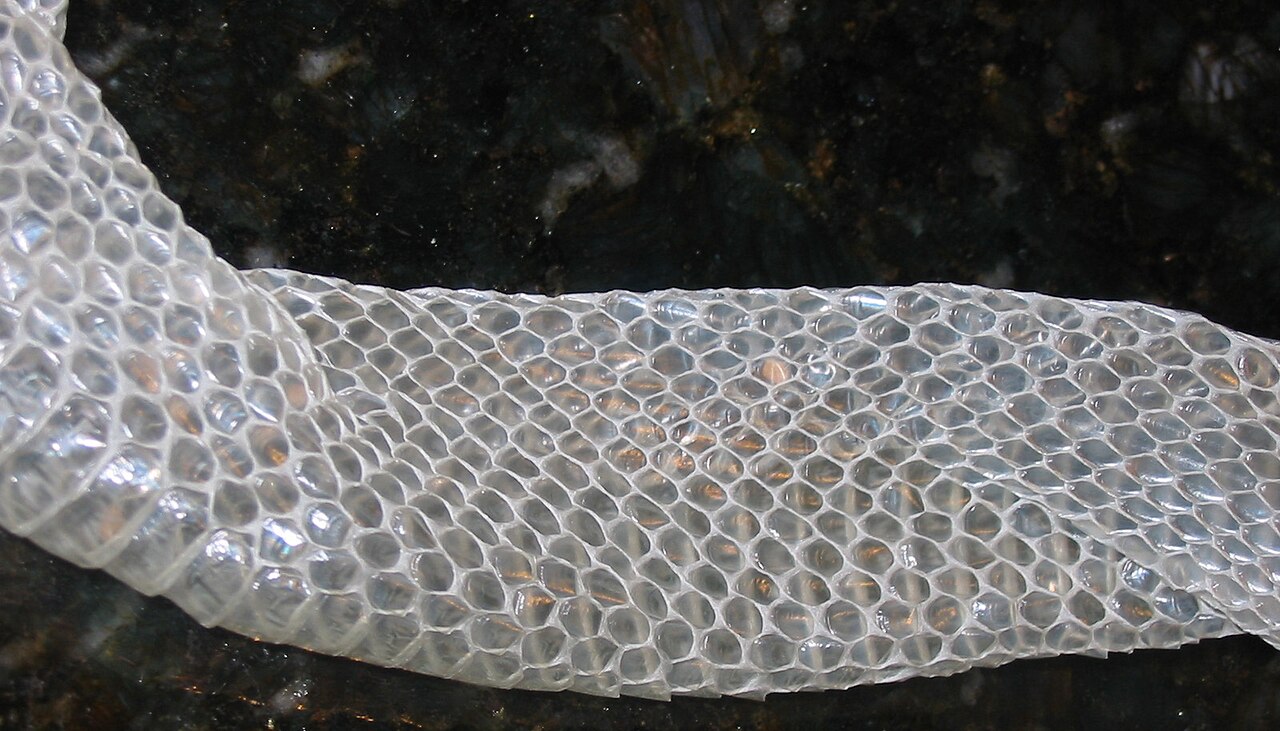
Once a tear is made, the snake begins to crawl forward, using the friction from the rough surface to peel the old skin back over its body. The process resembles removing a sock from a foot, but in reverse. The snake pushes its head through the opening, and then uses muscular contractions to work its body out of the old skin. The entire process is surprisingly efficient. A healthy snake can shed its entire skin in one continuous piece, turning it inside out like a stocking. The shed skin retains the exact pattern and scale count of the snake, making it a valuable tool for species identification in the wild.
For example, a common garter snake (Thamnophis sirtalis) might complete its shed in under 30 minutes, while a large python may take several hours. If the snake is dehydrated, undernourished, or suffering from a respiratory infection, the shed may come off in fragments, a condition known as dysecdysis. This is a common problem in captive snakes kept in enclosures with low humidity.
Health and Hygiene: Another Key Reason Snakes Shed Skin
While growth is the most obvious reason, the health benefits of shedding are equally important. When snakes shed skin, they effectively "reset" their outer protective layer, removing a host of potential threats.
Parasite Removal and Wound Healing
Snakes are vulnerable to external parasites like snake mites (Ophionyssus natricis), which feed on their blood and can cause anemia, stress, and secondary infections. These mites often burrow between the scales, attaching to the skin. When the snake sheds, it removes these mites along with the old skin, providing a natural, non-chemical method of pest control. Similarly, minor scrapes, scratches, or fungal infections are sloughed off, revealing fresh, healthy skin underneath. This is why snakes with skin injuries often heal remarkably well after a successful shed.
Hydration and Skin Condition
The condition of a snake's skin is directly linked to its hydration levels. A well-hydrated snake will produce a healthy, moist layer of new skin that separates easily from the old one. In contrast, a dehydrated snake may have dry, brittle old skin that sticks to the new layer, leading to retained spectacles (eye caps) or unshed patches on the tail and body. In the wild, snakes often seek out humid microhabitats, such as burrows, leaf litter, or water sources, prior to shedding. For instance, the arboreal emerald tree boa (Corallus caninus) relies on high humidity in the rainforest canopy to ensure complete sheds.
Behavioral Changes When Snakes Shed Skin
During the shedding cycle, a snake's behavior changes dramatically. Recognizing these signs is crucial for anyone who keeps snakes as pets, as it helps prevent unnecessary stress and injury.
- Increased Hiding: Snakes feel vulnerable when their vision is impaired and their skin is loose. They will spend more time in secure, dark hiding spots. In captivity, providing a humid hide box (a container with damp sphagnum moss) can greatly aid the process.
- Reduced Appetite: Most snakes will refuse food during the pre-shedding phase. Offering a meal during this time is often futile and can stress the snake. It is best to wait until after the shed is complete.
- Defensive Behavior: A snake that is normally docile may become nervous and defensive. This is a survival instinct, as they are effectively "blind" for a period. The western diamondback rattlesnake (Crotalus atrox), for example, is more likely to rattle and strike when in shed.
- Rubbing and Soaking: Snakes will actively rub their snouts against rough objects to initiate the tear. They may also soak in water to soften the old skin, a behavior often seen in species like the African rock python (Python sebae), which will submerge completely before shedding.
Environmental and Species-Specific Factors in Shedding
Not all snakes shed at the same rate or in the same way. The environment and the snake's natural history play a massive role in the frequency and success of ecdysis.
Habitat and Humidity
Snakes from humid tropical environments, such as the Amazon basin, have the advantage of constant moisture, which makes shedding easier. Species like the rainbow boa (Epicrates cenchria) are known for their vibrant, iridescent sheen, which is most brilliant immediately after a successful shed. In contrast, desert-dwelling snakes, like the sidewinder rattlesnake (Crotalus cerastes), face challenges from dry air. They have adapted by spending much of their time underground in burrows, where humidity is higher. If a desert snake cannot find adequate moisture, its shed may be incomplete, leading to retained skin and potential health issues.
Lifespan and Shedding Frequency
A snake's age dramatically impacts how often it sheds. Juvenile snakes, which grow rapidly, may shed every few weeks. For example, a hatchling corn snake can double its size in its first year, shedding 6–10 times. Adult snakes, which have a slower growth rate, shed less frequently—typically 2–4 times per year. The lifespan of a snake also plays a role. A long-lived species like the reticulated python (Malayopython reticulatus), which can live 20–30 years in captivity, will undergo hundreds of sheds in its lifetime. Each shed is a record of its health and growth journey.
Common Problems and How to Help Snakes Shed Skin
While shedding is a natural process, complications can arise, especially in captive environments. Understanding these issues helps ensure a snake remains healthy.
Dysecdysis: Incomplete or Difficult Sheds
Dysecdysis refers to abnormal shedding, where pieces of old skin remain stuck to the snake. This is most often caused by low humidity, dehydration, or poor nutrition. Retained eye caps (the spectacles) are a particularly serious issue, as they can build up over multiple sheds and eventually cause blindness or eye infections. Other common problem areas include the tail tip, where retained skin can constrict blood flow and lead to tail rot.
To prevent dysecdysis, keepers should provide a shallow water dish large enough for the snake to soak in, and maintain appropriate humidity levels for the species. For a ball python, this means 50–60% humidity normally, increased to 70–80% during shedding. Providing a humid hide box filled with damp moss is highly effective. If a snake has a stubborn piece of retained skin, a gentle soak in lukewarm water (not hot) for 15–20 minutes can help loosen it. Never forcibly peel off retained skin, as this can damage the new layer underneath.
Nutrition and Shedding Success
A snake's diet directly influences the quality of its shed. Snakes that are underfed or fed an inadequate diet (e.g., prey that is too small) may have poor skin condition. Calcium and vitamin D3 are crucial for healthy skin and scale development. Wild snakes obtain these nutrients from whole prey, which includes bones and organs. In captivity, feeding appropriately sized, whole prey items (such as mice or rats) ensures the snake receives all necessary nutrients. A well-fed snake will typically shed in one complete, intact piece.
Conclusion: The Vital Importance of Shedding for Snakes
When snakes shed skin, they are performing a complex, life-sustaining ritual that goes far beyond simple growth. It is a process of renewal that removes parasites, heals wounds, and allows the snake to continue thriving in its environment. From the initial clouding of the eyes to the final sloughing of the tail, each stage is a testament to the evolutionary adaptation of these remarkable reptiles. For pet owners, understanding the signs and requirements of shedding—such as proper humidity, hiding spots, and reduced handling—is essential for ensuring a stress-free and successful ecdysis. Whether you are observing a wild garter snake emerging from its old skin in a garden or caring for a captive boa constrictor, the sight of a fresh, vibrant snake after a shed is a powerful reminder of nature's ability to renew itself, one layer at a time.
❓ Frequently Asked Questions
💬 How often do snakes shed their skin?
Young snakes shed every few weeks as they grow rapidly, while adult snakes may shed only a few times a year, depending on species, health, and environmental factors.
💬 Do snakes eat their shed skin?
No, snakes do not eat their shed skin. They typically leave it behind in one piece, though some species may rub against objects to help remove it.
💬 What happens if a snake doesn't shed properly?
Incomplete shedding, often due to low humidity or health issues, can cause retained skin, especially on the eyes (spectacles) and tail, which may lead to infections or blindness if not treated.
💬 Is it painful for a snake to shed its skin?
Shedding is not painful, but it can be uncomfortable or stressful. Snakes may become irritable and seek moisture or rough surfaces to aid the process, which is natural and necessary for growth and health.