- What Exactly Is a Sea Star? Setting the Record Straight
- Where and How Long Do They Live?
- Why Do Starfish Regrow Arms? The Core Reasons
- How Do Starfish Regrow Arms? The Science of Regeneration
- Can a Single Arm Grow Into a Whole Starfish?
- How Long Does It Take for Starfish to Regrow Arms?
- The Dark Side: When Regeneration Meets the Starfish Wasting Epidemic
- Why Sea Star Regeneration Matters Beyond the Starfish Itself
- Common Myths About Starfish Regrow Arms
- Conclusion: The Real Truth About Starfish Regrow Arms
- ❓ Frequently Asked Questions
Anyone who has found a five-armed sea star on a beach and then spotted one with four arms, six arms, or a strange half-grown limb has witnessed one of the animal kingdom's most impressive tricks: starfish regrow arms. This ability to rebuild lost body parts is not a minor curiosity — it is central to how sea stars survive, escape predators, and reproduce. Yet the popular picture of regeneration is full of half-truths, from the idea that a starfish can always grow into a whole new animal from a single arm to the assumption that all species regenerate equally well. This article separates the biology from the myth and explains what really happens when a sea star loses an arm.
What Exactly Is a Sea Star? Setting the Record Straight
Sea stars — commonly called starfish — are marine invertebrates belonging to the phylum Echinodermata, a group that also includes sea urchins, sea cucumbers, brittle stars, and feather stars. They are not fish at all, which is why scientists and many wildlife organizations prefer the name "sea star." There are roughly 1,900 known species of sea stars, found in every ocean on Earth, from tropical coral reefs to the freezing seabed of the Arctic and Antarctic.
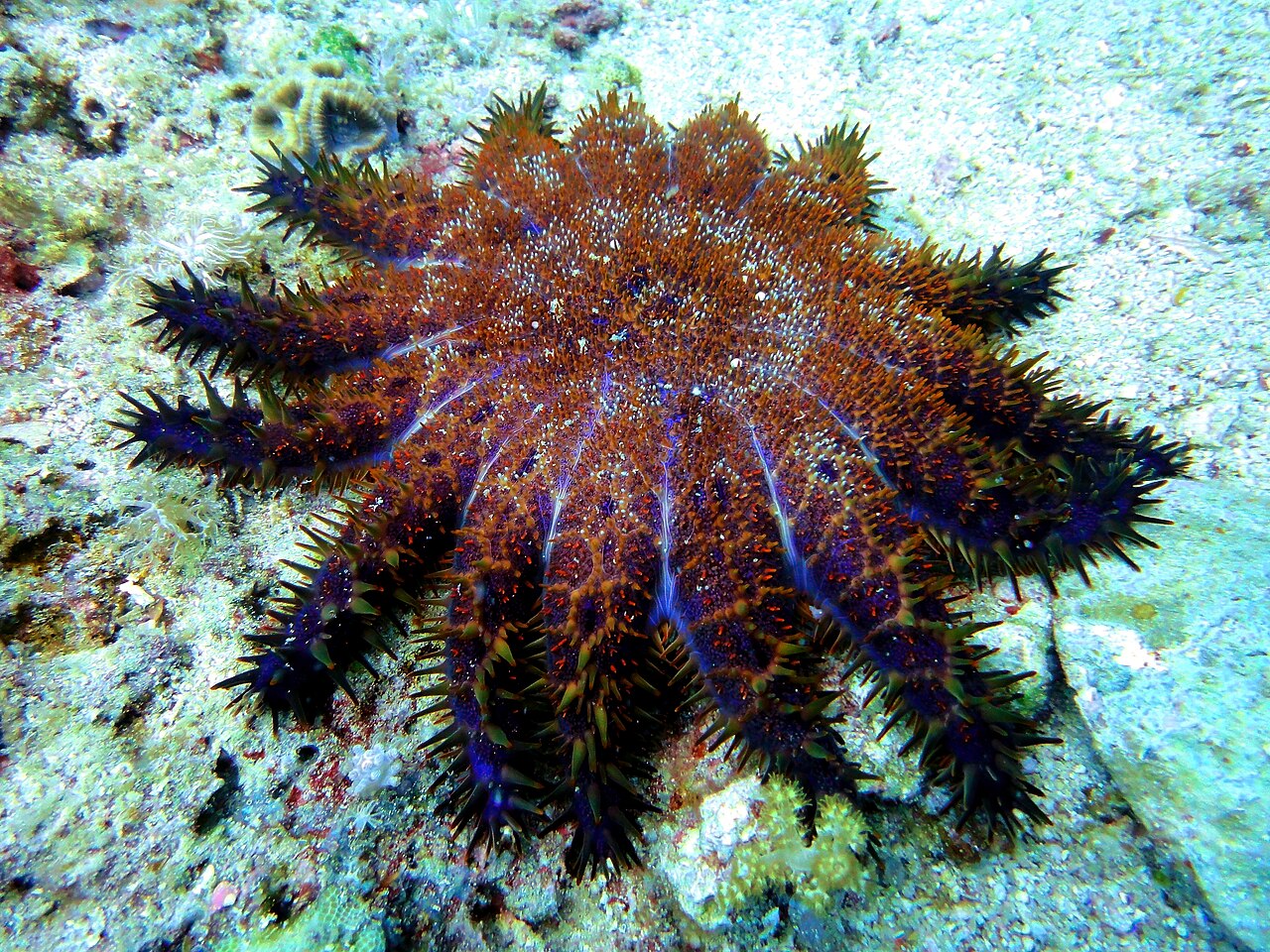
Most familiar species have five arms radiating from a central disc, but the family is far more varied than that suggests. The sunflower sea star (Pycnopodia helianthoides) of the North Pacific can have up to 24 arms and reach a diameter of about one metre (around three feet), making it one of the largest sea stars in the world. At the other end of the scale, some sea stars are barely a centimetre across. The crown-of-thorns starfish (Acanthaster planci), infamous for damaging Australia's Great Barrier Reef, typically has 12 to 19 arms and can grow to about 35 centimetres across.
Sea stars are also famous for their unusual anatomy. They have no brain and no true blood; instead, they circulate seawater through a network of tubes called the water vascular system, which powers hundreds of tiny tube feet on their underside. Those tube feet allow them to crawl slowly, grip rocks, pry open shellfish, and even sense chemicals in the water. A sea star's mouth sits in the centre of its underside, and many species feed by pushing their stomach out through the mouth to digest prey outside the body.
Where and How Long Do They Live?
Sea stars occupy a wide range of habitats: rocky shores, sandy seabeds, kelp forests, seagrass meadows, deep-sea plains, and coral reefs. Lifespans vary widely by species. Many small coastal species live only a few years, while some larger ones, such as certain cold-water species, are thought to live for decades — the sunflower sea star, for example, may live 20 to 30 years or more. Their diet is equally varied: some are strict carnivores that eat mussels, clams, oysters, and barnacles; others graze on algae or scavenge dead animals; and a few, like the crown-of-thorns, feed on coral polyps.
Why Do Starfish Regrow Arms? The Core Reasons
Regeneration is an evolutionary insurance policy. Sea stars are slow-moving animals that live in exposed, predator-rich environments, and they cannot run away or fight back effectively. Losing an arm is a routine hazard of life on the seabed. The ability to regrow it means an injury does not have to be permanent or fatal.
There are three main reasons starfish regrow arms:
- Predator escape: When a fish, crab, sea otter, or gull grabs an arm, a sea star can deliberately shed that arm — a process called autotomy — and crawl away. The predator is left with a meal of limb while the sea star survives.
- Damage repair: Arms can be crushed by rocks, nipped by predators, or injured in storms. Regeneration restores function so the animal can feed, move, and cling to surfaces properly again.
- Reproduction by fission: Some species reproduce asexually by splitting their central disc into two halves, each of which regenerates into a complete new individual. In these species, regeneration is not just repair — it is reproduction.
Losing an arm is not free, though. A sea star with a missing limb has less surface area for gas exchange, fewer tube feet for gripping, and reduced ability to open prey. Regrowing the arm costs energy that could otherwise go into growth or reproduction. Studies of species such as the ochre sea star (Pisaster ochraceus) have found that regenerating arms can take months to years and measurably slows other aspects of the animal's development.
How Do Starfish Regrow Arms? The Science of Regeneration
The mechanics of sea star regeneration are genuinely remarkable. When an arm is lost, the wound is quickly sealed by special contractile cells, and the animal then begins building new tissue from a mass of undifferentiated cells called a blastema. These cells can develop into whatever is needed: skin, muscle, nerve, tube feet, and the internal water vascular canals.
Because sea stars have a decentralised nervous system — a nerve ring around the mouth with a radial nerve running down each arm — a regrowing arm must also rebuild its own nerve cord and connect it to the central ring. The water vascular system must be re-plumbed as well, so the new tube feet can operate. In effect, the sea star rebuilds a fully functional limb, complete with its own sensory and hydraulic systems.
Can a Single Arm Grow Into a Whole Starfish?
This is where the myth needs correcting. In most sea star species, a detached arm cannot grow into a new individual, because the arm does not contain enough of the central disc — the region that holds the mouth, nerve ring, and core of the water vascular system — to rebuild a complete animal. A severed arm may survive briefly and even continue to move, but it will not become a new starfish.
There are exceptions. A small number of species, including some in the genera Linckia and Asterias, can regenerate a whole body from an arm fragment, provided a piece of the central disc is attached. This is why the "cut a starfish in half and get two starfish" claim is only partly true: it depends entirely on the species and on how much of the disc remains attached to the arm. For most common coastal sea stars, the realistic outcome is that the injured animal regrows its lost arm, while the severed arm dies.
How Long Does It Take for Starfish to Regrow Arms?
Regeneration speed depends on species, age, water temperature, food availability, and the size of the lost arm. As a rough guide:
- Small, warm-water species: A lost arm may regenerate in a few weeks to a few months.
- Larger temperate species: Full regrowth often takes six months to a year, sometimes longer.
- Cold-water and very large species: Regeneration can take several years, and the new arm may be visibly smaller than the others for a long time.
Regrowth is not perfectly symmetrical. The new arm often starts as a small bud and gradually lengthens, and in some species the regenerated arm remains slightly shorter or differently patterned than the original. Researchers studying regeneration frequently identify regrown arms by their smaller size and paler colour, which is one reason long-term monitoring of wild populations can reveal how often injuries occur.
The Dark Side: When Regeneration Meets the Starfish Wasting Epidemic
Since 2013, a disease known as sea star wasting syndrome has devastated sea star populations along the Pacific coast of North America, from Alaska to Mexico. Affected animals develop white lesions, lose their arms, and often disintegrate and die within days. More than 20 species have been affected, and the sunflower sea star — a major predator of sea urchins — has suffered catastrophic declines in many areas, with some populations collapsing by more than 90 percent.
The disease is linked to a densovirus, though environmental stress such as warming water is thought to play a role. The epidemic is a reminder that regeneration has limits: a sea star can rebuild an arm, but it cannot rebuild itself fast enough to outrun a systemic infection. Recovery of affected populations is slow precisely because sea stars reproduce and grow slowly, and because regeneration takes months, not days.
Why Sea Star Regeneration Matters Beyond the Starfish Itself
Sea stars are often keystone predators. The classic example is the ochre sea star, which preys on mussels and helps keep rocky shore communities diverse by preventing mussels from monopolising space. When sea stars are removed — by disease, harvesting, or injury — the ecosystem can shift dramatically. Understanding how quickly starfish regrow arms, and how much energy that costs, helps scientists model how resilient populations are to injury and disease.
Sea star regeneration also interests medical researchers. The blastema cells that rebuild an arm are a natural model for tissue repair, and studying how sea stars avoid scarring and restore complex structures may inform research into wound healing and regenerative medicine in other animals, including humans.
Common Myths About Starfish Regrow Arms
Several persistent misconceptions surround sea star regeneration. Here are the most common, corrected:
- Myth: Every arm can become a new starfish. Reality: Only in a few species, and only if part of the central disc is attached.
- Myth: Regrowth is instant. Reality: It typically takes months to years, and it drains energy.
- Myth: Losing an arm is harmless. Reality: It reduces feeding and mobility and can affect growth and reproduction.
- Myth: Starfish are fish. Reality: They are echinoderms, not fish, and "sea star" is the more accurate name.
It is also worth noting that not all arm loss is accidental. In some species, sea stars intentionally shed arms as a defence — a behaviour called autotomy — and in a few species, arms are shed during reproduction or as part of fission. The line between injury and strategy is blurrier than it first appears.
Conclusion: The Real Truth About Starfish Regrow Arms
Starfish regrow arms through a genuine biological superpower: a blastema-based rebuilding process that restores skin, muscle, nerves, and the water vascular system. This ability helps sea stars survive predator attacks, repair injuries, and in some species even reproduce asexually. But the popular image of a starfish magically becoming two animals from one severed limb is mostly myth — in most species, the detached arm dies, and it is the injured animal that slowly rebuilds its lost limb over months or years. Understanding that distinction matters, because it reveals both the resilience and the vulnerability of these remarkable marine animals. Sea stars can regrow arms, but they cannot regrow quickly, and in an era of warming oceans and wasting disease, that slow, energy-hungry process is a reminder of how much these keystone predators depend on stable, healthy seas.
❓ Frequently Asked Questions
💬 Can a starfish regrow its whole body from one arm?
Usually not. Most sea stars can regrow a lost arm as long as part of the central disk remains attached, but only a few species can regenerate an entire body from a single arm that includes a piece of the disk.
💬 How long does it take a starfish to regrow an arm?
It varies widely by species, age, and food supply, but regrowth often takes several months to about a year. Small, well-fed sea stars tend to regenerate faster than large or stressed ones.
💬 Do starfish feel pain when they lose an arm?
Sea stars lack a brain and the kind of pain-processing system vertebrates have, so they don't experience pain the way we do. They do have a nerve net and can respond to injury, but losing an arm is a normal, survivable event for them.
💬 Why do starfish lose their arms in the first place?
Mostly to escape predators—many sea stars deliberately shed an arm (autotomy) when grabbed, and the predator is left with just the arm. Arms can also be lost to injury, disease, or poor water conditions in captivity.