- Wombat Cube Poop: A Genuine Biological Puzzle
- Why "Cube" Isn't an Exaggeration
- How Do Wombats Make Cube-Shaped Poop? Inside the Gut
- The Intestine as a Stretchy, Squeezing Tube
- Why the Shape Holds
- Why Cube-Shaped Poop? The Real Advantages
- 1. Cubes Don't Roll Away
- 2. Stacking and Marking Territory
- 3. A Signal of Health and Status
- 4. Efficient Packaging
- What Do Wombats Eat—and How Does Diet Shape Their Poop?
- Wombat Cube Poop and the Scientists Who Study It
- Common Myths and Misconceptions
- Why the Cube Shape Matters Beyond the Joke
- Conclusion: The Strange Truth About Wombat Cube Poop
- ❓ Frequently Asked Questions
Ask anyone to name the strangest fact about Australian wildlife and you may hear about egg-laying mammals or venomous platypuses, but few things rival the sheer oddity of wombat cube poop. Yes, really: these stocky, burrowing marsupials produce droppings shaped like tiny, dark cubes—roughly the size of a sugar cube or a dice—and they do it thousands of times a week. It sounds like a joke, but the science behind it is serious, surprising, and still being unraveled. In this article, we'll dig into why wombats make cubic scat, how their intestines manage this feat of biological engineering, what the poop is actually used for, and why researchers find it so fascinating.
Wombat Cube Poop: A Genuine Biological Puzzle
Most animals—humans included—produce droppings with a roughly cylindrical or irregular shape, because soft waste gets squeezed through a tube and emerges rounded. Wombats break that rule. Their feces come out as distinct, fairly rigid cubes with flat faces and sharp-ish edges, and they stay that way after landing. The discovery that this wasn't just an internet myth but a real, measurable phenomenon helped launch a small but dedicated field of research into what is sometimes jokingly called "cube poo physics."
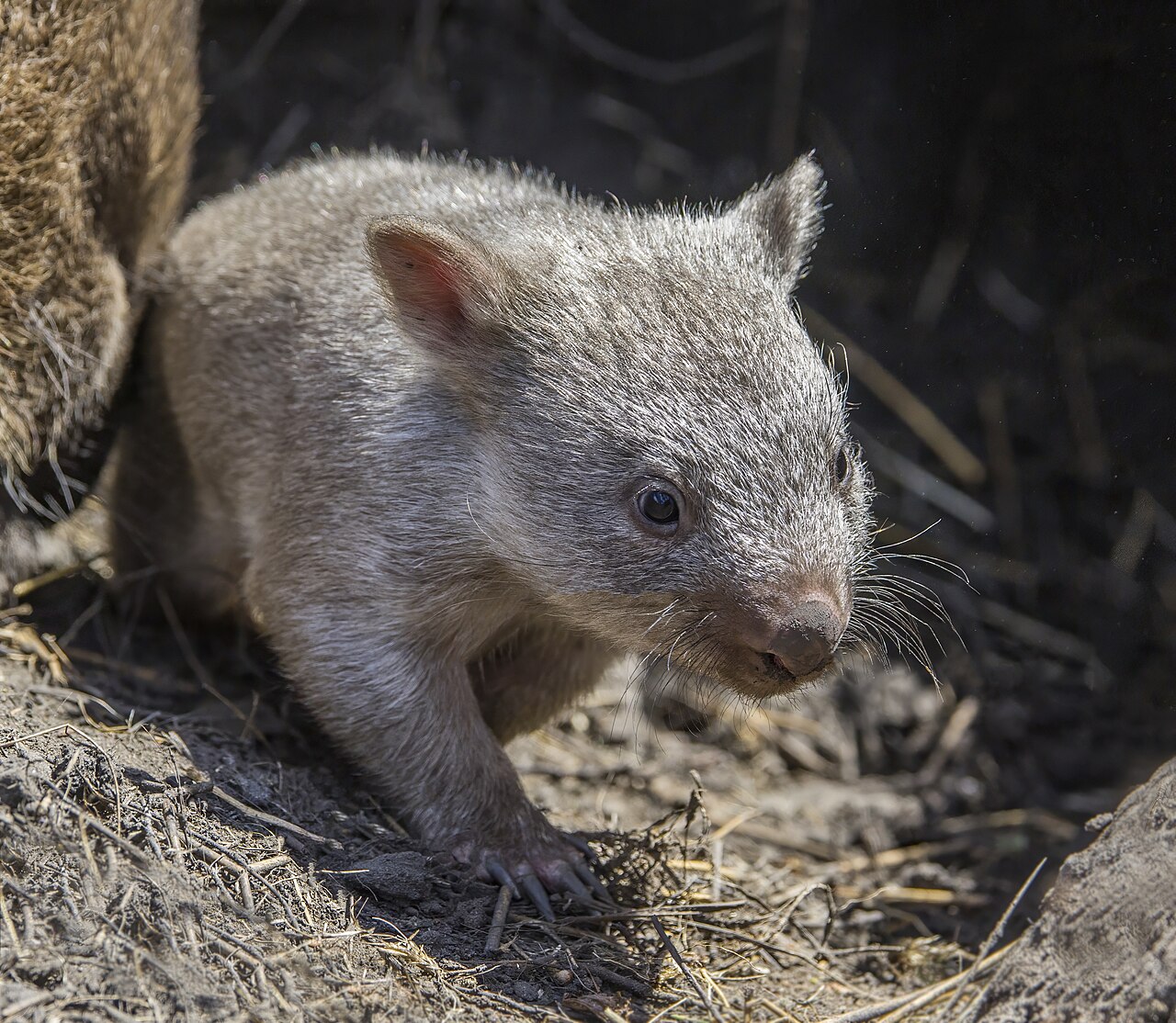
The animals responsible are the three living wombat species: the common wombat (also called the bare-nosed wombat), the southern hairy-nosed wombat, and the critically endangered northern hairy-nosed wombat. All three are found only in Australia, and all three produce cubic droppings. The cubes are typically around 2 centimeters (about 0.8 inches) across, though size varies with the animal's age, diet, and species. A wombat can produce well over 100 of these little blocks in a single night of foraging.
Why "Cube" Isn't an Exaggeration
It would be easy to assume the cubes are just lumpy or vaguely boxy. They're not. Studies that measured wombat droppings found that many are remarkably close to true geometric cubes, with flat sides and corners meeting at angles close to 90 degrees. Researchers have described them as among the most geometrically regular feces produced by any animal. That precision is what makes the wombat cube poop story more than a novelty—it points to a specific, evolved mechanism.
How Do Wombats Make Cube-Shaped Poop? Inside the Gut
The obvious question is: how? A soft, squishy material passing through a muscular tube should come out round. The answer lies in the unusual structure and mechanics of the wombat's large intestine, particularly its lower section.
The Intestine as a Stretchy, Squeezing Tube
Wombats have a long digestive tract adapted to a diet of tough, fibrous plant material. As food moves through the large intestine, water is steadily reabsorbed, turning the remaining waste from a slurry into a firmer mass. But reabsorption alone doesn't make cubes. The key is that the intestine doesn't squeeze uniformly. Research published in 2018 by a team of physicists and biologists (including work from Georgia Institute of Technology and Australian researchers) used modeling and dissection to show that the wombat's gut wall varies in thickness and stiffness along its length.
Some sections of the intestinal wall are stiffer and less stretchy; others are softer and more elastic. As rhythmic muscular contractions push the drying waste along, the material is squeezed and molded differently depending on where it is. The result is that the waste gets shaped into blocks rather than a continuous sausage. In effect, the wombat's gut acts like a set of soft, living molds. The feces are formed into cubes gradually, in a chain, and separate into individual blocks as they move toward the exit.
Why the Shape Holds
By the time the droppings reach the end of the digestive tract, they've lost enough moisture to become firm and self-supporting. That's why the cubes don't collapse into mush when they're deposited. The combination of gradual drying and localized shaping produces a final product that keeps its edges—an outcome that's rare in biology and striking to see in the field.
Why Cube-Shaped Poop? The Real Advantages
Evolution rarely produces something so peculiar without a payoff. Several explanations have been proposed, and they're not mutually exclusive—wombats may benefit in more than one way.
1. Cubes Don't Roll Away
This is the most widely cited explanation, and it makes intuitive sense. Wombats use their droppings as scent markers to communicate with neighbors. They deposit scat on rocks, logs, and other raised surfaces to advertise their presence and territory. A round dropping placed on a slope or a rock would simply roll off. A cube, with its flat faces, tends to stay put. That makes cube-shaped poop an efficient, self-anchoring signpost.
2. Stacking and Marking Territory
Because the cubes are flat-sided, wombats can pile them up—sometimes in small stacks on prominent objects. These piles act as conspicuous scent stations. Wombats have a keen sense of smell, and the droppings carry chemical signals about the individual that made them, including information that may relate to identity, reproductive status, and territory ownership. A stack is harder to miss than a single scattered pellet.
3. A Signal of Health and Status
Some researchers have suggested that the sheer regularity of the cubes could serve as an honest signal. Producing well-formed cubes requires a healthy, well-functioning digestive system and a good diet. A wombat leaving neat cubes may be advertising its condition to rivals and potential mates. This idea is harder to test than the "doesn't roll" explanation, but it's an intriguing possibility.
4. Efficient Packaging
There may also be a practical, low-key benefit: cubes pack together neatly and are less likely to smear or scatter messily. Whether this matters much to a wombat is debatable, but the geometry does make the droppings tidy in a way that cylindrical scat is not.
What Do Wombats Eat—and How Does Diet Shape Their Poop?
Wombats are herbivores, and their diet is dominated by tough, low-nutrient grasses, sedges, roots, bark, and shrubs. This is a challenging food source: it's high in fiber and requires a lot of processing to extract energy. Wombats have slow metabolisms and can take many hours—sometimes several days—to fully digest a meal, which is one reason they can survive in relatively dry, poor-quality habitats.
Their digestive strategy involves a long gut and a large, fermenting hindgut where microbes help break down fiber. The prolonged digestion and water reabsorption are exactly what allow waste to dry out enough to hold a shape. A wombat eating fresh, watery grasses may produce somewhat softer or less perfectly formed cubes, while one on a drier, more fibrous diet may produce firmer ones. In this way, diet and digestion are intimately linked to the famous cube shape.
- Habitat: Wombats live in burrows they dig themselves, often in forest, woodland, heathland, and grassland areas of southeastern Australia and Tasmania (common wombat), with hairy-nosed species in more arid or semi-arid regions.
- Burrow systems: A single wombat may maintain multiple burrows and can dig extensive tunnel networks—sometimes over 20 meters (65 feet) long—with several entrances.
- Lifespan: In the wild, wombats commonly live around 5 to 15 years, and in captivity some have reached their late 20s or even older.
- Size: Common wombats typically weigh 20–35 kilograms (44–77 pounds) and measure roughly 90–115 centimeters (35–45 inches) in length, making them among the largest burrowing mammals.
- Behavior: They're largely nocturnal and solitary, though home ranges may overlap. They're known for powerful rumps, which they use defensively to crush intruders against burrow walls.
Wombat Cube Poop and the Scientists Who Study It
The scientific interest in wombat droppings isn't purely whimsical. Researchers have used them to study soft-matter physics, because the formation of cubes from a soft material inside a biological tube raises interesting questions about how shape emerges from mechanical stress. The 2018 modeling work that examined wombat intestines suggested that differences in tissue stiffness, combined with the way the gut contracts, are enough to generate corners and flat faces—a finding that could even inspire new approaches in manufacturing or materials science.
There's also a conservation angle. Because wombats mark territory with droppings, researchers can use scat surveys to estimate population presence and distribution. For the critically endangered northern hairy-nosed wombat, which survives in tiny numbers in a few locations in Queensland, every piece of evidence about where the animals live and move matters. Studying their droppings—including their shape and chemistry—can help conservationists monitor these fragile populations without disturbing the animals.
Common Myths and Misconceptions
As the story has spread online, a few exaggerations have crept in. It's sometimes claimed that wombats are the only animal on Earth that produces cube-shaped poop. In fact, a handful of other animals—including some rodents and certain insects—can produce oddly shaped or pellet-like waste, though none match the wombat's near-perfect cubes at this size. It's also a myth that the cubes are deliberately "built" by the wombat; the animal has no conscious control over the shape. The geometry emerges from anatomy and physics, not intent.
Why the Cube Shape Matters Beyond the Joke
Beyond the novelty, wombat cube poop is a window into how evolution solves problems. Wombats live in environments where marking territory effectively can influence access to food, burrows, and mates. A dropping that stays where it's placed is a small but meaningful advantage, and over many generations natural selection can favor the anatomy that produces it. The cube shape is a reminder that even the most mundane bodily functions can be shaped by ecological pressures.
It's also a reminder of how much we still don't know. The precise mechanics of cube formation are still being studied, and questions remain about how much the shape varies between species, seasons, and diets. The northern hairy-nosed wombat, in particular, is so rare and elusive that detailed studies of its droppings are difficult. Each new observation adds a piece to the puzzle.
Conclusion: The Strange Truth About Wombat Cube Poop
Wombat cube poop is one of those facts that sounds like a tall tale but turns out to be entirely real—and far more interesting than a punchline. These marsupials produce near-perfect cubes because of a remarkable combination of gut anatomy, uneven tissue stiffness, muscular squeezing, and gradual drying. The shape likely helps their droppings stay put on rocks and logs, where they serve as scent markers and territory signs. From the physics of soft materials to the conservation of one of the world's rarest mammals, the humble cube has a lot to teach us. So the next time someone tells you about the animal that poops in cubes, you can tell them the strange truth: it's not a joke—it's evolution at its most ingenious, and a little bit absurd.
❓ Frequently Asked Questions
💬 Why is wombat poop cube-shaped?
Wombats produce cube-shaped droppings because the walls of their intestines have varying stiffness, which molds the waste into corners as it dries and compacts. The shape keeps the scat from rolling away, helping wombats mark territory on rocks and logs.
💬 How do wombats make cube-shaped poop?
The cube shape forms in the last section of the intestine, where uneven muscle thickness and elasticity press the drying waste into flat sides and corners. Researchers found the corners aren't created by squeezing at the end—the shape develops gradually along the gut.
💬 Do wombats poop cubes because of their diet?
Diet contributes by making the droppings dry and firm, but it isn't the main cause. The cube shape comes mostly from the mechanics of the wombat's intestine, which sculpts the waste as it passes through.
💬 Why do wombats put their poop on rocks and logs?
Cube-shaped droppings stack neatly and stay put on raised surfaces, so wombats use them as scent markers to claim territory and communicate with others. The stable shape means the scat won't roll off the rock or log where it's placed.