- Wombat Cube Poop: The Basics of a Bizarre Dropping
- Why the Shape Matters
- The Anatomy Behind Wombat Cube Poop
- Elasticity, Not a Square Tube
- Formed in Stages, Not All at Once
- Why Doesn't It Hurt?
- More Than a Novelty: The Real Purpose of Wombat Cube Poop
- Nature's Scent Posts
- A Stackable, Noticeable Signal
- What Wombats Eat and How It Shapes Their Droppings
- A Grinding, Slow-Motion Diet
- A Very Slow Gut
- Wombat Biology and Behaviour: The Context of the Cube
- Burrowers With a Built-In Tool
- Solitary, Territorial Lives
- Slow Reproduction
- Why Does the Cube Shape Matter to Science?
- Lessons for Engineers
- A Window Into Evolution
- Challenging Assumptions
- Common Myths and Misconceptions About Wombat Cube Poop
- Wombat Cube Poop: A Small Wonder With a Big Story
- ❓ Frequently Asked Questions
If you have ever seen a photo of a wombat's droppings, you have probably assumed it was a prank or a photoshop job. It is not. The wombat cube poop is real, and it is one of the strangest feats of biology in the animal kingdom: this stocky Australian marsupial produces feces shaped like small, dark cubes, roughly two to three centimetres (about 0.8 to 1.2 inches) on each side. It sounds like a joke, but the explanation behind those little box-shaped pellets is a genuinely fascinating story of anatomy, physics, ecology, and evolution.
Wombat Cube Poop: The Basics of a Bizarre Dropping
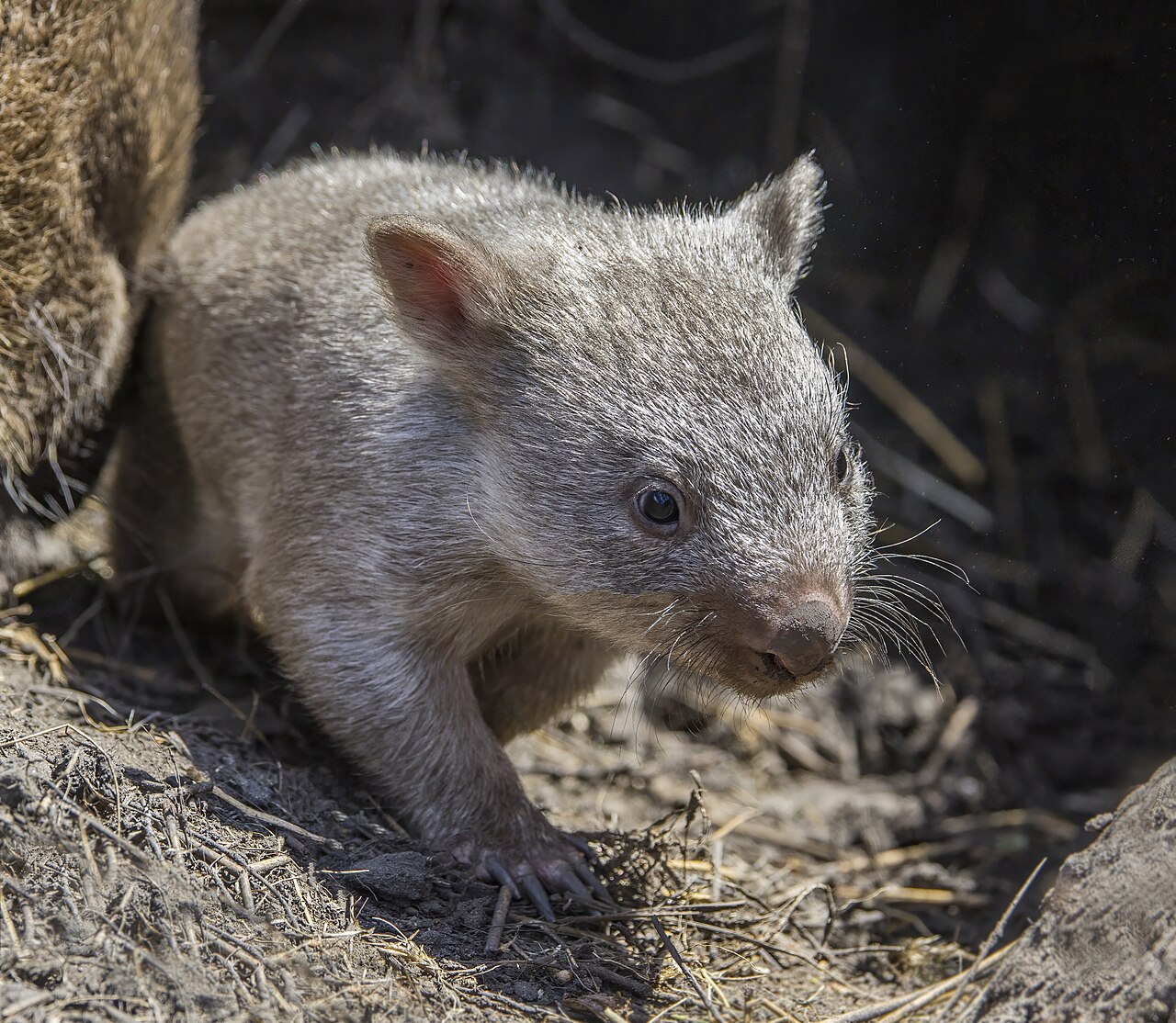
Wombats are burly, short-legged marsupials native to Australia. Three species exist today: the common wombat (also called the bare-nosed wombat), the northern hairy-nosed wombat, and the southern hairy-nosed wombat. They are herbivores, roughly the size of a small, very solid dog—adults typically measure around 90 to 115 centimetres (35 to 45 inches) in length and weigh between 20 and 35 kilograms (44 to 77 pounds), with some individuals exceeding that range.
Their droppings, however, are anything but ordinary. Instead of the round pellets or loose scat produced by most plant-eaters, wombats deposit neat, angular cubes. A single wombat may produce dozens of these each night. The cubes are dry, fibrous, and surprisingly uniform, and they are usually deposited on prominent surfaces—rocks, logs, tufts of grass, even the tops of other wombat droppings.
For years, the cube shape was treated as a curiosity, a fun fact passed around at dinner parties. But in recent years, scientists have taken it seriously, and what they found is far more interesting than the punchline suggests.
Why the Shape Matters
The shape is not random. Wombats use their droppings as scent markers to communicate with one another, and a cube does something a sphere cannot: it stays put. A round pellet placed on a rock or a log tends to roll away. A cube sits stable on its flat face, holding its position and its scent exactly where the wombat left it. For an animal that relies on chemical messages to claim territory and advertise its presence, that stability is a big deal.
The Anatomy Behind Wombat Cube Poop
For a long time, the leading explanation was simple: the wombat's intestines must be square. That turns out to be wrong. The intestines are, of course, tube-shaped like those of other mammals. So how does a round tube produce a cube?
Elasticity, Not a Square Tube
A 2018 study published in the journal Soft Matter by researchers at the Georgia Institute of Technology and the Taronga Conservation Society Australia finally cracked the puzzle. Using dissections and measurements of wombat intestinal tissue, the team found that the cube shape forms gradually inside the last section of the large intestine, the descending colon.
The key is that the intestinal wall is not uniformly stiff. The researchers discovered that the tissue varies in thickness and elasticity around the circumference of the colon. In certain regions, the gut wall is stiffer and stretches less; in others, it is more elastic and stretches more. As fecal matter moves through and is squeezed by rhythmic muscle contractions, these alternating stiff and soft zones create corners and flat faces.
Formed in Stages, Not All at Once
The researchers also found that the cubes do not appear suddenly. By examining the intestines of wombats that had died in road accidents, they traced the formation of the feces in stages—first as a soft, rounded mass, then progressively developing distinct corners, until fully formed cubes emerged near the exit. The shape is sculpted over a stretch of several metres of intestine, not stamped out at the end.
This makes wombat cube poop a rare example of a biological structure with sharp corners formed inside a soft, muscular tube—something engineers would find difficult to replicate in a factory. In fact, the Georgia Tech team noted that the process could inspire new manufacturing techniques for shaping materials without moulds.
Why Doesn't It Hurt?
A fair question: pushing angular cubes through a colon sounds uncomfortable. Researchers point out that the feces are relatively dry and the intestinal lining is smooth and mucus-coated, so the process is not the ordeal it might seem. Wombats have evolved alongside this system for millions of years, and it clearly works for them.
More Than a Novelty: The Real Purpose of Wombat Cube Poop
The shape is only half the story. The other half is what wombats do with their droppings, and here the cube shape pays off in a very practical way.
Nature's Scent Posts
Wombats are solitary and territorial. They live in extensive burrow systems—some warrens have more than a dozen entrances—and they need to communicate ownership without constant confrontation. Their answer is to leave droppings on raised, conspicuous surfaces: rocks, fallen branches, grass tussocks, and the tops of logs. These serve as scent posts, carrying chemical information about the individual's identity, sex, and reproductive status.
Because the droppings are cubed, they balance neatly on these surfaces and resist rolling away. A round pellet deposited on a rock might tumble off within minutes; a cube stays put for days or weeks, broadcasting its message. Some researchers have described wombats as deliberately placing their droppings on top of existing ones, stacking them like cairns—a behaviour that makes the scent marker even more visible.
A Stackable, Noticeable Signal
Height matters in scent marking. The higher a marker sits, the more likely it is to be encountered by a passing wombat and the more it may signal the depositor's size or vigour. The flat faces and edges of a cube make stacking feasible in a way that spheres would never allow. It is a small, elegant piece of evolutionary engineering.
What Wombats Eat and How It Shapes Their Droppings
Wombat digestion is built for a harsh, fibrous diet, and that diet contributes to the dry, compact nature of their scat.
A Grinding, Slow-Motion Diet
Wombats are grazers. Their diet consists mainly of grasses, sedges, herbs, roots, and the bark of shrubs and trees. Their incisors grow continuously, like a rodent's, which lets them gnaw tough vegetation without wearing their teeth away. Their molars grind the food into fine particles before it ever reaches the gut.
A Very Slow Gut
Wombats have an unusually slow digestive system. Food can take a week or more to pass through, and in some estimates up to two weeks. This extended processing time allows microbes in the large intestine to break down tough plant fibre, extracting as much nutrition as possible. The result is feces that are dry, fibrous, and well-compacted—the ideal raw material for a cube. A wetter, looser diet would not hold a shape at all.
This combination—an abrasive, low-nutrition diet, a long digestion time, and a colon with uneven elasticity—is what makes the cube possible. Change any one of those factors and the shape would likely disappear.
Wombat Biology and Behaviour: The Context of the Cube
Understanding wombat cube poop means understanding the animal that makes it. Wombats are among the most distinctive marsupials in Australia, and several of their traits are directly connected to their droppings.
Burrowers With a Built-In Tool
Wombats are champion diggers. A single burrow system can be 20 to 30 metres (65 to 100 feet) long, with multiple entrances and chambers. They dig with powerful forelimbs and use their rump—reinforced with cartilage—to push soil out and to crush intruders against burrow walls. A wombat's rump is famously tough and is used as a defensive weapon; a predator that follows a wombat into a tunnel risks being blocked or suffocated.
Solitary, Territorial Lives
Wombats are largely solitary and strongly territorial. Each individual maintains a home range, and burrows are defended. Because they are nocturnal, much of their communication happens through scent rather than sight, which is why their droppings play such an outsized role in their social lives. A well-placed cube is, in effect, a message board post.
Slow Reproduction
Wombats reproduce slowly. A female typically gives birth to a single joey after a gestation of only about 20 to 22 days—one of the shortest pregnancies among marsupials—and the tiny newborn crawls into the pouch, where it stays for roughly five to seven months. The joey then remains with its mother for many more months, often riding on her back or following her. This slow reproductive rate makes wombat populations vulnerable to threats such as habitat loss, vehicle collisions, and disease.
Why Does the Cube Shape Matter to Science?
The wombat's droppings have attracted attention far beyond Australia, and not just for the novelty factor.
Lessons for Engineers
The Georgia Tech research on wombat cube poop was funded partly with an eye toward manufacturing. The idea that a soft tube can produce sharp-cornered cubes through controlled variation in wall stiffness is a principle that could be applied to shaping materials, from food production to plastics, without rigid moulds. The wombat, in other words, is a natural engineer whose solution may one day show up in a factory.
A Window Into Evolution
The cube shape is also a case study in how behaviour and anatomy co-evolve. The droppings are shaped the way they are because the animals use them to communicate; the communication works better because the droppings are shaped the way they are. It is a feedback loop, refined over millions of years, and it demonstrates how even unglamorous bodily functions can be shaped by natural selection into something remarkable.
Challenging Assumptions
Finally, the wombat cube is a useful reminder that "everyone knows" explanations are often wrong. For decades, people assumed the intestines must be square. It took careful dissection and materials science to reveal the truth. The lesson applies well beyond wombats: nature's oddities usually have real explanations, and they are often more elegant than the myths.
Common Myths and Misconceptions About Wombat Cube Poop
Because the cube shape is so striking, several myths have grown up around it. Here are a few of the most common, and the facts behind them.
- Myth: Wombats have square intestines. False. The intestines are round tubes. The cube shape comes from uneven elasticity in the colon wall combined with muscle contractions.
- Myth: Wombats deliberately squeeze their droppings into cubes. False. The shape forms passively as the feces move through the colon; the wombat does not shape them consciously.
- Myth: The cubes are soft. False. Wombat droppings are typically dry and firm, which is part of why they hold their shape on rocks and logs.
- Myth: The shape has no purpose. False. The cubes are stable scent markers, and their flat faces make them easy to place and stack on raised surfaces.
- Myth: All wombats produce identical cubes. Not quite. Size and exact proportions vary with the individual, its diet, and its species, but the cuboid shape is consistent across all three species.
Wombat Cube Poop: A Small Wonder With a Big Story
Wombat cube poop may be the most famous animal dropping on the internet, but it deserves its fame for the right reasons. Those little dark cubes are the product of a slow, fibrous diet, a long digestive tract, and a colon whose wall varies in stiffness just enough to sculpt corners out of a soft tube. They are then placed with purpose on rocks and logs, where their flat faces keep them from rolling away and their scent does the talking for a solitary, territorial animal.
From the outside, it looks like a joke. From the inside, it is a masterclass in anatomy, behaviour, and evolution—and a reminder that even the humblest bodily function can be shaped by millions of years of natural selection into something genuinely extraordinary. The next time you see a photo of a wombat's cubed droppings, you will know exactly why they look that way, and you will have a much better story than the punchline.
❓ Frequently Asked Questions
💬 Why is wombat poop cube-shaped?
Wombats produce cube-shaped droppings because the walls of their intestines have varying stiffness, which molds the waste into corners as it moves through. This shape lets them stack the droppings on rocks and logs to mark territory without them rolling away.
💬 How do wombats make cube-shaped poop?
The cube shape forms in the last section of the intestine, where uneven tissue stiffness squeezes the waste into flat sides and corners rather than a cylinder. Researchers confirmed this by studying the intestine's structure, not by the poop drying out after leaving the body.
💬 Is wombat poop really cube-shaped?
Yes, wombats are the only known animal that produces consistently cube-shaped droppings. The cubes are small, roughly 2 centimeters across, and are often found stacked neatly on logs, rocks, and other raised surfaces.
💬 Why do wombats stack their poop?
Wombats stack their cube-shaped droppings on elevated spots like rocks and logs to mark territory and communicate with other wombats. Because the cubes don't roll off, the scent marks stay in place and are easier for other wombats to find.