- What Is the Iguana Third Eye?
- The Anatomy of the Iguana Third Eye
- The Lens and Retina
- The Pineal Gland Connection
- What Does the Iguana Third Eye Actually Do?
- Why Did the Iguana Third Eye Evolve?
- How the Iguana Third Eye Compares to Other Animals
- The Tuatara’s Exceptional Third Eye
- Real-World Behaviors Linked to the Iguana Third Eye
- Common Myths About the Iguana Third Eye
- ❓ Frequently Asked Questions
The iguana third eye is not a myth, but a fully functional parietal eye tucked into the very top of the skull. Hidden beneath a thin, pale scale, this ancient sensory organ detects light, shadow, and the rhythm of day and night, offering an extraordinary layer of perception beyond the two ordinary eyes. For years, reptile enthusiasts and zoologists have puzzled over exactly what this structure does, and the truth is far more fascinating than the folklore suggests.
What Is the Iguana Third Eye?
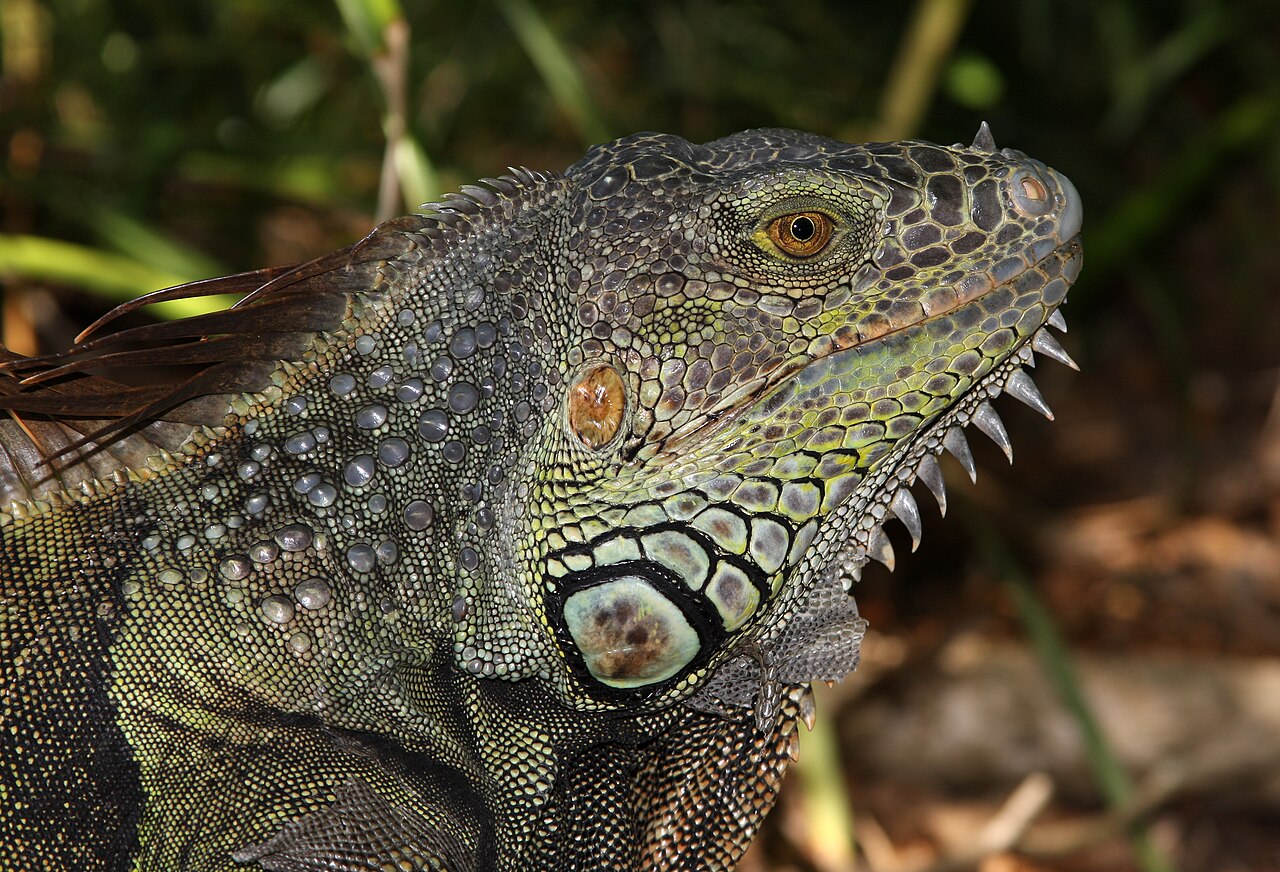
Commonly known as the parietal eye or pineal eye, the iguana third eye is a small photoreceptive organ found on the midline of the animal’s head, typically between the two normal eyes. In young green iguanas (Iguana iguana), it appears as a faint translucent spot on the top of the skull, just behind the crown. As the animal matures, the overlying scale may become more opaque, but the organ remains active beneath the skin.
Unlike the lateral eyes, the iguana third eye is remarkably simple. It measures only about one millimeter across and lacks muscles, an iris, and any ability to focus. Despite its simplicity, it contains a lens-like mass, a retina-like layer of photoreceptor cells, and a nerve connection that runs directly to the pineal gland and then into the brain. This tiny structure essentially serves as a dedicated light sensor, specialized for detecting changes in illumination rather than forming detailed images.
All true iguanas, from the massive green iguana of Central and South America to the marine iguana of the Galápagos Islands, possess this hidden eye. The green iguana itself is an impressive lizard, reaching up to six feet (1.8 meters) in total length and weighing as much as 17 pounds (7.7 kilograms). These herbivores spend their lives in rainforest canopies near rivers and lakes, which makes the third eye’s ability to sense overhead predators especially valuable in their three-dimensional, sun-dappled world.
The Anatomy of the Iguana Third Eye
To understand what the iguana third eye does, it helps to zoom in on its structure. The organ sits within a small opening in the skull called the parietal foramen, and it is covered by a modified scale. In hatchlings and juveniles, this scale is notably thinner and more transparent, allowing the third eye to receive more light. With age, this scale becomes thicker and sometimes slightly opaque, yet the internal machinery remains remarkably intact.
The Lens and Retina
Inside the iguana third eye lies a spherical structure often described as a lens. It is not nearly as elaborate as the lens of a normal eye, but it does gather and direct incoming light. Behind this lens sits a simple retina composed of photoreceptor cells. Research on green iguanas and related species has shown that these cells contain photopigments that are especially sensitive to wavelengths around 500 nanometers, which corresponds to the green-blue part of the spectrum common in forest light.
These photoreceptors do not have the same complexity as the cones and rods found in the lateral eyes. The third eye does not distinguish colors and cannot track objects. Instead, it measures total light intensity and changes in that intensity. A sudden darkening, such as the shadow of a circling hawk, triggers a strong neural signal. A slow, gradual change, like the fading dusk, produces a different response used to regulate daily cycles.
The Pineal Gland Connection
The iguana third eye is anatomically linked to the pineal gland, a small endocrine organ located deep within the brain. In iguanas, the third eye’s nerve fibers deliver light information to this gland, which then secretes the hormone melatonin. This melatonin production follows a strict daily rhythm: high at night, low during the day. The third eye essentially acts as the input sensor that tunes this rhythm to the natural photoperiod.
This connection also influences thermoregulation. Studies have shown that if the pineal gland or its connection to the third eye is damaged, iguanas lose some ability to choose appropriate basking sites. Rather than being a mere curiosity, the parietal eye is a crucial component of the lizard’s internal timing and temperature-management system.
What Does the Iguana Third Eye Actually Do?
The functions of the iguana third eye are beautifully practical for a diurnal lizard living in open, sunlit habitats. It is not, as some imagine, a mystical portal or a second set of eyes for spotting prey. Instead, it performs several key tasks that improve survival. These include:
- Predator detection: Sensing sudden shadows overhead, which helps the iguana leap from a branch or dive into water before an aerial predator strikes.
- Thermoregulation: Monitoring solar radiation levels to tell the lizard when it has basked long enough and when it needs to seek shade.
- Circadian rhythm regulation: Detecting the transition from light to dark and adjusting melatonin secretion, which controls sleep and wake cycles.
- Seasonal signaling: Measuring changing day lengths, which helps iguanas time reproduction and seasonal behaviors such as brumation.
- Vitamin D synthesis: Supporting exposure patterns to ultraviolet light, though the third eye itself does not directly synthesize vitamin D.
The predator detection function has been tested in laboratory settings. When researchers cover the third eye of a green iguana with an opaque patch, the animal shows a much weaker startle response to passing shadows. In contrast, normal iguanas will suddenly lift their heads, open their eyes, and flee even when the shadow is produced by a harmless piece of cardboard moving overhead. This demonstrates that the third eye provides an early-warning system that works even when the lateral eyes are closed or the animal is resting.
The thermoregulatory role is equally important. Iguanas are ectotherms, meaning they rely on external heat sources to raise their body temperature. By basking in the sun, they warm themselves enough to digest food and run quickly. The third eye helps them fine-tune this behavior. When covered, iguanas may spend too long in direct sun and risk overheating, or they may leave basking sites too early and fail to reach optimal body temperature for digestion and locomotion.
Why Did the Iguana Third Eye Evolve?
The origin of the iguana third eye takes us back hundreds of millions of years. Parietal eyes appeared in some of the earliest backboned animals, long before reptiles existed. Fossil evidence from ancient jawless fishes suggests that these creatures already possessed a light-sensitive opening in the top of their skulls. As vertebrates moved onto land, the parietal eye became a highly useful tool for regulating daily activity in a new environment.
Early reptiles, including the ancestors of modern lizards, had well-developed third eyes. Some ancient reptiles, particularly herbivorous species like the early Dimetrodon, had elaborate cranial openings that likely housed robust parietal eyes. Over evolutionary time, many lineages lost this structure. In birds and mammals, the pineal gland was retained internally, but the external eye disappeared. Lizards, and especially iguanids, are the inheritors of this ancient sensory system.
Why did iguanas keep their third eye when so many other animals lost it? The answer likely lies in their lifestyle. Iguanas are mostly arboreal, climbing trees and resting on exposed branches where predators such as hawks, eagles, and snakes are a constant threat. Having a dedicated sensor that monitors the sky for shadows, without requiring the brain to process a full image, offers a fast reflex pathway. Additionally, living in tropical latitudes with relatively stable day lengths still allows the third eye to calibrate subtle seasonal changes, which is useful for breeding in regions where rainy and dry seasons are the primary environmental signals.
How the Iguana Third Eye Compares to Other Animals
Iguanas are not the only animals with a hidden third eye. Several other reptiles possess parietal or pineal eyes, though their structures and visibility vary greatly. One of the most famous examples is the tuatara (Sphenodon punctatus), a reptile native to New Zealand. The tuatara is not a lizard but belongs to a separate lineage of reptiles. Its third eye is remarkably well developed, featuring a lens, a retina, and even nerve connections that research suggests may allow rudimentary image perception, though most scientists believe it still primarily senses light.
Among true lizards, the iguana third eye is shared with many species of anoles, agamids (including bearded dragons), some skinks, and various geckos that retain this trait. For example, the green anole (Anolis carolinensis), a common backyard lizard, has a clearly visible parietal eye that appears as a tiny dark spot on its head. Similarly, the bearded dragon (Pogona vitticeps) is popular in the pet trade and is known for having a third eye that reacts to light changes, which is why keepers often see their dragons tilt their heads toward a light source before moving.
However, the iguana third eye is considered somewhat more functional than that of some other groups. The marine iguana (Amblyrhynchus cristatus) of the Galápagos has a parietal eye that likely helps it navigate the intense equatorial sunlight. Even specialized burrowing or nocturnal lizards have reduced or lost this organ entirely, demonstrating that the third eye is closely tied to diurnal life in bright, sunlit environments. Among invertebrate animals, some jellyfish and flatworms have simple eyespots, but these are not homologous to the lizard’s third eye.
The Tuatara’s Exceptional Third Eye
Tuataras are often called the most primitive reptiles, and their third eye reinforces this label. In juvenile tuataras, the parietal eye is visible externally for the first several months of life before the skin thickens and becomes scaly. This eye contains true photoreceptor cells that are structurally similar to those in the lateral eyes. Some researchers have suggested that the tuatara’s third eye can detect not just light intensity but also the polarization of light, which could be useful for navigation. In iguanas, no such polarization sensitivity has been confirmed, meaning the iguana third eye is likely more limited in its range of perception.
Real-World Behaviors Linked to the Iguana Third Eye
Observations of wild and captive iguanas reveal how the iguana third eye influences everyday behavior beyond simple shadow avoidance. One of the most noticeable is basking posture. When a green iguana settles on a sunny branch, it often arches its head upward and slightly sideways, perhaps angling the top of its head toward the sun. This is not just for facial warmth; it positions the third eye in direct sunlight, allowing the lizard to gauge exactly how much solar energy it is receiving.
Another behavior involves sleeping positions. Iguanas are known to sleep in trees, often on exposed branches, with their heads facing outward. During dawn, as the first light strikes the head, the third eye detects the gradual increase in brightness. This signal triggers hormonal changes that make the iguana begin to wake up and orient itself. Even if its regular eyes are still closed, the third eye’s light reading initiates the animal’s daily routine. In this way, the third eye serves as an internal alarm clock tied to sunrise.
In the wild, green iguanas often live in groups and rest in the same trees for years. A predator like a snake or a hawk approaching from above will cast a shadow that the third eye catches immediately. This triggers a rapid escape response, sometimes without the iguana fully opening its eyes. Behaviorists have recorded movies of iguanas leaping from branches during a bird-like shadow, landing in water below and swimming away. This survival reflex depends on a hair-trigger response from the parietal eye, which transmits signals directly to motor centers in the brain.
For pet iguanas, this behavior has practical implications. A iguana living in a room with large windows may react to clouds passing overhead or to a ceiling fan’s rotating blades. Likewise, abrupt shadows from hands or toys above the enclosure can startle the animal. Understanding the iguana third eye helps keepers design enclosures that minimize unexpected shadows, reducing stress and promoting natural basking behavior. Providing consistent light cycles with a timer also supports the healthy function of the pineal gland and melatonin rhythm.
Common Myths About the Iguana Third Eye
Because the term “third eye” carries an air of mystery, several myths have grown around the iguana third eye. The most widespread myth is that iguanas can see images, colors, or even humans through this eye. This is simply false. The third eye lacks the complex neural processing required for image formation. It detects gross changes in light intensity and shadow, not shapes or movements. A fully obstructed third eye does not create a blind spot in an iguana’s ability to see the world; it only loses the extra light-sensing signal.
Another myth is that only iguanas have a third eye. As we have seen, many reptiles, amphibians, and even some fish have homologous structures. In fact, the tu
❓ Frequently Asked Questions
💬 What is the third eye on an iguana?
It's a light-sensitive organ called the parietal eye, located on the top of the head. It doesn't form images, but detects changes in light and shadows to help the iguana sense predators from above.
💬 Why do iguanas have a third eye?
The parietal eye helps iguanas detect overhead predators, like birds, and regulate their body temperature by sensing daylight. It also aids in regulating their circadian rhythms and hormonal cycles.
💬 Where is the iguana's third eye located?
It's a small, pale scale at the top of the head, between the two normal eyes. Underneath that scale lies a lens, retina, and nerve connections to the pineal gland.
💬 Can iguanas see with their third eye?
No, the third eye cannot form images. It only perceives light intensity and movement shadows, giving the iguana an early warning system for danger.