- The Basics: Meet the Bird Behind the Mystery
- What Kiwi Bird Wings Actually Look Like Today
- Why "Vestigial" Does Not Mean "Worthless"
- The Missing Keel: A Structural Clue
- Why Did Kiwis Lose the Ability to Fly? The Island Equation
- No Mammalian Predators, No Reason to Flee Skyward
- Ground Living Rewards Different Bodies
- Island Gigantism and Dwarfism in One Bird
- How Kiwi Bird Wings Fit Into a Nocturnal, Ground-Based Life
- Smell, Touch, and the Famous Long Beak
- Diet: What Fuels a Flightless Forager
- Reproduction and the Enormous Egg
- The Real Threat: Introduced Predators and a Flightless Bird
- Common Myths About the Kiwi Bird Wings
- "Kiwis Have No Wings at All"
- "Kiwis Are Related to Ostriches and Emus"
- "Kiwis Are Basically Mammals"
- Conclusion: The Odd Truth Is Also a Success Story
- ❓ Frequently Asked Questions
When people first learn about New Zealand's most famous bird, one question tends to stop them cold: why do kiwi bird wings barely exist at all? Here is a bird the size of a chicken, covered in hair-like feathers, that snuffles through the forest floor at night and cannot fly a single metre. The odd truth is that kiwis are not failed flyers or evolutionary accidents — they are highly successful specialists that traded the sky for the soil, and their tiny wings are a record of that bargain.
The Basics: Meet the Bird Behind the Mystery
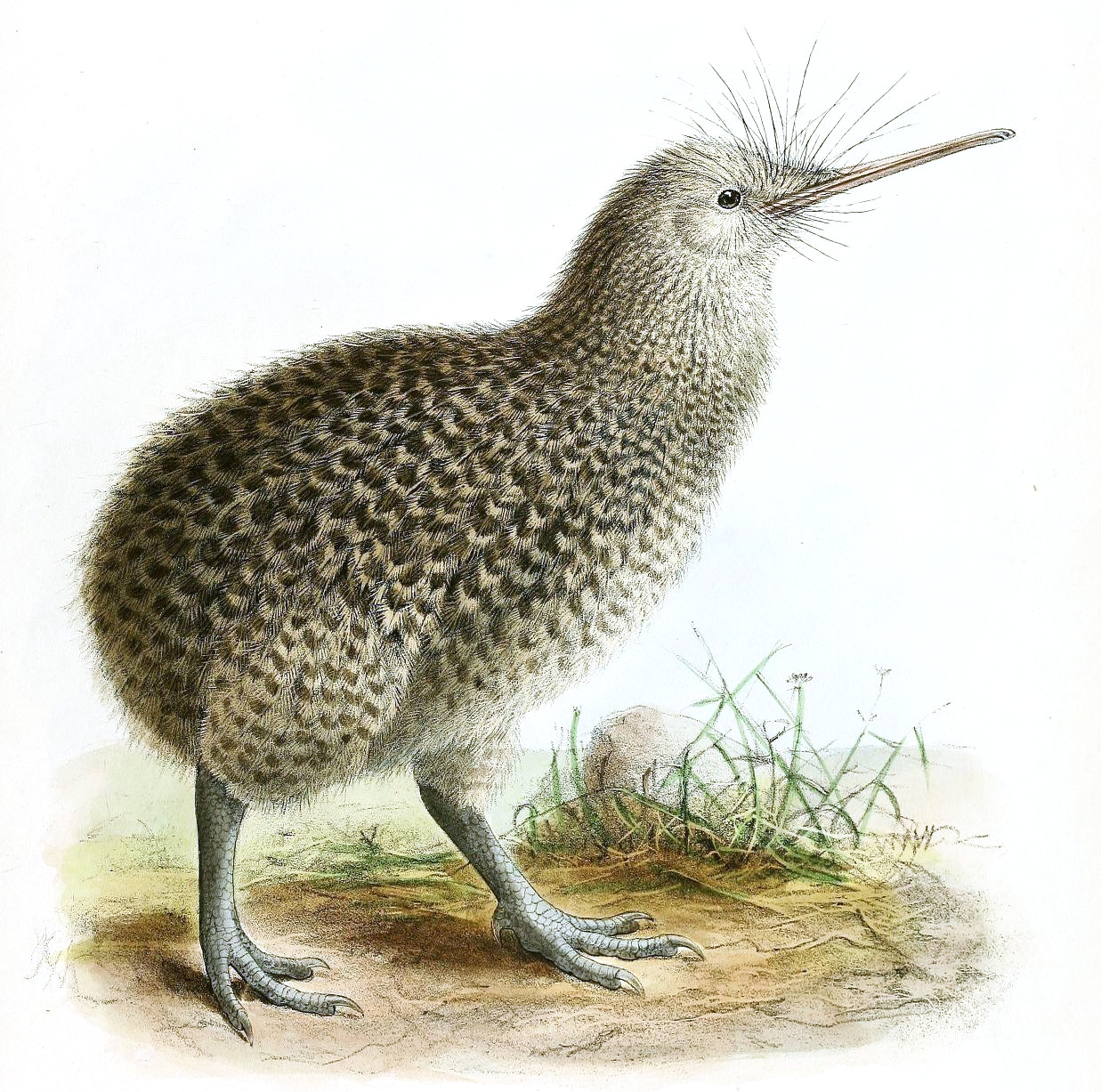
The kiwi is not one animal but a genus — Apteryx — containing five recognised species: the North Island brown kiwi, the tokoeka, the rowi, the roroa (great spotted kiwi), and the little spotted kiwi. The name Apteryx literally means "without wing," which tells you how completely the wingless condition defines these birds in the eyes of science.
Size varies noticeably across the group. The little spotted kiwi, the smallest, weighs roughly 0.9 to 1.3 kilograms and stands about 25 centimetres tall. The great spotted kiwi, the largest, can reach 45 centimetres in height and weigh up to 3.3 kilograms — with females generally larger and heavier than males. All species are stout, round-bodied, and surprisingly dense, with powerful legs that make up a large proportion of their total body weight.
They are also genuinely strange birds. Their feathers are loose, shaggy, and hair-like, lacking the stiff vanes and barbules that give most bird plumage its structure. They have marrow-filled bones rather than the hollow, air-filled bones of flying birds — heavier, but far stronger. Their body temperature runs slightly lower than that of most birds, around 38 degrees Celsius, and their metabolism is slower. Even their blood is unusual: kiwi red blood cells are smaller and more numerous than those of other birds, and they carry more haemoglobin, which helps them cope with the low-oxygen burrows they sleep in.
Lifespan is impressive. In the wild, kiwis can live 25 to 50 years, and some individuals in sanctuaries have exceeded 40. They are long-lived, slow-breeding birds — a combination that makes them vulnerable to new threats but also means an adult kiwi that survives its first year has a decent chance of a very long life.
What Kiwi Bird Wings Actually Look Like Today
If you were to examine a kiwi closely — which requires handling a protected, nocturnal, and famously temperamental animal, so mostly this happens in research settings — you would find the wings reduced to tiny, stubby appendages, usually no more than 2.5 to 5 centimetres long. They are buried under the shaggy plumage and are easy to miss entirely.
These vestigial wings are not completely useless structures. They retain a small claw at the tip, and they still contain bones: a humerus, radius, ulna, and reduced hand elements. What they lack is the machinery of flight — no keel on the sternum for anchoring powerful flight muscles, no significant muscle mass, and no aerodynamic surface area. In other words, the blueprint is still there, but almost every functional part has been stripped away.
Why "Vestigial" Does Not Mean "Worthless"
The word vestigial often gets misread as "broken" or "leftover junk." In biology it simply means a structure has lost its original function. For kiwis, the wing remnants may still serve minor roles — possibly in balance during fast running, in body temperature regulation, or as part of courtship displays when a bird shifts and fluffs its feathers. The honest scientific answer is that we don't know for certain. What we do know is that natural selection has not bothered to remove them entirely, which suggests they are not actively harmful.
The Missing Keel: A Structural Clue
One of the most telling details about kiwi anatomy is the sternum, or breastbone. In flying birds, this bone carries a prominent ridge called a keel, which provides a large surface for the attachment of the pectoral muscles that power the downstroke. Kiwis have a flat, unkeeled sternum. Without that anchor point, there is nowhere for flight muscles to attach, which means even if the wings were larger, the bird could not generate the force needed to lift itself.
Why Did Kiwis Lose the Ability to Fly? The Island Equation
Flight is expensive. It demands enormous muscle mass, a lightweight skeleton, a high metabolic rate, and constant maintenance. Any bird that can survive without paying those costs will, over evolutionary time, tend to stop paying them. On isolated islands with few ground predators, that is exactly what happened — repeatedly and independently, across many bird lineages.
No Mammalian Predators, No Reason to Flee Skyward
For tens of millions of years, New Zealand had no native terrestrial mammals. There were no rats, no cats, no stoats, no foxes — none of the ground-hunting predators that force birds elsewhere to stay airborne or die. The only significant predators were birds themselves, notably the giant Haast's eagle and the Eyles' harrier, both now extinct. Against those threats, camouflage, nocturnality, and hiding in dense vegetation were effective strategies. Flight was not the only escape route available.
Ground Living Rewards Different Bodies
Once a bird commits to life on the forest floor, a different set of traits becomes advantageous. Strong legs for walking, probing, and kicking aside leaf litter matter more than wing power. A heavier, more robust skeleton is fine — even helpful — when you are not trying to defy gravity. Reduced wings also make it easier to move through tight burrows and dense undergrowth without snagging.
Kiwis took this trade to an extreme. Their legs are thick and muscular, with three forward toes and one small rear toe, and they can run surprisingly fast for short bursts. They also use their legs as weapons: a cornered or startled kiwi can deliver a powerful kick with sharp claws, capable of inflicting real damage on a human hand or a would-be predator.
Island Gigantism and Dwarfism in One Bird
Island evolution often produces extremes. Some species grow larger than their mainland relatives (island gigantism), others shrink (island dwarfism). Kiwis show a mixed pattern: they lost flight and many flight-related structures, yet they are relatively large for a bird that eats invertebrates. Their eggs, however, are absurdly large — proportionally among the biggest of any bird. A kiwi egg can weigh up to 20 to 25 percent of the female's body weight, and in the North Island brown kiwi it may approach a quarter of her mass. That is roughly equivalent to a human woman giving birth to a six-year-old child.
How Kiwi Bird Wings Fit Into a Nocturnal, Ground-Based Life
Kiwis are nocturnal and crepuscular, emerging at dusk to forage through the night and returning to burrows or hollow logs before dawn. Their eyes are small relative to their body size — unusually so for a nocturnal animal — and their vision is relatively poor. Instead, they rely on three other senses.
Smell, Touch, and the Famous Long Beak
The kiwi has the smallest eyes relative to body size of any bird, but one of the largest olfactory bulbs — the brain region handling smell. Behavioural studies have confirmed that kiwis can detect odours underground, sniffing out earthworms and insect larvae hidden beneath the soil surface. This is rare among birds and puts them closer to mammals in sensory strategy.
Their beak is long, slender, slightly curved, and unusually flexible at the tip. Critically, the nostrils are located at the very end of the beak rather than at the base, as in most birds. This means a kiwi can probe its beak into soil and leaf litter and smell or feel prey directly, without having to withdraw and reposition. The beak tip is packed with sensory receptors, giving it an exquisite sense of touch.
Diet: What Fuels a Flightless Forager
Kiwis are omnivorous but heavily invertebrate-focused. Their diet includes:
- Earthworms, which form a major part of the diet in many populations
- Insect larvae, beetles, weta, and other ground-dwelling invertebrates
- Fallen fruit and berries, especially in autumn and winter
- Occasionally small lizards, frogs, and freshwater crayfish
- Seeds and plant material, taken opportunistically
They forage by walking slowly with the beak angled downward, tapping and probing the ground, often moving along established tracks through the undergrowth. A single kiwi may cover several kilometres in a night. Because they do not fly, their home ranges are measured in hectares of forest floor rather than in the vertical space a flying bird might use.
Reproduction and the Enormous Egg
Kiwi breeding is as unusual as the rest of their biology. Pairs often form long-term bonds, sometimes lasting years or even for life, and they defend territories together with loud, haunting calls — the female's call lower and hoarser, the male's higher and more shrill. These duets carry through the night forest and are one of the few ways researchers can monitor populations without capturing birds.
The egg itself is a marvel. Relative to body size, the kiwi egg is the largest of any bird except the extinct elephant birds of Madagascar and the modern ostrich, which are far bigger animals overall. The female must eat heavily for weeks before laying, and the egg takes roughly 70 to 85 days to incubate — one of the longest incubation periods of any bird.
In most kiwi species, the male does the bulk of incubation, sitting on the nest for weeks while the female recovers and forages. The chick hatches fully feathered, with eyes open, and is essentially independent within days to weeks — no long period of parental feeding. This precocial strategy makes sense for a bird that cannot fly: there is no nest to defend from the air, and the sooner the chick can hide and forage on its own, the better its chances.
The Real Threat: Introduced Predators and a Flightless Bird
The same evolutionary logic that made kiwis successful for millions of years became a liability the moment humans arrived. Polynesian settlers brought the Pacific rat (kiore) roughly 700 years ago, and European settlers later introduced stoats, ferrets, cats, dogs, and possums. For a ground-nesting, flightless, slow-breeding bird, these predators were catastrophic.
Stoats are especially devastating. A single stoat can kill a kiwi chick within its first few months of life, and in some regions more than 90 percent of chicks die before reaching adulthood without predator control. Adult kiwis are tough and can sometimes fight off smaller predators, but chicks and eggs are highly vulnerable.
All five kiwi species are now classified as threatened or at risk, with the rowi and some brown kiwi populations among the most endangered. Conservation efforts include:
- Predator trapping and poisoning across large tracts of forest
- Predator-free sanctuaries on offshore islands and fenced mainland sites
- Operation Nest Egg, which removes eggs, hatches them in captivity, and releases chicks once they are large enough to defend themselves
- Community-led trapping groups, which now number in the thousands across New Zealand
- Translocation programmes to establish new wild populations
The irony is sharp: a bird that lost its wings because it had no ground predators is now dependent on human intervention precisely because ground predators arrived. The wingless condition is not what threatens kiwis — it is the sudden appearance of mammals in an ecosystem that evolved without them.
Common Myths About the Kiwi Bird Wings
Because kiwis are iconic and a little mysterious, several misconceptions persist. It is worth clearing up the most common ones.
"Kiwis Have No Wings at All"
Not quite. They have tiny, vestigial wings, usually under five centimetres, hidden in their feathers. The name Apteryx means "without wing," but that is a practical description rather than a literal one. The bones are present; the function is gone.
"Kiwis Are Related to Ostriches and Emus"
This is a reasonable guess — ostriches, emus, rheas, cassowaries, and kiwis are all ratites, a group of mostly flightless birds. But genetic and anatomical studies have shown that kiwis are not closely related to the Australian ratites. Their closest living relative is actually the elephant bird of Madagascar, an extinct giant that stood up to three metres tall. The two lineages split roughly 50 million years ago, and kiwis are thought to have arrived in New Zealand by flying there before losing the ability — not by walking across a land bridge.
"Kiwis Are Basically Mammals"
They are not, despite the hair-like feathers, the burrows, the strong smell, and the unusual blood. They lay eggs, they have beaks and feathers, and they are unambiguously birds. The mammal-like traits are the result of convergent evolution — different lineages arriving at similar solutions because they faced similar pressures.
Conclusion: The Odd Truth Is Also a Success Story
Kiwis have no functional wings because flight stopped being worth its cost. On an island with no ground-dwelling mammals, the energy and structural investment required for flight could be spent elsewhere: on stronger legs, sharper senses, bigger eggs, and a slower, more efficient metabolism suited to a nocturnal, burrow-dwelling life. The tiny kiwi bird wings are not a defect but a receipt — proof of a trade that paid off for millions of years. That trade only turned dangerous when humans introduced predators the kiwi never evolved to fear. Understanding why kiwis lost their wings is not just a piece of trivia; it is the key to understanding why they now need our help to survive.
❓ Frequently Asked Questions
💬 Do kiwi birds really have no wings at all?
Kiwis aren't completely wingless — they have tiny, vestigial wings about 3–5 cm long that are almost invisible under their shaggy feathers. These stubby remnants serve no flight function and can't even be seen unless you part the plumage.
💬 Why did kiwis lose the ability to fly?
Kiwis evolved on New Zealand, where they faced no ground-dwelling mammal predators for millions of years, so flight became unnecessary for escape. Without that pressure, their wing muscles and bones shrank over time, and they invested energy in strong legs and a keen sense of smell instead.
💬 How do kiwis survive without being able to fly?
They rely on powerful, sturdy legs to run, dig burrows, and kick when threatened, plus excellent hearing and smell to find food and detect danger at night. Their brown, hair-like feathers also camouflage them well against the forest floor.
💬 Are kiwi wings a sign of evolution?
Yes — the tiny wings are a classic example of vestigial structures, body parts that lost their original function through evolution. They show how kiwis descended from flying ancestors but adapted to a ground-based, nocturnal life in New Zealand.