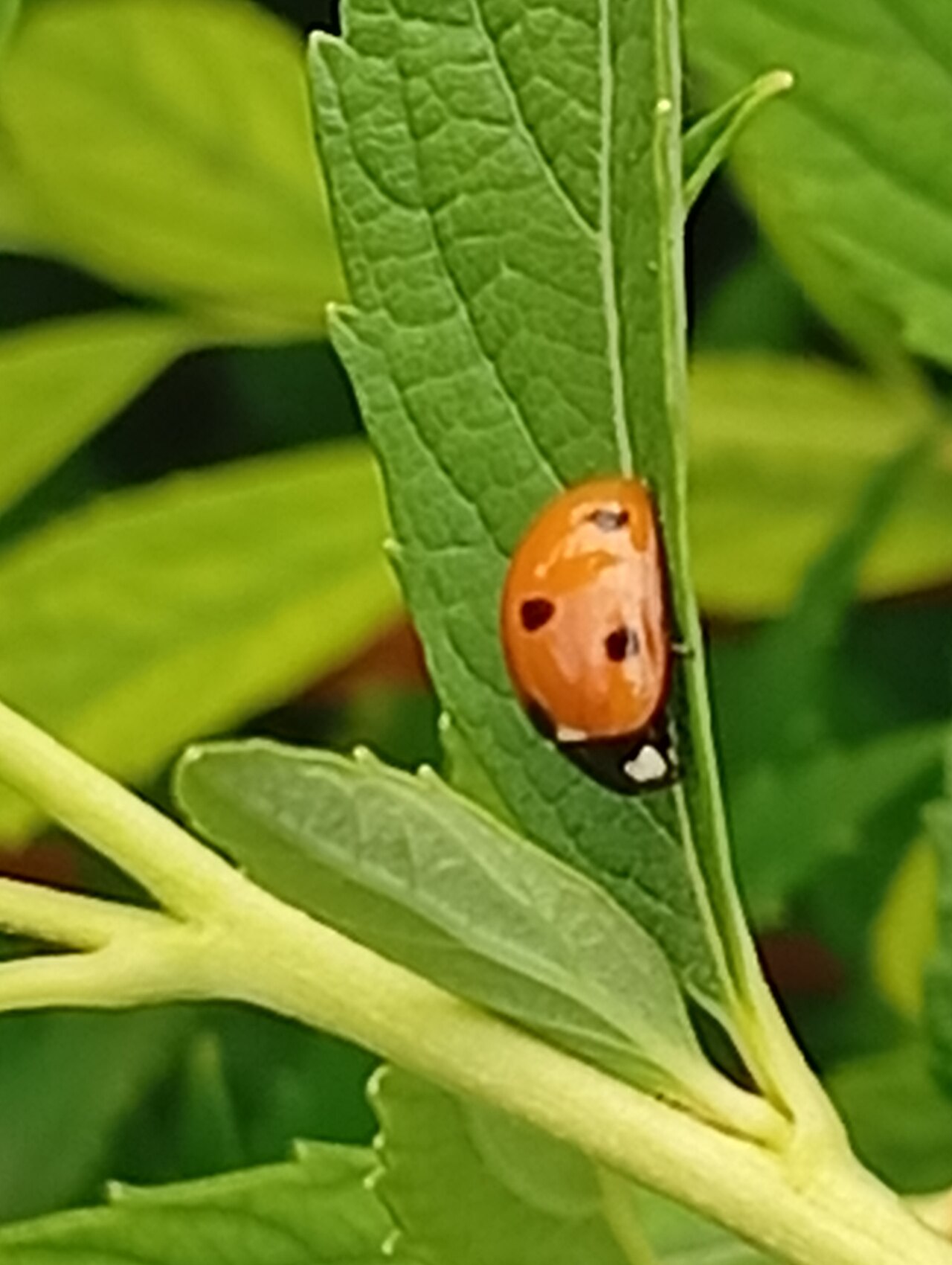
- What Ladybug Spots Actually Are
- Not All Ladybugs Are Red With Black Dots
- The Warning Truth: Ladybug Spots Are Aposematic Signals
- Why Contrast Matters More Than the Spots Themselves
- How Ladybug Spots Vary — And Why It Matters
- Genetic Control and Temperature Effects
- Spot Counts in Common Species
- What Ladybugs Eat — And Why It Makes Them Garden Heroes
- Diet Shapes the Warning Signal
- Habitat, Range, and the Asian Lady Beetle Invasion
- Overwintering Behavior
- Do Ladybug Spots Really Work? The Evidence
- Batesian Mimicry and Copycats
- Common Myths and Misconceptions About Ladybug Spots
- The Warning Truth, Summed Up
- ❓ Frequently Asked Questions
Ladybug spots are one of nature's most recognizable warning labels — and, as it turns out, one of its most misunderstood. Most of us grew up believing those cheerful red-and-black polka dots were simply decoration, a bit of whimsy on a tiny beetle. In reality, every spot, every shade of red, and even the number of dots tells a story about survival, chemistry, and the ancient arms race between predator and prey. This article unpacks the science behind those markings: what they signal, why the number varies so wildly, whether the spots really deter predators, and what the research actually says about the "warning truth" behind the ladybug's famous coat.
What Ladybug Spots Actually Are
First, a quick anatomy lesson. The colorful dome you see on a ladybug is not a shell in the way a snail's shell is. It is a pair of hardened forewings called elytra, which protect the delicate flight wings folded beneath. The spots are areas of the elytra where the cuticle contains different pigments — primarily melanins — deposited in the exoskeleton during the beetle's final molt into adulthood. Once a ladybug reaches its adult form, its spot pattern is fixed for life. It cannot add, lose, or rearrange spots the way a leopard might change its coat between seasons.
That fixed pattern is why entomologists can use spots as a field identification tool. The seven-spot ladybird (Coccinella septempunctata), for example, almost always has exactly seven black dots on a red-orange background — three on each elytron and one shared across the midline near the head. The two-spot ladybird (Adalia bipunctata) typically has one spot per wing case, though melanic (black) forms with red spots also occur. The Asian lady beetle (Harmonia axyridis), infamous for invading homes in autumn, is a spot-pattern chameleon: it can be red, orange, or nearly black, with anywhere from zero to more than twenty spots depending on genetics and temperature during development.
Not All Ladybugs Are Red With Black Dots
It's worth dispelling a common myth early. Ladybugs — more properly called ladybirds or lady beetles, family Coccinellidae — come in a startling range of color schemes. There are yellow ladybugs with black spots, black ladybugs with red spots, orange ladybugs with white spots, and even species that are brown or dull gray. The "classic" red-with-black-dots image describes only a handful of the roughly 6,000 described species worldwide (about 500 of which live in North America). So when we talk about ladybug spots as a warning signal, we're really talking about a broader family strategy: bright, contrasting colors paired with conspicuous patterning.
The Warning Truth: Ladybug Spots Are Aposematic Signals
Here is the core of the story. Ladybug spots, together with the beetle's vivid red or orange base color, form what biologists call an aposematic signal — a warning advertisement that says, in effect, "do not eat me." The word comes from the Greek apo (away) and sema (sign). Aposematism is widespread in nature: poison dart frogs, monarch butterflies, and coral snakes all use it. The logic is simple. If an animal is toxic, venomous, or simply tastes terrible, it pays to advertise that fact loudly rather than wait to be bitten or swallowed first.
Ladybugs are chemically defended. When threatened, they engage in a behavior called reflex bleeding: they exude a yellowish-orange fluid from joints in their legs, a process sometimes called "bleeding" from the knees. This hemolymph contains bitter-tasting alkaloids and pyrazines — defensive compounds that vary by species. The seven-spot ladybird, for instance, produces coccinelline, while the Asian lady beetle produces harmonine, a compound with antimicrobial properties that researchers have studied for potential medical applications. The fluid is not usually lethal to birds or mammals, but it is deeply unpleasant: it tastes foul, can stain skin and fabric, and in some species produces a lingering odor.
Why Contrast Matters More Than the Spots Themselves
Experiments with birds — the main predators of ladybugs — have shown that what matters most is contrast and conspicuousness, not the exact number of dots. A red beetle with black spots stands out sharply against green foliage, making it easy for a predator to spot and, crucially, easy to remember. Studies on great tits and other insectivorous birds found that individuals quickly learn to avoid prey with bold, high-contrast patterns after a single bad experience. The spots may function less as a precise "count the dots" code and more as a pattern-breaker that enhances memorability. In other words, the spots help a bird remember: "That red thing with black marks? Never again."
Some research suggests the spots may also serve a secondary role in disruptive coloration, breaking up the beetle's outline and making it harder to target precisely during a peck. And in a few species, the spots appear to play a role in mate recognition or courtship, though this is less well established than the anti-predator function.
How Ladybug Spots Vary — And Why It Matters
The sheer variety of ladybug spot patterns is not random. It reflects a mix of genetics, environment, and evolutionary pressure. Understanding this variation helps explain why you might see a dozen different-looking ladybugs in the same garden.
Genetic Control and Temperature Effects
In species like the two-spot ladybird and the Asian lady beetle, spot number and background color are strongly heritable. Melanic forms — where the beetle is mostly black with red or orange spots — are more common in some populations and appear to be favored in certain climates, possibly because dark elytra absorb heat faster, helping the beetle warm up in cool conditions. Temperature during the pupal stage can also influence pigmentation, meaning two genetically similar beetles raised at different temperatures may look noticeably different.
Spot Counts in Common Species
- Seven-spot ladybird (Coccinella septempunctata): The classic European and introduced North American species. Almost always seven spots; roughly 5–8 mm long.
- Two-spot ladybird (Adalia bipunctata): Usually two spots, but highly variable; red, orange, or black forms exist. About 3.5–5.5 mm long.
- Asian lady beetle (Harmonia axyridis): Zero to 20+ spots; colors range from pale yellow-orange to deep red to black. About 5–8 mm long. Known for its "W" or "M" mark on the pronotum behind the head.
- Convergent lady beetle (Hippodamia convergens): Typically 12–13 spots; common in western North America and widely sold for pest control.
- Pink spotted lady beetle (Coleomegilla maculata): Pinkish-red with usually 12 spots; longer and more oval than typical round ladybugs.
The takeaway: you cannot reliably identify a ladybug species by spot count alone, and spot count is not a reliable indicator of age, health, or toxicity. A ladybug with faded or missing spots is usually just old — the pigments can wear or the elytra can be damaged — not sick or unusually dangerous.
What Ladybugs Eat — And Why It Makes Them Garden Heroes
Ladybugs are among the most voracious predators in the garden, and this matters for understanding their defense strategy. Most familiar species are aphid specialists. A single seven-spot ladybird larva can consume hundreds of aphids during its development, and an adult can eat 50 or more aphids a day. A ladybug's life cycle — egg, larva, pupa, adult — takes roughly four to eight weeks depending on temperature and food supply, and adults can live for several months to about a year in the wild, with some overwintering individuals surviving longer.
The larvae look nothing like the adults: they are elongated, spiny, often dark with orange or red markings, and resemble tiny alligators. They are just as predatory as the adults and are sometimes mistaken for pests by gardeners who don't recognize them. Both larvae and adults feed on aphids, scale insects, mealybugs, spider mites, and other soft-bodied pests, which is why ladybugs are prized in integrated pest management and are commercially released in agriculture and gardens.
Diet Shapes the Warning Signal
There's an elegant connection here: the ladybug's diet helps supply the raw materials for its chemical defense. Aphids sequester plant compounds, and ladybugs that feed on them accumulate alkaloids that make them distasteful. Some species supplement their diet with pollen and nectar, and a few — notably the twenty-two-spot ladybird (Psyllobora vigintiduopunctata) — feed on mildew and are actually beneficial fungivores. The warning spots advertise a defense that is, in part, built from what the beetle eats.
Habitat, Range, and the Asian Lady Beetle Invasion
Ladybugs are found on every continent except Antarctica, in habitats ranging from gardens and farmland to meadows, forests, and even deserts. They are most abundant where their prey is abundant, which is why agricultural fields and aphid-heavy gardens attract them. Many species overwinter as adults, clustering in sheltered spots — under bark, in leaf litter, in rock crevices, and, notoriously, inside human homes.
The Asian lady beetle is the most famous home invader. Introduced to North America repeatedly from the early 20th century onward for biological control of aphids and other pests, it established widespread populations and now often outcompetes native species. In autumn, it seeks warm, light-colored, south-facing surfaces to overwinter — which is why it congregates on siding and squeezes through gaps around windows. When handled or disturbed, it reflex bleeding releases a yellow, foul-smelling fluid that can stain walls and fabrics and trigger allergic reactions in sensitive people. This is aposematism in action, experienced firsthand by homeowners every October.
Overwintering Behavior
Overwintering ladybugs can cluster in groups of hundreds or thousands, a behavior thought to reduce heat loss and improve survival. The convergent lady beetle, common in the western United States, famously forms huge overwintering aggregations in mountain valleys and along the California coast, sometimes in the same sites year after year. These clusters are a spectacular sight — and a reminder that ladybugs are far more social than their solitary summer hunting suggests.
Do Ladybug Spots Really Work? The Evidence
Yes — but with nuance. The evidence for aposematism in ladybirds is strong and comes from decades of experiments. Classic studies by researchers such as those working with avian predators showed that birds learn to avoid ladybirds after tasting them, and that the learning is faster and more durable when the prey is brightly colored and patterned. Predators that have never encountered a ladybug may still peck at one, which is why the defense is not perfect: young, naive birds sometimes sample a ladybug before learning better.
The spots also work in combination with other signals. The beetle's behavior matters: when threatened, many ladybugs tuck their legs and drop to the ground, playing dead, and some release their defensive fluid simultaneously. The combination of color, pattern, posture, and chemistry creates a multi-layered warning system. Remove any one element — as researchers have done by painting over spots or using non-toxic model beetles — and the protective effect weakens.
Batesian Mimicry and Copycats
The ladybug's warning signal is so effective that other insects copy it. Several species of leaf beetles and tortoise beetles have evolved red-and-black or orange-and-black patterns that mimic ladybirds, even though they lack the chemical defense. There are also true mimics among cockroaches and bugs that resemble ladybugs closely enough to fool a casual observer — and, presumably, a hungry bird. This mimicry is itself evidence that the ladybug's warning signal carries real survival value: if it didn't work, nothing would bother copying it.
Common Myths and Misconceptions About Ladybug Spots
Because ladybugs are so familiar, they've accumulated a thick layer of folklore. It's worth separating fact from fiction.
- Myth: The number of spots tells you the ladybug's age. False. Spot number is determined by species and genetics, not age. A seven-spot ladybug is not "seven years old."
- Myth: More spots means more toxic. Not reliably. Toxicity varies by species and diet, not by spot count.
- Myth: All ladybugs are red with black spots. False. Ladybugs come in yellow, orange, black, brown, and pink, with spots of various colors or none at all.
- Myth: Ladybugs are always harmless. Mostly true for humans, but the Asian lady beetle can bite (a mild pinch), stain surfaces, and cause allergic reactions in some people. In rare cases, large indoor infestations have been linked to respiratory irritation.
- Myth: Ladybugs are bugs. They are beetles (order Coleoptera), not true bugs (order Hemiptera). The name "ladybird" is the more accurate common name in British English.
The Warning Truth, Summed Up
Ladybug spots are not decoration and they are not a code to be cracked. They are a survival strategy written on the beetle's back: a bold, memorable advertisement that says "I am not worth eating." The spots work alongside vivid color, reflex bleeding, bitter alkaloids, and defensive behavior to protect the beetle from birds, mammals, and other predators. They are fixed at adulthood, vary enormously across the roughly 6,000 species in the family, and are copied by mimics that have everything to gain from looking like a ladybug. The next time you see one of these tiny beetles on a rosebush, you're not just looking at a pretty insect — you're looking at millions of years of evolutionary negotiation between predator and prey, printed in black on red.
❓ Frequently Asked Questions
💬 Are ladybug spots a warning to predators?
Yes. The bright red or orange background with contrasting black spots is aposematic coloration—a visual warning that the beetle tastes bad and may be toxic. Birds and other predators learn to avoid them after one unpleasant meal.
💬 Do all ladybugs have spots?
No. While most species have spots, the number and pattern vary widely, and some ladybugs are spotless or have faint, merging spots. The seven-spot ladybird has seven, but species like the eleven-spot or twenty-two-spot differ, and melanic (black) forms can obscure the pattern.
💬 Why do ladybug spots fade or disappear?
Spots can fade as a ladybug ages, and in some species the pattern darkens or spreads over time. Spot appearance also varies with temperature during development and among color morphs, so a spotless ladybug isn't necessarily a different species.
💬 Does the number of spots tell you the ladybug's age?
No—spot count is a species characteristic, not an age indicator. A seven-spot ladybug has seven spots throughout its adult life; aging may dull the colors but doesn't add spots. Counting spots helps identify the species, not the beetle's age.